


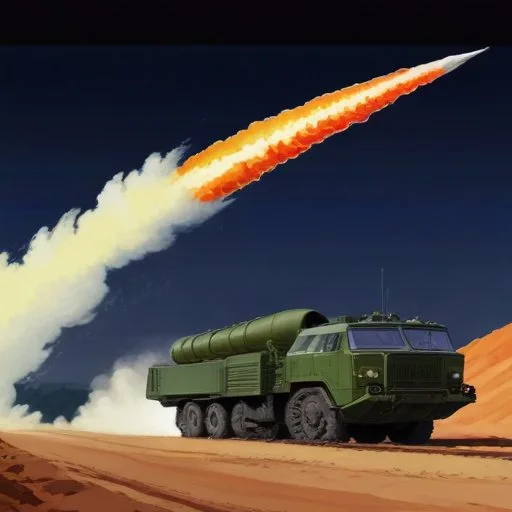
The R7 Semyorka's development sparked a nuclear arms race between the Soviet Union and the United States. In response, the US developed its own intercontinental ballistic missile, the Atlas ICBM. While both missiles had similar range and payload capacities, they differed significantly in design and functionality. The Atlas ICBM used a combination of liquid-fueled and solid-fueled stages, whereas the R7 Semyorka relied solely on liquid-fueled rockets.
Another key difference lay in their guidance systems. The R7 Semyorka employed a radio-controlled inertial guidance system, whereas the Atlas ICBM used an inertial measurement unit. These differences in design and functionality highlight the distinct approaches taken by each nation in their quest for nuclear superiority.
Sergei Korolev, the mastermind behind the R7 Semyorka, was a Soviet rocket engineer and scientist. Born in 1907 in Ukraine, Korolev demonstrated a passion for aeronautics from an early age. He went on to study at the Kyiv Polytechnic Institute and later worked at the GIRD, a Soviet rocket research group.
Korolev's innovative thinking and leadership played a crucial role in the development of the R7 Semyorka. His vision for a missile capable of delivering a nuclear warhead to any target on the planet became a reality, cementing his position as a pioneer in the field of rocketry.
The R7 Semyorka's development took place during a time of intense political tension between the Soviet Union and the United States. The early 1950s saw the beginning of the Cold War, with both nations engaging in a nuclear arms race. The Soviet Union was determined to catch up with the United States in terms of nuclear capabilities, and the R7 was the key to achieving this goal.
The R7 Semyorka's operational status had far-reaching implications for global politics, forcing the United States and its allies to reevaluate their nuclear strategies. This marked a significant shift in the global balance of power, with the Soviet Union emerging as a major nuclear superpower.
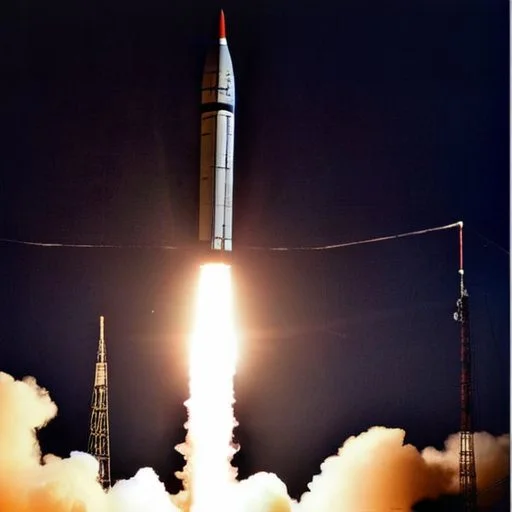
The R7 Semyorka's development pushed the boundaries of rocket technology, paving the way for future advancements in space exploration. The missile's four-stage liquid-fueled rocket design became a model for subsequent Soviet space launch vehicles, including the R-7 Sputnik, which carried Sputnik 1, the world's first artificial satellite, into space.
The R7 Semyorka's technological innovations also had significant implications for the development of civilian space programs. The expertise gained from the R7 Semyorka's development enabled the Soviet Union to launch a series of successful space missions, including the first human spaceflight by Yuri Gagarin in 1961.
The development of the R7 Semyorka came at a significant economic cost to the Soviet Union. The project required massive investments in infrastructure, research, and personnel, diverting resources away from other key sectors of the Soviet economy.
However, the R7 Semyorka's operational status also brought significant economic benefits, enabling the Soviet Union to maintain a level of nuclear deterrence without having to invest in a large-scale military buildup. This had long-term implications for the Soviet economy, allowing for greater investment in other areas, such as industry and agriculture.