


The Ranger 9 spacecraft was a marvel of engineering, weighing over 1,000 pounds and standing 13 feet tall. Its advanced design enabled it to transmit high-quality images and data back to Earth, providing scientists with an unprecedented understanding of the lunar environment.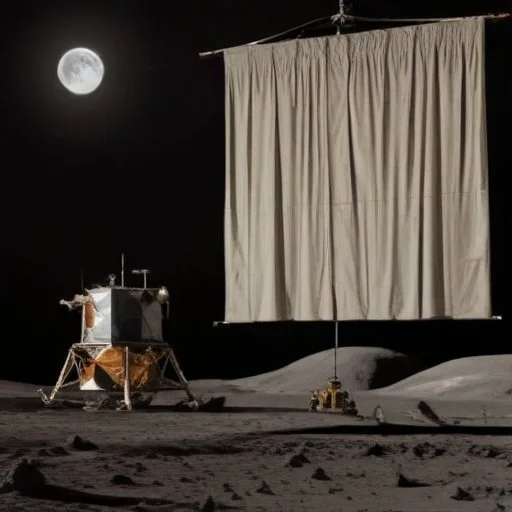
The Ranger 9 mission returned over 5,800 images of the moon's surface, providing scientists with a wealth of information on its geology, craters, and mountains. The mission's findings greatly contributed to our understanding of the moon's origin, composition, and evolution.
Ranger 9's success also paved the way for future lunar exploration, influencing the development of subsequent NASA missions, including the Apollo program.
The Ranger 9 mission left an indelible mark on the history of space exploration, pushing the boundaries of human understanding and inspiring future generations of scientists and engineers.
As we continue to venture into the unknown, the Ranger 9 mission serves as a testament to humanity's unwavering curiosity and our unrelenting pursuit of discovery.
The Ranger 9 mission was not just a solo act, but rather the culmination of a series of lunar probes that paved the way for future space exploration. The program was initiated in the early 1960s, with the first Ranger mission, Ranger 1, launching on August 23, 1961. Although it failed to reach its intended orbit, the program persevered, and subsequent missions provided valuable insights into the moon's surface.
Ranger 4, launched on April 23, 1962, was the first American spacecraft to impact the moon's surface, returning significant data on the moon's composition and geology. Ranger 7, launched on July 31, 1964, sent back over 4,300 images of the moon's surface, setting the stage for Ranger 9's groundbreaking mission.
The Ranger program's success can be attributed to the vision and determination of NASA's administrators, engineers, and scientists, who worked tirelessly to overcome technical challenges and budget constraints. The program's legacy extends far beyond its contributions to lunar exploration, as it laid the foundation for future NASA missions, including the Apollo program.

William H. Pickering, a renowned engineer and scientist, played a pivotal role in the development of the Ranger program. As the director of NASA's Jet Propulsion Laboratory (JPL), Pickering oversaw the design, development, and execution of the Ranger missions.
Pickering's expertise in rocketry and his unwavering commitment to space exploration inspired a generation of scientists and engineers. His leadership and vision were instrumental in shaping the Ranger program, which paved the way for future lunar exploration.
Under Pickering's guidance, the Ranger program achieved numerous milestones, including the first close-up images of the moon's surface and the discovery of the moon's extremely thin atmosphere. Pickering's legacy extends beyond the Ranger program, as he continued to contribute to NASA's efforts, shaping the course of space exploration for decades to come.
The Ranger 9 mission marked a significant technological leap forward in space exploration, as it showcased the capabilities of NASA's advanced instrumentation. The spacecraft's TV cameras, designed by the NASA contractor, RCA, returned high-quality images of the moon's surface, providing unprecedented insights into the moon's geology and composition.
The mission's seismometer, developed by the California Institute of Technology, provided critical data on the moon's internal structure, allowing scientists to better understand the moon's evolution and composition. The success of the Ranger 9 mission demonstrated the feasibility of using advanced instrumentation to gather data on the moon and paved the way for future lunar exploration.
The technological innovations of the Ranger 9 mission have far-reaching implications, influencing the development of subsequent NASA missions, including the Apollo program. The mission's success has also inspired generations of scientists and engineers, driving innovation and advancing our understanding of space exploration.

The Ranger 9 mission had a profound cultural impact, capturing the imagination of the American public and inspiring a new generation of scientists and engineers. The mission's success was extensively covered by the media, with newspapers and magazines publishing stunning images of the moon's surface.
The mission's cultural significance extends beyond the scientific community, as it symbolized American ingenuity and determination in the face of adversity. The Ranger 9 mission served as a beacon of hope during a tumultuous period in American history, providing a much-needed morale boost to the nation.
The mission's cultural impact can be seen in the numerous documentaries, books, and films that have been inspired by the Ranger program. The mission's legacy continues to inspire new generations, encouraging them to pursue careers in science, technology, engineering, and mathematics (STEM).
The Ranger 9 mission's scientific contributions have had a lasting impact on our understanding of the moon and its place in our solar system. The mission's findings provided critical insights into the moon's geology, composition, and evolution, allowing scientists to re-evaluate their theories on the moon's origin.
The mission's discovery of the moon's extremely thin atmosphere, known as the exosphere, has significant implications for our understanding of the moon's interaction with the solar wind. The mission's data has also contributed to our understanding of the moon's internal structure, composition, and thermal properties.
The Ranger 9 mission's scientific legacy extends beyond the moon, as it has influenced the development of subsequent NASA missions, including the Apollo program. The mission's findings have also inspired new areas of research, driving our understanding of the solar system and the universe beyond.