


Zaire's national radio station in Kinshasa, the heart of the country's media landscape, fell to rebel forces in a daring coup, marking a pivotal moment in the nation's struggle for power. On that fateful day, the rebels hijacked the airwaves, broadcasting a defiant demand for the government's resignation, sending shockwaves throughout the country.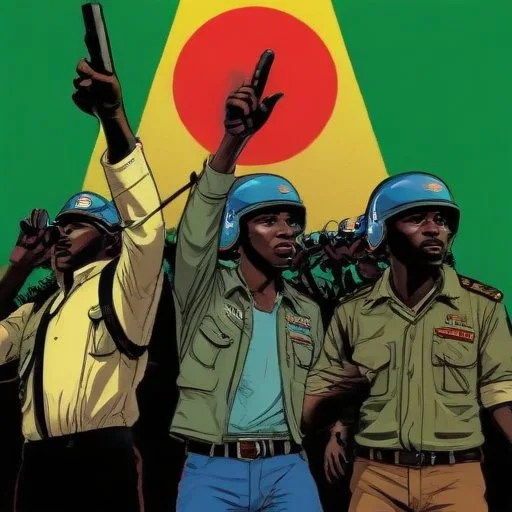
The rebel forces, driven by their desire for reform, were a diverse group of individuals united in their quest for a better future. At the helm of the rebellion stood a charismatic leader, determined to bring about change through non-violent means.
With the radio station under their control, the rebels seized the opportunity to address the nation, broadcasting their message of hope and defiance. The airwaves, once a tool of the ruling elite, were now a powerful platform for the rebels to rally support and spread their vision for a better Zaire.
The rebels' bold move resonated deeply with the Zairian people, many of whom had grown disillusioned with the government's authoritarian rule. The occupation of the radio station became a symbol of resistance, inspiring a new wave of activism and cultural expression.
One rebel, who wished to remain anonymous, recalled the moment they first heard their message broadcast on the radio: "It was like a weight had been lifted off our shoulders. We knew we had done something special, something that would change the course of history."
In the years that followed, the rebels' bravery and determination were recognized with numerous awards and honors, cementing their place in Zaire's history.
The occupation of the radio station set a precedent for non-violent resistance, inspiring countless others to take a stand against injustice and oppression. The event continues to serve as a beacon of hope, reminding generations to come of the power of grassroots activism.
The occupation of the radio station marked a significant shift in the power dynamics of Zaire's political landscape. The rebels' bold move forced the government to reevaluate their stance and respond to the growing opposition.
The event also highlighted the importance of control over communication channels in shaping public opinion and influencing political outcomes.
A new era of political mobilization had begun, with the radio station becoming a symbol of resistance against authoritarian rule.
In the aftermath of the radio station occupation, a surge of creative expression swept across Zaire. Musicians, artists, and writers began to produce works that reflected the mood of the nation, capturing the spirit of resistance and defiance.
Rebel songs, played on makeshift radios and cassette tapes, became anthems of the revolution, inspiring others to join the fight for reform.
The occupation had sparked a cultural awakening, as Zairians began to reclaim their voices and challenge the status quo through art and music.
The occupation of the radio station had a profound impact on the social fabric of Zaire, inspiring a new wave of grassroots activism and community organizing.
As news of the rebel's bold move spread, ordinary citizens began to take action, mobilizing in their neighborhoods and towns to demand change.
The event had unleashed a ripple effect of change, as Zairians from all walks of life began to demand a better future for themselves and their country.
The rebel leader, known for their unwavering commitment to non-violent resistance, had spent years building a network of allies and supporters.
A natural orator, they had honed their skills through years of community organizing, using their charisma to inspire and mobilize others.
Their leadership had been instrumental in bringing together disparate groups, forging a united front against the authoritarian government.
The occupation of the radio station had far-reaching implications for the region, as neighboring countries began to take notice of the shifting balance of power in Zaire.
The event had sent shockwaves throughout the African continent, inspiring others to challenge authoritarian rule and demand democratic reforms.
The radio station occupation had become a symbol of resistance, inspiring a new wave of pan-African solidarity and cooperation.