


The Red Army's sudden and decisive invasion of Japanese-occupied Manchuria, code-named Operation August Storm, remains one of the most striking examples of military prowess in modern history. Launched on August 8, 1945, this audacious operation would ultimately precipitate Japan's unconditional surrender, bringing a swift end to World War II.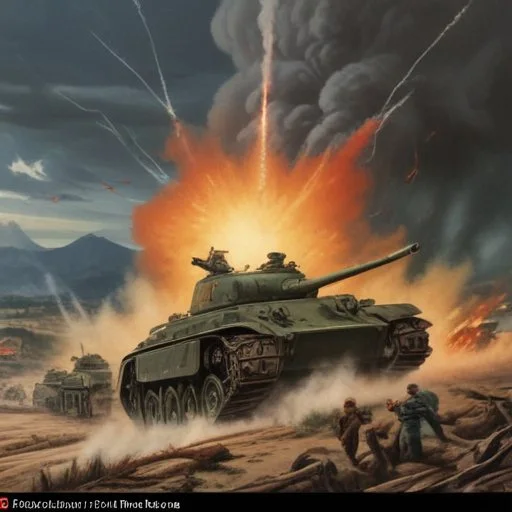
In the twilight of World War II, the Japanese Empire, having suffered a series of crushing defeats, found itself on the brink of collapse. The Soviet Union, fresh from its own titanic struggle against Nazi Germany, turned its attention to the East, seeking to capitalize on Japan's weakness. The stage was thus set for a clash of titans, as the Red Army prepared to unleash its might upon the Japanese-occupied territory of Manchuria.
| Date | Event |
|---|---|
| August 8, 1945 | Operation August Storm commences, as Soviet forces pour into Manchuria |
| August 10, 1945 | Japanese forces begin to falter, as Red Army units rapidly advance |
| August 15, 1945 | Japan surrenders unconditionally, bringing an end to World War II |
The Red Army's lightning-fast campaign in Manchuria had far-reaching consequences, both militarily and politically. Japan's defeat marked the end of World War II, while the Soviet Union's meteoric rise cemented its status as a global superpower. Additionally, the operation served as a stark demonstration of the Soviet Union's military might, casting a long shadow over the emerging Cold War landscape.
The Red Army's invasion of Manchuria had significant cultural and social repercussions, particularly in the Soviet Union. The operation was hailed as a triumph of Soviet military prowess, solidifying the Red Army's reputation as an elite fighting force. Moreover, the campaign marked a turning point in the Soviet Union's self-perception, as the nation began to see itself as a major player on the global stage.
While the Red Army's invasion of Manchuria was widely viewed as a necessary evil, some critics have argued that the operation was motivated by a desire to expand Soviet territory and influence, rather than solely to defeat Japan. This debate has continued to resonate, with many historians grappling with the complexities of Soviet motivations during this period.
One Soviet soldier, recalling the chaos of the initial invasion, wrote: "We were like a storm, sweeping across the countryside, leaving devastation in our wake. The Japanese were caught off guard, and we made the most of it." This firsthand account serves as a testament to the ferocity and speed of the Red Army's advance.
The Soviet Union's invasion of Manchuria was not only a military operation but also a culmination of years of strategic planning and diplomatic maneuvering. In the early 1940s, Soviet leader Joseph Stalin had begun secretly negotiating with the United States and Great Britain to coordinate their efforts against Japan. These talks led to the Yalta Conference in February 1945, where Stalin agreed to declare war on Japan within three months of Germany's surrender.
The Soviet Union's military buildup in the Far East began in earnest following the Yalta Conference. By the summer of 1945, the Red Army had amassed a force of over 1.5 million troops, 26,000 aircraft, and 5,000 tanks along the Manchurian border. This massive buildup was designed to ensure a swift and decisive victory over Japan's forces in Manchuria.
On August 8, 1945, the Red Army launched Operation August Storm, a coordinated assault across the Manchurian border. The Soviet army rapidly advanced, bypassing Japanese strongpoints and exploiting weaknesses in the enemy's defenses. By August 10, Japanese forces were in full retreat, and the Red Army had captured key cities and infrastructure.

General Aleksandr Vasilevsky, the mastermind behind Operation August Storm, was a decorated veteran of the Soviet war effort. Born in 1895, Vasilevsky graduated from the Academy of the General Staff in 1937 and quickly rose through the ranks, earning a reputation as a brilliant strategist and tactician.
Vasilevsky's leadership during the Soviet Union's fight against Nazi Germany had earned him numerous honors, including the title of Hero of the Soviet Union. In the spring of 1945, he was appointed Chief of the General Staff, where he oversaw the planning and execution of Operation August Storm.
Vasilevsky's military genius was instrumental in the success of the Manchurian campaign. He worked tirelessly to ensure that the Red Army's forces were adequately supplied, equipped, and coordinated, allowing them to exploit weaknesses in the Japanese defenses and achieve a swift victory.
The Red Army's invasion of Manchuria had a profound impact on Soviet culture and society. The operation was hailed as a triumph of Soviet military prowess, solidifying the Red Army's reputation as an elite fighting force.
The Manchurian campaign inspired a wave of patriotic fervor in the Soviet Union, with citizens from all walks of life celebrating the Red Army's victory. The operation was seen as a symbol of Soviet strength and prestige, demonstrating the nation's ability to project power beyond its borders.
In many ways, the Red Army's invasion of Manchuria marked the emergence of the Soviet Union as a global superpower, a status that would shape the nation's self-perception and foreign policy for decades to come.
The Red Army's invasion of Manchuria had significant economic implications for the Soviet Union and Japan. The operation enabled the Soviet Union to gain control of Manchuria's vast natural resources, including coal, iron, and oil.
The Soviet occupation of Manchuria also provided the Soviet Union with access to the region's industrial infrastructure, including factories, mines, and transportation networks. This access helped to stimulate the Soviet economy, which had suffered greatly during the war.
In contrast, the Japanese economy was severely weakened by the loss of Manchuria. The region had long been a vital source of raw materials and industrial production for Japan, and its loss dealt a devastating blow to the nation's war effort.
The Soviet Union's decision to invade Manchuria was motivated by a complex array of political and strategic considerations.
One of the primary motivations behind the operation was to prevent the Japanese from surrendering to the United States and Great Britain, which would have granted the Western powers a significant advantage in the emerging post-war order.
The Soviet Union also sought to secure its borders and protect its interests in Northeast Asia. By occupying Manchuria, the Soviet Union could ensure the security of its Far Eastern territories and prevent Japanese aggression in the region.