


Vasily Arkhipov, a Soviet submarine commander, is renowned for his heroic decision to refuse the launch of a nuclear-armed torpedo at the USS Randolph, a United States warship, during a tense standoff in the depths of the Cold War. This courageous act averted a global nuclear catastrophe, placing Arkhipov's name in the annals of history as the individual who saved humanity from the brink of destruction.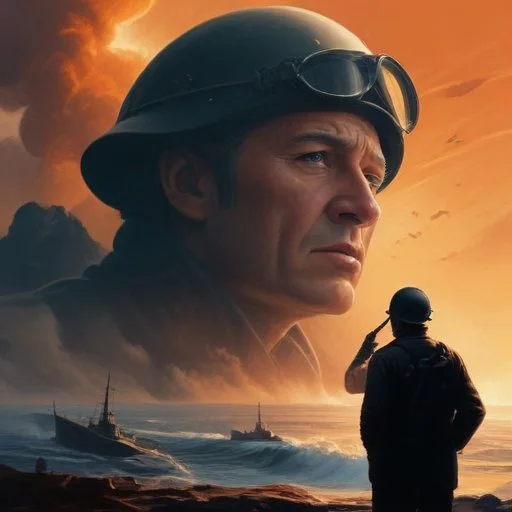
The Cold War, a period of political and ideological tensions between the United States and the Soviet Union, had been escalating for decades. The 1960s witnessed a surge in nuclear proliferation, and the Cuban Missile Crisis had brought the world to the edge of nuclear war just a few years prior. In this climate of heightened tensions, a minor incident could spark a global catastrophe.
On October 27, 1962, the Soviet submarine B-59, commanded by Valentin Savitsky, was operating in the Caribbean Sea. The vessel was depth-charged by the US Navy, which had been tracking it for several days. The attack crippled the submarine, causing it to lose contact with Moscow. Savitsky, believing a war had begun, urged Arkhipov, his second-in-command, to launch a nuclear-armed torpedo at the USS Randolph, a nearby American aircraft carrier.
Arkhipov, a veteran of World War II, understood the devastating consequences of nuclear war. Drawing from his experiences, he refused to give the order to launch the torpedo, instead opting to surface the submarine and await further instructions from Moscow. This decision would prove to be the turning point in the crisis, as it prevented a retaliatory strike from the United States and potentially escalated the conflict into a global nuclear war.
The crisis was eventually defused when the Soviet Union agreed to withdraw its missiles from Cuba, and the United States pledged not to invade the island. The incident marked a significant shift in the Cold War dynamics, as both superpowers began to take steps towards reducing nuclear arsenals and engaging in diplomatic efforts to prevent future conflicts.
The incident had a profound impact on the global psyche, as the world came to realize the devastating consequences of nuclear war. It sparked a wave of anti-war protests and movements, as people began to question the logic of nuclear deterrence and the Cold War rhetoric. The incident also led to increased diplomatic efforts, ultimately resulting in the Partial Nuclear Test Ban Treaty in 1963.
In an interview, Arkhipov later recalled, "I couldn't allow a nuclear war to break out over a technical mistake." This statement highlights the humanity and integrity of the man who stood firm in the face of catastrophic consequences.
The incident served as a catalyst for future diplomatic efforts, including the Strategic Arms Limitation Talks (SALT) and the Intermediate-Range Nuclear Forces Treaty (INF). It also led to the establishment of the Moscow-Washington Hotline, a direct communication channel between the two nations to prevent future misunderstandings.
Vasily Arkhipov's courageous decision to refuse the launch of a nuclear torpedo remains a testament to the power of humanity and responsible leadership in the face of catastrophic consequences. His actions will forever be etched in history as a beacon of hope, reminding us of the importance of diplomacy and cooperation in preventing global catastrophes.
Vasily Arkhipov was born on January 30, 1926, in Orekhovo, Russia. He joined the Soviet Navy in 1945 and quickly rose through the ranks, earning a reputation as a skilled and level-headed officer. Arkhipov's experiences during World War II, where he served on a submarine in the Baltic Sea, had a profound impact on his perspective on war and its devastating consequences.
Arkhipov's calm and composed demeanor, even in the face of catastrophic decisions, was a characteristic that earned him the respect of his peers and superiors alike. His ability to think critically and make sound judgments under pressure was instrumental in preventing a global nuclear catastrophe.

The early 1960s were marked by a heightened sense of tension between the United States and the Soviet Union. The Cuban Missile Crisis, which brought the world to the brink of nuclear war just a few years prior, had created an atmosphere of mistrust and hostility.
The Soviet Union, under the leadership of Nikita Khrushchev, was determined to expand its influence in the Western Hemisphere, while the United States, led by President John F. Kennedy, was equally determined to prevent it. This led to a series of proxy wars, espionage, and a relentless arms race, further fueling the flames of the Cold War.
The Cuban Missile Crisis, and the subsequent incident involving Vasily Arkhipov, had a profound impact on popular culture. The crisis led to a surge in anti-war protests and movements, as people began to question the logic of nuclear deterrence and the Cold War rhetoric.
The incident also inspired a range of artistic works, including films, literature, and music, that reflected the anxieties and fears of the time. The crisis marked a turning point in the cultural narrative, as people began to shift their focus from the ideologies of the Cold War to the devastating consequences of nuclear conflict.

The incident had significant political implications, as both the United States and the Soviet Union scrambled to contain the crisis and prevent further escalation. The Soviet Union's agreement to withdraw its missiles from Cuba marked a major concession, while the United States' pledge not to invade the island signaled a willingness to negotiate.
The incident also led to a re-evaluation of the Cold War dynamics, as both superpowers began to explore diplomatic avenues to prevent future conflicts. This shift in political rhetoric paved the way for future diplomatic efforts, including the Strategic Arms Limitation Talks (SALT) and the Intermediate-Range Nuclear Forces Treaty (INF).
Historians have long debated the significance of Vasily Arkhipov's decision, with some arguing that it was a pivotal moment in the Cold War, while others view it as a minor incident in a larger narrative of superpower rivalry.
Despite these differing perspectives, most historians agree that the incident marked a turning point in the Cold War, as both superpowers began to move away from brinksmanship and towards diplomacy. The incident serves as a powerful reminder of the importance of responsible leadership and the devastating consequences of nuclear conflict.