


In a move that would forever alter the balance of power in East Asia, the Republic of China reluctantly agreed to 13 of the 21 demands presented by the Empire of Japan, effectively ceding control over Manchuria and significant portions of its economy. This pivotal event, which took place in 1915, marked a turning point in the region's history, cementing Japan's status as a dominant force and foreshadowing its aggressive expansionist policies in the years to come.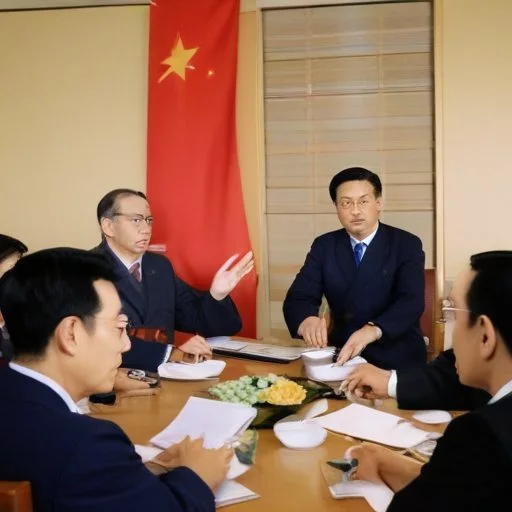
In the early 20th century, the Empire of Japan was on a quest for territorial expansion and economic dominance. As the Republic of China struggled to maintain its sovereignty, Japan saw an opportunity to assert its influence over its neighbor. The stage was set for a high-stakes power play, with China's President Yuan Shikai caught in the middle.
The 21 Demands, presented by Japan in January 1915, were a comprehensive list of concessions that would have far-reaching implications for China's economy and sovereignty. The demands included:
The Republic of China's decision to accede to 13 of the 21 Demands marked a significant shift in the balance of power in East Asia. Japan's influence extended far beyond its own borders, as it solidified its hold on Manchuria and gained significant control over China's economy. The consequences of this agreement would be felt for decades to come, as Japan's aggressive expansionist policies continued to shape the region's destiny.
The 1915 agreement between China and Japan sent shockwaves throughout the international community, as nations took note of Japan's rising power. The event marked a turning point in the region's history, as Japan's expansionist policies began to take center stage. The agreement would serve as a precursor to Japan's involvement in World War I and its subsequent role in World War II.
The Republic of China's decision to accede to 13 of the 21 Demands presented by Japan in 1915 was a pivotal moment in the region's history. The agreement marked a significant shift in the balance of power, cementing Japan's status as a dominant force in East Asia. As we reflect on this event, we are reminded of the importance of diplomacy, sovereignty, and the delicate balance of power in international relations.
In the years leading up to the 21 Demands, Japan had been quietly building its military presence in Manchuria, ostensibly to protect its economic interests in the region. However, the true extent of Japan's military buildup was unknown to the Chinese government, which was increasingly paranoid about foreign encroachment. Meanwhile, President Yuan Shikai was struggling to consolidate his power and maintain China's sovereignty in the face of growing internal unrest and external pressures.
The 21 Demands itself was a masterclass in diplomatic maneuvering, with Japan expertly playing on China's weaknesses and using a combination of carrots and sticks to extract concessions. The demands were presented in a take-it-or-leave-it fashion, leaving China little room for negotiation or maneuver.
In the aftermath of the agreement, Japan moved quickly to consolidate its gains, establishing a network of puppet governments and client states in Manchuria and Inner Mongolia. This would set the stage for further Japanese expansionism in the region, including the eventual invasion of Manchuria in 1931.

President Yuan Shikai was a complex figure, known for his cunning and political acumen. A former Qing dynasty official, Yuan had played a key role in the fall of the dynasty and the establishment of the Republic of China in 1912. However, his presidency was marked by authoritarian tendencies and a growing sense of paranoia about foreign threats.
Yuan's decision to accede to the 21 Demands was widely seen as a betrayal of China's sovereignty, and would ultimately contribute to his downfall. Despite his early successes, Yuan's later years were marked by increasing isolation and despotism, and he died in 1916 amid rumors of a Japanese-backed coup.
The 21 Demands can be seen as a precursor to Japan's later aggression in Asia, including its invasion of Manchuria in 1931 and its role in World War II. In each case, Japan used a combination of military might and diplomatic pressure to extract concessions from its weaker neighbors.
In contrast to the 21 Demands, Japan's later aggressions were marked by a growing sense of militarism and ideological fervor, driven in part by the rise of the Imperial Japanese Army and the cult of the emperor. Despite these differences, the 21 Demands set an important precedent for Japan's later expansionism.
The 21 Demands had significant economic implications for China, ceding control over key industries and resources to Japan. The agreement marked a significant shift in the balance of economic power in East Asia, with Japan emerging as the dominant player.
In particular, the agreement gave Japan control over China's railroads and mineral resources, providing a significant boost to Japan's industrial sector. This would have long-term implications for China's economic development, limiting its ability to industrialize and modernize.
The 21 Demands took place against a backdrop of growing international tensions and a shifting global balance of power. The event was closely watched by the great powers of Europe and North America, which were increasingly concerned about Japan's rising influence in Asia.
In the aftermath of the agreement, Japan's international reputation was transformed, with many seeing it as a major player in global politics. This would have significant implications for Japan's role in World War I and its subsequent involvement in international organizations such as the League of Nations.