


On July 14, 1789, the French Revolution reached a boiling point as the people of Paris stormed the infamous Bastille prison, marking a pivotal moment in French history. This event, sparked by the dismissal of French finance minister Jacques Necker, would go on to shape the course of modern democracy.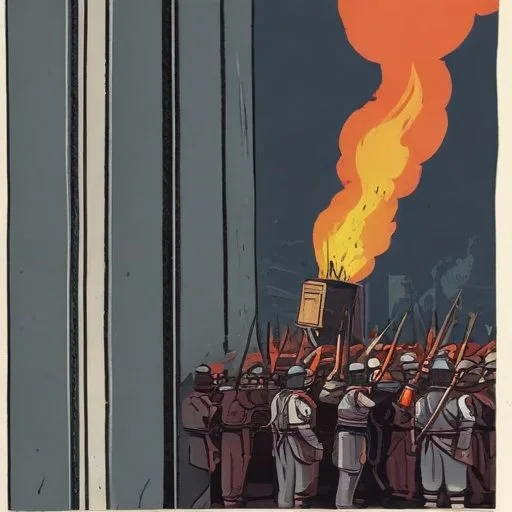
In the midst of economic crisis and royal mismanagement, Camille Desmoulins, a radical journalist and fierce critic of the monarchy, took to the streets to deliver a passionate speech. His words ignited the crowd, calling for the overthrow of the monarchy and the destruction of the Bastille, a symbol of royal tyranny.
A series of events had led to this moment of rebellion. The Estates-General, a representative assembly of the three estates of the realm, had been summoned to address the financial crisis. However, the National Assembly, formed by the Third Estate, soon discovered that the King had secretly planned to dissolve them. This betrayal, combined with the dismissal of Necker, was the final straw for the French people.
On the morning of July 14, a large crowd gathered outside the Bastille, demanding its surrender. After a fierce battle, the prison governor, Bernard de Launay, surrendered, and the crowd stormed the prison, freeing the seven prisoners held within. The event marked the beginning of the end of absolute monarchy in France and paved the way for the establishment of the First French Republic.
The storming of the Bastille had far-reaching consequences, shaping the course of modern democracy and inspiring similar movements across Europe. It marked a turning point in the French Revolution, leading to the adoption of the Declaration of the Rights of Man and of the Citizen and the establishment of the French Constitution.
" Vive la Nation! Vive le peuple! " ("Long live the Nation! Long live the people!") - Camille Desmoulins
"This is the most beautiful day of my life!" - a revolutionary, upon storming the Bastille
The storming of the Bastille had a profound impact on future events, inspiring similar movements across Europe and shaping the course of modern democracy. It marked a turning point in the French Revolution, leading to the establishment of the First French Republic and the adoption of the Declaration of the Rights of Man and of the Citizen.
The storming of the Bastille serves as a testament to the power of the human spirit, demonstrating that even in the face of oppression, ordinary people can come together to achieve extraordinary change.
The storming of the Bastille has been interpreted by historians in various ways over the years. Some have viewed it as a symbol of the triumph of liberty and democracy, while others have seen it as a violent and chaotic event that marked the beginning of a period of instability and terror.
"The storming of the Bastille was not just a random act of violence, but a deliberate and planned attack on the symbol of royal tyranny," writes historian Georges Lefebvre.

Camille Desmoulins was a radical journalist and fierce critic of the monarchy. He was born in 1760 and began his career as a lawyer, but soon turned to writing and became one of the most influential journalists of his time.
Desmoulins' impassioned speech in the Palais-Royal gardens on July 12, 1789, is often credited with sparking the storming of the Bastille.
], {CIS
The French Revolution took place in a complex and tumultuous geopolitical context. The country was facing economic crisis, and the burden of taxation had fallen heavily on the common people.
The neighboring European powers, including Prussia, Austria, and Great Britain, were watching the events in France with great interest, and were quick to take advantage of the country's weakness.

The storming of the Bastille is well-documented in historical records. The archives of the National Assembly and the Ministry of War contain numerous documents and letters that provide a firsthand account of the event.
The manuscript of Camille Desmoulins' speech in the Palais-Royal gardens is particularly significant, as it provides insight into the motivations and passions of the revolutionaries.
The documents also reveal the chaos and confusion that followed the storming of the Bastille, as the revolutionaries struggled to establish a new government and restore order to the city.