


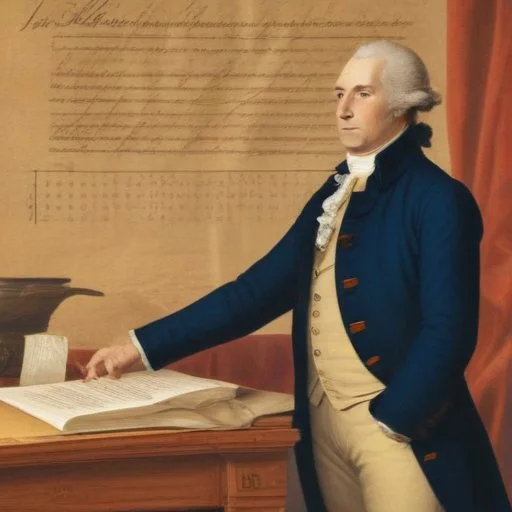
Richard Henry Lee's-resolution was not an isolated event, but rather the culmination of decades of simmering tensions between the colonies and Great Britain. The roots of the American Revolution can be traced back to the 1760s, when a series of taxes imposed by the British government sparked widespread protests and boycotts. The Boston Tea Party, which took place in 1773, was a pivotal moment in this escalating conflict, as it demonstrated the colonies' willingness to take direct action against British authority.
The Continental Congress, convened in 1774, was initially focused on finding a peaceful resolution to the crisis. However, as the British government continued to assert its dominance, the mood of the congress shifted dramatically. By the spring of 1776, it was clear that the colonies were on the brink of declaring independence.
Lee's resolution was a bold move, but it was not without precedent. In 1774, the First Continental Congress had issued a statement declaring the colonies' right to govern themselves, and several colonies had already drafted their own declarations of independence. Nevertheless, Lee's proposal was a watershed moment, as it formalized the colonies' commitment to independence and paved the way for the United States Declaration of Independence.
Richard Henry Lee was a member of the prominent Lee family of Virginia, and his upbringing and education instilled in him a strong sense of independence and self-governance. He was a skilled orator and politician, and his experiences as a delegate to the Continental Congress had prepared him well for the role he would play in shaping American history.
Lee's commitment to independence was unwavering, and he was willing to take bold action to achieve his goals. His resolution was not only a declaration of independence but also a call to action, urging the colonies to take concrete steps towards self-governance. This spirit of determination and leadership earned Lee the respect of his peers and cemented his place as a hero of the American Revolution.
Lee's legacy extends far beyond his role in the Continental Congress. He went on to serve as Governor of Virginia and was a vocal advocate for individual liberties and limited government. Today, he is remembered as a champion of American independence and a testament to the power of individual leadership.The American Revolution was not an isolated event, but rather part of a broader pattern of resistance to colonial rule that swept across the globe in the 18th and 19th centuries. From the Haitian Revolution to the Latin American wars of independence, the spirit of rebellion and self-determination inspired countless movements for freedom and democracy.
The United States Declaration of Independence, with its eloquent articulation of the principles of liberty and democracy, became a beacon of inspiration for these movements. The document's influence can be seen in the language and ideals of later independence movements, from the French Revolution to the African independence movements of the mid-20th century.
The concept of national sovereignty, first enshrined in the Declaration of Independence, has become a cornerstone of modern international relations. Today, the principles of independence, self-determination, and democracy continue to shape global politics, as nations and peoples around the world struggle to assert their rights and define their place in the world.
The United States Declaration of Independence has had a profound impact on American culture, shaping the nation's identity, values, and sense of purpose. The document's eloquent articulation of the principles of liberty and democracy has inspired generations of Americans, from abolitionists to civil rights activists, to strive for a more just and equitable society.
The Declaration's influence can be seen in American literature, art, and music, which often reflect the nation's founding ideals and values. From Thomas Paine's Common Sense to Martin Luther King Jr.'s "I Have a Dream" speech, American cultural expression has been deeply influenced by the spirit of independence and self-determination.
The Declaration of Independence has become an iconic symbol of American identity, a powerful emblem of the nation's commitment to freedom, democracy, and human rights. Today, it continues to inspire Americans to strive for a more perfect union, where all citizens can enjoy the blessings of liberty and justice.The economic impact of the American Revolution was significant, as the newly independent nation began to forge its own economic path. The Continental Congress's decision to issue paper currency, known as Continentals, helped to finance the war effort but ultimately led to inflation and economic instability.
The Treaty of Paris, signed in 1783, marked the beginning of a new era of economic development, as the United States began to establish trade agreements and commercial relationships with other nations. The young nation's economy was shaped by the principles of laissez-faire and protectionism, which influenced the development of industries such as textiles, iron, and shipping.
The American Revolution had far-reaching consequences for the global economy, as it marked the emergence of a new economic power and helped to reshape the international trading system. Today, the United States is a global economic leader, and its economic policies continue to have a profound impact on the world economy.