


The Newark riots of 1967 are infamous for being one of the most devastating and chaotic events in American civil rights history, leaving 26 people dead, hundreds injured, and a city in ruins. This six-day period of unrest was a culmination of simmering tensions between the Newark Police Department and the African American community, sparked by a routine traffic stop that escalated into brutality.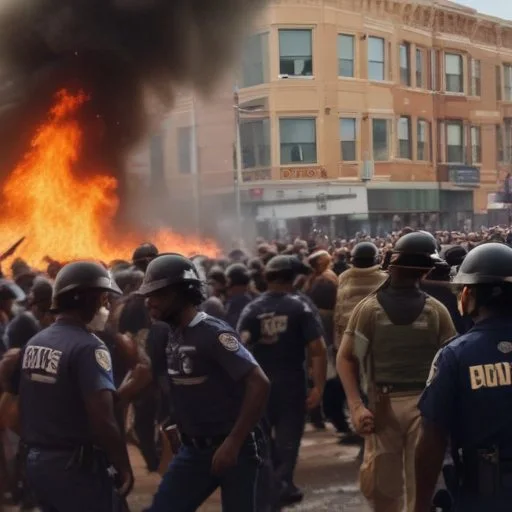
Newark, New Jersey, was a city plagued by poverty, unemployment, and discrimination in the 1960s. African Americans faced rampant racism, police brutality, and discrimination in housing, education, and employment. The city's infrastructure was crumbling, and the residents were fed up with the lack of opportunities and resources.
On July 12, 1967, John Weeden, a black taxi driver, was stopped by two white police officers, John DeSimone and Vito Pontrelli, for a traffic violation. The situation quickly escalated into a physical altercation, with Weeden being beaten and arrested. News of the brutality spread like wildfire, sparking outrage and anger within the community.
The Newark riots led to a national conversation about police brutality, racism, and civil rights. The event sparked widespread outrage, with many calling for reform and accountability. The riots also led to the establishment of the National Advisory Commission on Civil Disorders, which concluded that the underlying cause of the riots was racism and discrimination.
The Newark riots had a profound impact on American culture, inspiring a new wave of activism and social change. The event influenced musicians, artists, and writers, who used their platforms to address issues of racism and inequality. The riots also sparked a national dialogue about poverty, education, and employment opportunities for African Americans.
The Newark riots were marked by controversy and debate, with many questioning the role of the police and the response of the National Guard. The event was also marred by allegations of police brutality, with many accusing the authorities of using excessive force against protesters.
One eyewitness, Amiri Baraka, a renowned poet and playwright, recalled the terror and chaos of the riots, saying, "I saw people being beaten, I saw people being shot... It was like a war zone."
The Newark riots served as a catalyst for the civil rights movement, inspiring protests and demonstrations across the country. The event also led to reforms in policing and community relations, with many cities implementing new policies to address issues of racism and discrimination.
Did you know that the Newark riots led to the creation of the New Jersey Minorities Scholarship Program, providing scholarships to African American students?
Did you know that the event inspired a new wave of African American filmmakers, including Spike Lee, who referenced the riots in his film "Do the Right Thing"?
The Newark riots of 1967 were a pivotal moment in American history, marking a turning point in the struggle for civil rights and social justice. The event serves as a reminder of the importance of addressing issues of racism, discrimination, and inequality, and the need for continued activism and advocacy for a more just and equitable society.
John Weeden, a 35-year-old African American taxi driver, was an ordinary man who found himself at the center of a maelstrom on that fateful day in July 1967. A routine traffic stop escalated into a brutal beating, which in turn sparked a chain of events that would change the course of American history. Weeden's courage in the face of police brutality inspired a generation of activists to demand justice and equality.
Little is known about Weeden's life before the incident, but his actions on that day cemented his place in the annals of civil rights history. His courage in speaking out against police brutality helped galvanize the African American community and brought national attention to the issue.
The Newark riots had a profound impact on American culture, inspiring a new wave of musicians, artists, and writers to explore themes of social justice and inequality. Jazz musicians like Amiri Baraka and John Coltrane drew on the riots as inspiration for their music, while visual artists like Gordon Parks and Romare Bearden created works that reflected the turmoil and anger of the times.
The riots also influenced a generation of writers, including Toni Morrison and James Baldwin, who drew on the event in their works. The riots' impact on American culture was felt for decades to come, as artists continued to grapple with the themes of racism, inequality, and social justice.
Newark, New Jersey, had a long history of racial tensions and unrest, dating back to the 1930s and 1940s. African Americans faced discrimination in housing, education, and employment, which created deep-seated resentment and frustration. The city's infrastructure was also plagued by neglect and decay, further exacerbating the sense of disillusionment among its citizens.
The 1960s saw an increase in tensions between the African American community and the Newark Police Department, with allegations of police brutality and racism becoming more frequent. The fatal shooting of a young African American man by a white police officer in 1965 sparked protests and demonstrations, which set the stage for the events of July 1967.
The Newark riots marked a turning point in American politics, as public opinion shifted in favor of the civil rights movement. The brutality and violence caught on camera and broadcast on national television shocked the nation, and many Americans began to question the status quo.
The riots led to a surge in support for civil rights legislation, including the Fair Housing Act of 1968 and the Civil Rights Act of 1968. The event also galvanized a new generation of political leaders, including African American politicians like Kenneth Gibson, who would go on to become mayor of Newark in 1970.
The Newark riots exacted a heavy economic toll on the city, with damages estimated to be in the millions. Many businesses were destroyed or looted, leaving owners without livelihoods. The city's infrastructure was also severely damaged, with entire city blocks left in ruins.
The riots also had a long-term impact on the city's economy, as many businesses never recovered and investors became wary of investing in the city. It would take years of rebuilding and revitalization efforts to restore Newark's economy to its former glory.