


The RMS Carpathia, the ship that earned a place in history by rescuing 705 survivors from the ill-fated Titanic in 1912, met its own tragic fate just six years later. On July 17, 1918, while en route from Liverpool to Boston, the Carpathia was torpedoed by the German SM U55 submarine off the southern coast of Ireland, resulting in the loss of five lives.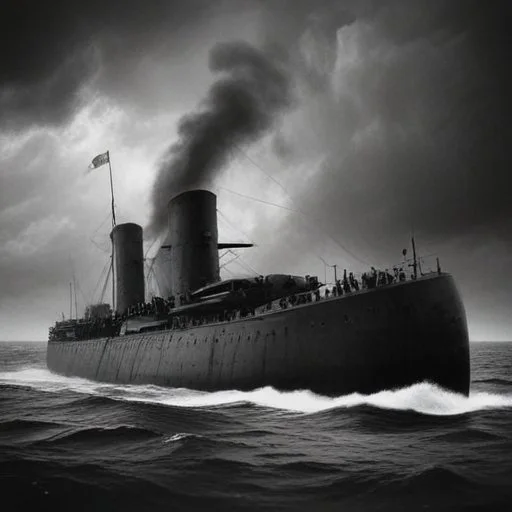
Launched in 1903, the RMS Carpathia was a passenger ship built by the Cunard Line, designed to cater to the growing demand for transatlantic travel. With a capacity for over 1,700 passengers, the Carpathia was considered one of the most luxurious vessels of its time, featuring amenities such as a swimming pool, gym, and even a dog kennel.
On the ill-fated night of April 14, 1912, the Carpathia received distress calls from the Titanic, which had struck an iceberg and was rapidly taking on water. Captain Arthur Rostron and his crew altered course, racing against time to reach the stricken vessel. In the early hours of April 15, the Carpathia arrived on the scene, rescuing survivors from the Titanic's lifeboats and providing them with food, clothing, and medical care.
As World War I ravaged Europe, the Carpathia was converted into a troop ship, ferrying soldiers and supplies between Liverpool and Boston. On its final voyage, the Carpathia was traveling in a convoy, accompanied by several other vessels, when it was spotted by the German submarine SM U55.
At 11:15 am on July 17, 1918, the SM U55 fired two torpedoes, which struck the Carpathia on its port side. Despite efforts to save the ship, the Carpathia began to list severely, eventually slipping beneath the waves just over two hours later. Of the 217 people on board, 212 were rescued, but five lives were lost in the disaster.
The sinking of the Carpathia was met with shock and outrage, as the world mourned the loss of a hero ship that had saved so many lives just six years earlier. The incident served as a stark reminder of the brutal realities of war and the sacrifices made by those who served. Today, the Carpathia's legacy serves as a testament to the power of human bravery and compassion in the face of tragedy.
The RMS Carpathia's heroic rescue of the Titanic survivors was not the only instance of its bravery. In 1915, the Carpathia played a crucial role in the evacuation of Serbian civilians and soldiers from Albania, earning it a reputation as a ship of mercy.
During World War I, the Carpathia was involved in several daring rescue missions, including the evacuation of wounded soldiers from the Battle of Gallipoli. Its bravery and selflessness earned it a special place in the hearts of those who served on board.
Despite its tragic fate, the Carpathia's legacy as a hero ship continues to inspire generations. Its story serves as a testament to the power of human compassion and bravery in the face of adversity.
Captain Arthur Rostron: A Leader of Unwavering Courage
Captain Arthur Rostron was more than just the commander of the Carpathia. He was a leader who embodied the values of courage, compassion, and duty. Rostron's unwavering commitment to saving the lives of the Titanic survivors earned him the highest accolades, including the Congressional Medal of Honor.
Roston's leadership during the rescue mission was exemplary. He navigated the treacherous waters of the North Atlantic, braving icebergs and freezing temperatures to reach the stricken vessel. His calm and composed demeanor inspired confidence in his crew, who worked tirelessly to rescue as many survivors as possible.
The sinking of the Carpathia had significant economic implications for the Cunard Line and the British economy as a whole. The loss of the ship and its cargo resulted in substantial financial losses, which were exacerbated by the ongoing war effort.
The Carpathia's conversion into a troop ship had made it an important asset for the British war effort. Its loss meant that alternative arrangements had to be made to transport soldiers and supplies, which put additional pressure on the already strained resources of the British military.
In the aftermath of the sinking, the Cunard Line was forced to reassess its operations and implement new safety measures to protect its remaining vessels. This led to increased investment in safety equipment and protocols, which had long-term benefits for the shipping industry as a whole.
The sinking of the Carpathia had a profound impact on the cultural psyche of the British public. The loss of a hero ship that had saved so many lives just six years earlier was a stark reminder of the brutal realities of war.
The incident sparked widespread outrage and mourning, with many Britons seeing the sinking of the Carpathia as a senseless act of aggression by the German navy. The tragedy also fueled anti-German sentiment, which contributed to the growing war fervor of the time.
In the years that followed, the Carpathia's legacy was cemented in popular culture, with numerous books, films, and songs paying tribute to its bravery and sacrifice.
The sinking of the Carpathia occurred against the backdrop of a global conflict that had already claimed millions of lives. The war had created an atmosphere of fear and mistrust, in which ships like the Carpathia were seen as vulnerable targets.
The German U-boat campaign, which had been launched in 1917, had already claimed numerous victims, including civilian passenger ships. The sinking of the Carpathia was part of a larger strategy by the German navy to disrupt Allied supply lines and weaken their ability to wage war.
The incident highlighted the importance of convoy systems and naval escorts in protecting merchant vessels from attack. In response to the sinking, the British Navy stepped up its efforts to secure the seas and protect its vital supply lines.