


On a fateful day in 1935, British engineer Robert Watson-Watt revolutionized air defense by successfully demonstrating the concept of radar near Daventry, England. This groundbreaking event marked a significant milestone in the development of radar technology in the United Kingdom, paving the way for a seismic shift in modern warfare.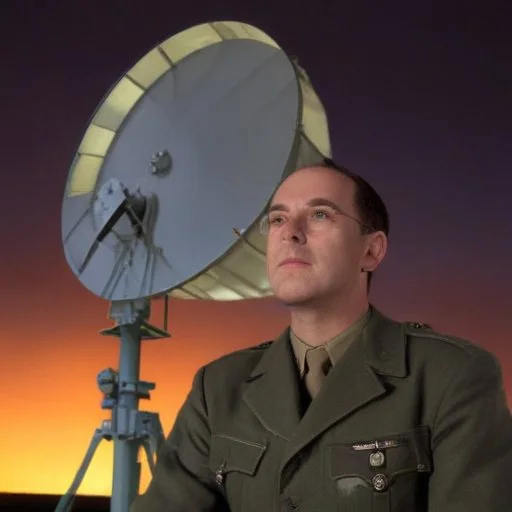
Radar, an acronym for RAdio Detection And Ranging, is a system that uses radio waves to detect and locate objects. Watson-Watt's innovative idea was to harness the power of radio waves to track aircraft, providing an early warning system against enemy aircraft. This pioneering concept was met with skepticism at first, but Watson-Watt's determination and perseverance paid off.
In the early 1930s, Watson-Watt began researching the concept of radar, driven by the need for an effective air defense system. After months of experimentation, he finally secured funding from the British government to conduct a demonstration of his technology.
The success of Watson-Watt's demonstration led to a rapid development of radar technology in the United Kingdom. The implications were far-reaching, and radar soon became a crucial component of air defense systems worldwide.
Watson-Watt's pioneering work on radar technology had a profound impact on British culture and society. The development of radar technology boosted national morale, providing a sense of security and pride in British innovation.
Watson-Watt's achievement also inspired a new generation of scientists and engineers, cementing Britain's reputation as a hub for innovation and technological advancement.
The development of radar technology played a pivotal role in shaping the course of World War II. Radar systems provided critical early warning systems, allowing allied forces to respond promptly to enemy attacks.
The success of radar technology also paved the way for the development of modern air traffic control systems, ensuring the safety of commercial air travel.
Watson-Watt's own words best describe the significance of his achievement: "The demonstration at Daventry was a turning point in the history of air defense. It marked the beginning of a new era in which science and technology would play a dominant role."
Watson-Watt's pioneering work on radar technology earned him numerous awards and honors, including a knighthood in 1942.
Robert Watson-Watt, the son of a Scottish family, was born on April 13, 1892, in Brechin, Angus. He developed a fascination with science and technology at an early age, which led him to pursue a degree in electrical engineering from the University of Dundee. Watson-Watt's early career was marked by a series of innovative projects, including the development of a direction-finding system for locating lightning storms.
Watson-Watt's determination and perseverance were instrumental in overcoming the skepticism surrounding his radar technology. Despite initial doubts from officials, he remained convinced of the potential of his invention and worked tirelessly to refine it. This unwavering dedication ultimately led to the successful demonstration of radar technology in 1935.

The development of radar technology had far-reaching cultural implications, particularly in Britain. The success of Watson-Watt's invention instilled a sense of national pride, demonstrating the country's capabilities in innovation and technological advancement. Radar technology became a symbol of British ingenuity, inspiring a new generation of scientists and engineers.
The radar system also played a significant role in shaping British popular culture. The technology's association with air defense and national security made it a ubiquitous presence in wartime media, featuring prominently in films, literature, and propaganda.
The impact of radar technology on social dynamics was profound, particularly in the context of World War II. The early warning system provided by radar enabled the British government to evacuate civilians from targeted areas, significantly reducing casualties and minimizing panic.
Radar technology also facilitated the emergence of a new class of professionals, including radar operators, technicians, and engineers. These individuals played a crucial role in maintaining and operating the radar system, contributing to the war effort and shaping the course of modern warfare.

The development of radar technology had a profound impact on the scientific community, driving innovation and advancement in fields such as physics, electrical engineering, and materials science. Watson-Watt's work on radar inspired new areas of research, including the development of microwave technology and satellite communications.
Radar technology also spawned a range of spin-off applications, including air traffic control systems, weather radar, and medical imaging technologies. These innovations have continued to shape the modern scientific landscape, driving progress and improvement in various fields.
The geopolitical context of the 1930s played a significant role in the development of radar technology. The rise of Nazi Germany and the threat of aerial warfare created an urgent need for innovative air defense systems. Watson-Watt's radar technology filled this gap, providing a critical advantage for British air defenses.
The demonstration of radar technology in 1935 also sent a powerful message to potential aggressors, demonstrating Britain's commitment to innovative defense strategies and its willingness to invest in cutting-edge technology.