Israel and PLO sign historic Oslo Accords
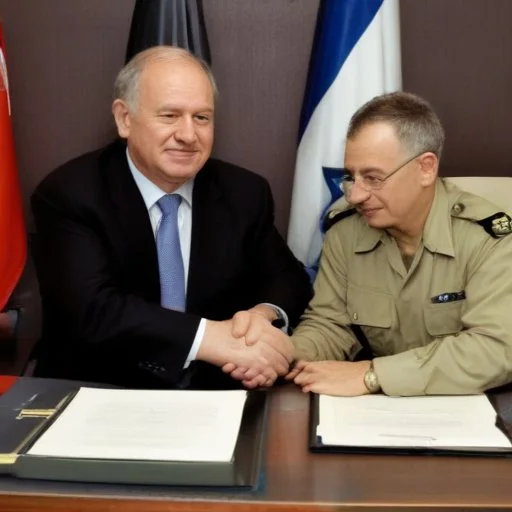
In a bold move towards peace, Israeli Prime Minister Yitzhak Rabin and PLO Chairman Yasser Arafat put aside decades of conflict, shaking hands on the Oslo Accords. These secret negotiations in Norway paved the way for a Palestinian self-governing authority, Palestinian police force, and eventual Israeli withdrawal from Gaza and Jericho. The Accords sparked a new era of cooperation, raising hopes for a lasting Middle East peace.
The Unlikely Handshake: How the Oslo Accords Redefined the Middle East Peace Process
The Oslo Accords, a landmark agreement signed on September 13, 1993, marked a significant turning point in the history of the Middle East peace process. This historic accord, brokered by Norway, saw Israeli Prime Minister
Yitzhak Rabin and PLO Chairman Yasser Arafat put aside decades of conflict, setting the stage for a new era of cooperation between Israel and the Palestine Liberation Organization (PLO).
A Glimmer of Hope in the Shadows of Conflict
The Oslo Accords were the culmination of secret negotiations between Israel and the PLO, facilitated by Norwegian diplomats in Oslo. This behind-the-scenes diplomacy paved the way for a public ceremony in Washington, D.C. the following month, where the accord was formally signed. The agreement marked a significant shift in the region's political landscape, as both parties acknowledged each other's legitimate existence for the first time in decades.
Key Provisions: A Pathway to Palestinian Self-Governance
The Oslo Accords consisted of two main components: the Declaration of Principles (DOP) and the Gaza-Jericho Agreement. The DOP outlined the framework for Palestinian self-governance, including the establishment of a Palestinian police force and the eventual Israeli withdrawal from Gaza and Jericho. The Gaza-Jericho Agreement, signed in May 1994, detailed the specific terms of this withdrawal, marking the first time Israel had ceded control of territory to the Palestinian Authority.
A New Era of Cooperation: Timeline of Events
- 1992: Secret negotiations between Israel and the PLO begin in Norway
- September 13, 1993: The Oslo Accords are signed in Washington, D.C.
- May 1994: The Gaza-Jericho Agreement is signed, outlining Israeli withdrawal from Gaza and Jericho
- 1995: The Palestinian Authority takes control of Gaza and Jericho
- 1996: Israeli-Palestinian peace talks resume, focusing on permanent status issues
Major Outcomes and Impacts
The Oslo Accords had far-reaching consequences for the Middle East peace process:
- Recognition of the PLO as the legitimate representative of the Palestinian people
- Establishment of the Palestinian Authority, marking a significant step towards Palestinian self-governance
- Reduction in violence and a decrease in terrorist attacks
- A new era of cooperation and diplomatic engagement between Israel and the PLO
Palestinian Police Force: A Symbol of Autonomy
One of the most significant outcomes of the Oslo Accords was the establishment of a Palestinian police force. This symbol of autonomy marked a significant shift in the balance of power, as the Palestinian Authority began to take control of its own security and governance.
Controversies and Public Perception
Despite the historic significance of the Oslo Accords, the agreement was not without controversy. Critics argued that the accords did not adequately address key issues, such as settlements, borders, and the right of return. The agreement was also met with opposition from extremist groups on both sides, who saw it as a betrayal of their respective causes.
Quotes and Memorable Sayings
- "We who have come from a land of strife and bloodshed dedicate ourselves to the consecration of a new era of peace." - Yasser Arafat, PLO Chairman
- "Let us today raise a wall against violence, against hatred, against war." - Yitzhak Rabin, Israeli Prime Minister
A Lasting Legacy: Impact on Future Events
The Oslo Accords set the stage for future peace negotiations, including the 1998 Wye River Memorandum and the 2000 Camp David Summit. While the accords did not single-handedly bring about a lasting peace, they marked a crucial step towards cooperation and recognition between Israel and the PLO.
The Oslo Accords will forever be remembered as a symbol of hope and cooperation in a region long plagued by conflict. As we reflect on this historic agreement, we are reminded that even in the darkest of times, there is always the possibility for change, for forgiveness, and for peace.
In-Depth Political Study
The Oslo Accords were a significant turning point in the Middle East peace process, but they were also a product of the complex political landscape of the time. The Gulf War had just ended, and the Soviet Union had recently dissolved, creating a power vacuum that the United States and other Western nations sought to fill.
In this context, the Israeli government, led by Yitzhak Rabin, saw an opportunity to make a bold move towards peace. Rabin, a seasoned politician and military leader, had long believed that Israel's security could be better ensured through diplomacy and cooperation rather than military might alone.
The PLO, led by Yasser Arafat, was also under pressure to make concessions. The organization had been weakened by the Gulf War and was struggling to maintain its influence in the region.
A delicate balance of power
The Oslo Accords were the result of a delicate balance of power and interests. The United States, Norway, and other European nations provided critical support to the negotiations, while Israel and the PLO made difficult concessions to reach a deal.

Character Examination
Yasser Arafat, the charismatic leader of the Palestine Liberation Organization (PLO), was a key figure in the Oslo Accords. Born in Jerusalem in 1929, Arafat grew up in a tumultuous region, experiencing firsthand the displacement and marginalization of the Palestinian people.
Arafat's early life was marked by activism and militancy, as he became involved in the Palestinian nationalist movement at a young age. He co-founded Fatah, a Palestinian political party, and later became the chairman of the PLO, a position he held until his death in 2004.
A pragmatic leader
Arafat was a pragmatic leader who recognized the need for compromise and diplomacy in achieving Palestinian goals. Despite his tough exterior, he was willing to make difficult concessions, such as recognizing Israel's right to exist, in order to advance the Palestinian cause.
Thorough Historical Narrative
The Oslo Accords were not the first attempt at Israeli-Palestinian peace negotiations, but they were a significant departure from previous efforts. The 1988 Algiers Declaration, which recognized the PLO as the sole legitimate representative of the Palestinian people, laid the groundwork for future negotiations.
In the years leading up to the Oslo Accords, secret talks between Israel and the PLO took place in locations ranging from Tunis to Oslo. These talks, facilitated by Norwegian diplomats, built trust and laid the groundwork for the eventual agreement.
A long and winding road
The road to the Oslo Accords was long and winding, marked by false starts, setbacks, and periods of intense violence. Despite these challenges, the negotiators persevered, driven by a shared commitment to finding a peaceful resolution to the conflict.

Rich Economic Analysis
The Oslo Accords had significant economic implications for both Israel and the Palestinian territories. The agreement paved the way for increased trade and investment between the two entities, as well as with the international community.
The establishment of the Palestinian Authority and the transfer of authority over Gaza and Jericho led to a significant increase in economic activity in these areas. International organizations, such as the World Bank, provided critical support to the Palestinian economy during this period.
A new era of economic cooperation
The Oslo Accords marked a new era of economic cooperation between Israel and the Palestinian territories. While challenges remained, the agreement created opportunities for growth, development, and increased prosperity for both parties.
Full Cultural Impact Analysis
The Oslo Accords had a profound impact on Palestinian culture and identity. The agreement recognized the PLO as the legitimate representative of the Palestinian people, providing a sense of validation and recognition to a long-marginalized population.
The establishment of the Palestinian Authority and the transfer of authority over Gaza and Jericho led to a resurgence of Palestinian cultural expression, including literature, art, and music.
A symbol of hope
The Oslo Accords became a symbol of hope and resistance for the Palestinian people, representing a new era of self-determination and autonomy.


