


Russian mystic and advisor to the Tsar, Grigori Yefimovich Rasputin, met a gruesome end at the hands of a loyalist group led by Prince Felix Yusupov. His lifeless, partially trussed body was discovered three days later in a Petrograd river, marking the culmination of a sinister plot that would shake the foundations of the Russian Empire.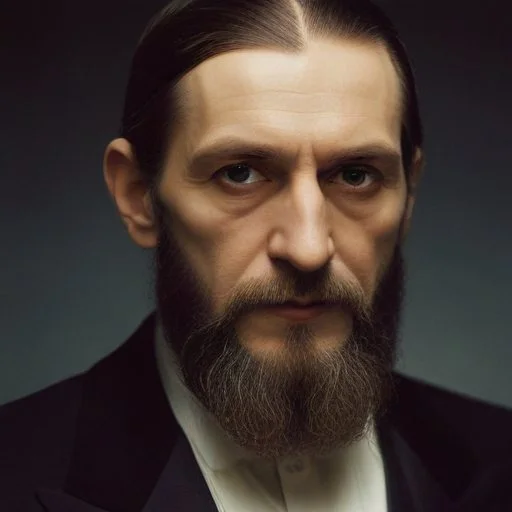
Rasputin's rise to prominence began in the early 1900s, when he gained the favor of Tsar Nicholas II and his wife Alexandra. The mystic's uncanny ability to heal the couple's hemophiliac son, Alexei, earned him a permanent place in the royal inner circle. However, his influence soon extended beyond the realm of medicine, and Rasputin began to exert considerable control over the Romanovs' decision-making process.
Prince Felix Yusupov, a respected member of the Romanov nobility, grew increasingly concerned about Rasputin's sway over the Tsar. Fearing that the mystic's influence would ultimately lead to the downfall of the monarchy, Yusupov conspired with a group of like-minded loyalists to eliminate the perceived threat.
On the fateful night of December 16, 1916, Rasputin was lured to Yusupov's palace under the guise of a social gathering. Instead, he was met with a deadly concoction of cyanide-laced pastries and Madeira wine. When the poison failed to take effect, the plotters resorted to more brutal measures, beating Rasputin mercilessly before binding him with ropes and rolling him into a snow-covered blanket.
The badly injured Rasputin was then tossed into the icy waters of the Neva River, where he met a slow and agonizing death. The conspirators believed they had successfully erased the mystic from the Romanov equation, but their actions would ultimately have far-reaching consequences for the empire.
Rasputin's murder sparked a chain reaction of events that would contribute to the downfall of the Romanov dynasty. The Bolsheviks, who had been gaining momentum in the years leading up to the murder, seized upon the scandal as a rallying cry for their revolution. In the end, the Romanovs would fall, and the Russian Empire would be reborn as the Soviet Union.
Rasputin's enigmatic legacy continues to fascinate historians and laypeople alike, serving as a stark reminder of the treacherous undercurrents that flow beneath the surface of power and politics.
As I stood on the banks of the Neva River, gazing out at the frozen waters that had claimed Rasputin's life, I couldn't help but wonder about the complexities of the human heart. Was Rasputin a charlatan, or a genuine mystic driven by a desire to heal and guide? Whatever the truth may be, his tragic demise serves as a haunting testament to the destructive power of fear, ambition, and deceit.
Rasputin was born in 1869 in Siberia, Russia, to a peasant family. He grew up in poverty and had little formal education. Despite this, he developed a strong interest in spirituality and became a starets, a wandering holy man, in his early 20s. His charisma and supposed supernatural healing powers soon earned him a reputation in Russia's rural areas. In 1903, he arrived in St. Petersburg, where he quickly gained the attention of the Romanov family and eventually became a trusted adviser to Tsar Nicholas II and his wife Alexandra.

Russia in the early 20th century was a country in turmoil. The Russo-Japanese War of 1904-1905 had weakened the Russian economy, and the country was plagued by poverty, inequality, and social unrest. The Romanov dynasty, which had ruled Russia for over 300 years, was facing growing opposition from liberal and socialist movements. The Russian Revolution of 1905, which led to the establishment of the Duma (Russia's parliament), had also created a sense of uncertainty and instability in the government. This fragile political climate created an environment in which Rasputin's influence could thrive.
The Russian Orthodox Church, which had traditionally played a significant role in Russian politics, was also experiencing internal conflicts during this period. The rise of mysticism and spiritualism, which Rasputin embodied, was seen as a threat to the traditional Orthodox Church's authority. This led to further divisions within the Church and contributed to the growing distrust of Rasputin among the Russian nobility.
Rasputin's influence extended far beyond the Romanov palace. He became a cultural icon, symbolizing the mysticism and spirituality that were popular in early 20th-century Russia. His rise to prominence coincided with a growing interest in Theosophy, a spiritual movement that emphasized the unity of all religions. Rasputin's supposed supernatural powers and his ability to heal the Tsar's son, Alexei, captivated the Russian public's imagination.
Many Russian artists, writers, and intellectuals were drawn to Rasputin's charismatic personality and his unconventional views on spirituality. The writer and philosopher, Vladimir Solovyov, was one of many who were fascinated by Rasputin's mysticism. Solovyov saw Rasputin as a symbol of the Russian people's desire for spiritual renewal and regeneration.

Rasputin's murder had significant political consequences for Russia. The event weakened the Romanov dynasty's already fragile grip on power and created a power vacuum that the Bolsheviks would eventually fill. The provisional government, established after Nicholas II's abdication, was unable to stabilize the country, and the February Revolution of 1917 marked the beginning of the end for the Romanov dynasty.
The murder also marked a turning point in the relationship between the Russian people and their monarch. The Romanovs' inability to address the country's widespread poverty, inequality, and social unrest had already eroded their popularity. Rasputin's murder, seen by many as a brutal attack on the monarchy, further weakened the bond between the people and the throne.
Revisionist historians have reevaluated Rasputin's role in Russian history, arguing that his influence on the Romanovs has been exaggerated. They contend that Rasputin was merely a symptom of the Romanov dynasty's decline, rather than a primary cause. These historians point out that Rasputin's supposed control over the Tsar was limited, and that he was often at odds with the Tsarina and other prominent courtiers.
Traditional historians, on the other hand, maintain that Rasputin played a significant role in the downfall of the Romanovs. They argue that his influence over the Tsar and Tsarina was substantial and that his antics alienated the Russian nobility, ultimately contributing to the dynasty's collapse. This historiographical debate highlights the complexities of Rasputin's role in Russian history and underscores the need for continued research and analysis.