


Imagine a time when two powerful nations, locked in a brutal conflict, put down their arms and chose diplomacy over destruction. The Russo-Japanese War, which raged from 1904 to 1905, was a devastating conflict that seemed to have no end in sight. That was until the Treaty of Portsmouth, mediated by U.S. President Theodore Roosevelt, brought the war to a close on September 5, 1905, in Portsmouth, New Hampshire.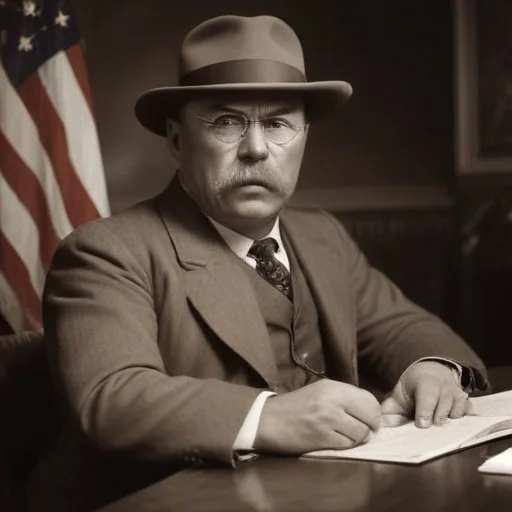
The Russo-Japanese War was a clash of empires, with Russia seeking to expand its influence in Manchuria and Korea, while Japan fought to protect its own interests in the region. The war was marked by brutal battles, including the Siege of Port Arthur and the Battle of Tsushima, which left thousands dead and wounded on both sides.
Enter Theodore Roosevelt, the 26th President of the United States, who saw an opportunity to broker a peace treaty between the two warring nations. Through a series of secret negotiations, Roosevelt brought the two sides to the negotiating table, leveraging his reputation as a fair and impartial leader.
After months of tense negotiations, the Treaty of Portsmouth was signed on September 5, 1905, at the Portsmouth Naval Shipyard in New Hampshire. The treaty marked a major turning point in international relations, as it was the first time a major conflict had been resolved through mediation rather than victory or defeat.
For his role in brokering the Treaty of Portsmouth, Theodore Roosevelt was awarded the Nobel Peace Prize in 1906. This recognition cemented his reputation as a champion of peace and diplomacy, and set a precedent for future leaders to follow.
The Treaty of Portsmouth paved the way for future international mediation efforts, including the Paris Peace Conference of 1919 and the Camp David Accords of 1978. It demonstrated that even in the face of seemingly intractable conflicts, diplomacy and negotiation could lead to a lasting peace.
Roosevelt's mediation efforts were not without controversy. He famously coined the phrase "speak softly and carry a big stick" to describe his approach to diplomacy, which combined gentle persuasion with the threat of military force. This approach earned him both praise and criticism, but ultimately led to a successful outcome.
The Treaty of Portsmouth marked a significant shift in international relations, as nations began to recognize the value of diplomacy and mediation in resolving conflicts. It also highlighted the importance of strong leadership and creative thinking in achieving a lasting peace.
In the end, the Treaty of Portsmouth was more than just a peace treaty – it was a beacon of hope for a world torn apart by war and conflict. As we look back on this momentous event, we are reminded of the power of diplomacy and the importance of working together to achieve a more peaceful and prosperous world.
The Russo-Japanese War was not the only conflict brewing in the early 20th century. In fact, the war was part of a larger web of imperial rivalries and alliances that threatened to engulf the entire world in conflict. The Treaty of Portsmouth, in this sense, marked a significant turning point in the history of international relations, as it demonstrated that even the most powerful nations could put aside their differences and work towards peace.
One of the key factors that contributed to the outbreak of the Russo-Japanese War was the scramble for influence in Manchuria and Korea. Both Russia and Japan saw these regions as crucial to their economic and strategic interests, and were willing to go to war to protect them. The Treaty of Portsmouth, by establishing a new balance of power in the region, helped to calm these rivalries and create a more stable international environment.

Theodore Roosevelt's leadership style was marked by a unique blend of diplomacy and assertiveness. His famous phrase, "speak softly and carry a big stick," encapsulated his approach to international relations, which emphasized the importance of gentle persuasion backed up by the threat of military force.
Roosevelt's diplomacy was also marked by a deep understanding of human psychology. He knew that the key to successful negotiation was to appeal to the interests and desires of the other party, rather than simply trying to impose one's own will. This approach helped him to build trust with the Japanese and Russian leaders, and ultimately to bring the war to a successful conclusion.
The Treaty of Portsmouth has often been compared to other major diplomatic agreements, such as the Treaty of Versailles and the Camp David Accords. While each of these treaties had its own unique characteristics, they all shared a common goal: to bring peace to a region torn apart by conflict.
One of the key similarities between these treaties is the role of strong leadership in bringing the parties to the negotiating table. In each case, a charismatic leader was able to bridge the gap between rival nations and forge a lasting peace. The Treaty of Portsmouth, in this sense, is part of a broader tradition of diplomatic agreements that have shaped the course of world history.

The Treaty of Portsmouth itself is a fascinating historical artifact, with its own unique history and significance. The treaty was signed on a specially designed document, featuring the coats of arms of the Russian and Japanese empires.
One of the most interesting aspects of the treaty is the way it reflects the diplomatic style of the time. The language is formal and ornate, with elaborate phrases and clauses that reflect the complex web of alliances and rivalries that characterized international relations in the early 20th century.
The Russo-Japanese War had a profound impact on the environment of Manchuria and Korea, with widespread destruction of forests, wildlife habitats, and agricultural land. The Treaty of Portsmouth, by bringing the war to a close, helped to mitigate some of these environmental impacts.
One of the key provisions of the treaty was the agreement to restore Chinese sovereignty over Manchuria, which had been occupied by Japanese forces during the war. This provision helped to reduce the environmental impact of the war, as it allowed the Chinese government to reassert control over the region and implement more sustainable land use practices.