


On July 1, 1999, Queen Elizabeth II officially opened the Scottish Parliament, marking a momentous occasion in Scotland's journey towards autonomy. This historic event signified the transfer of legislative powers from the old Scottish Office in London to the new devolved Scottish Executive in Edinburgh, giving Scotland greater control over its own affairs.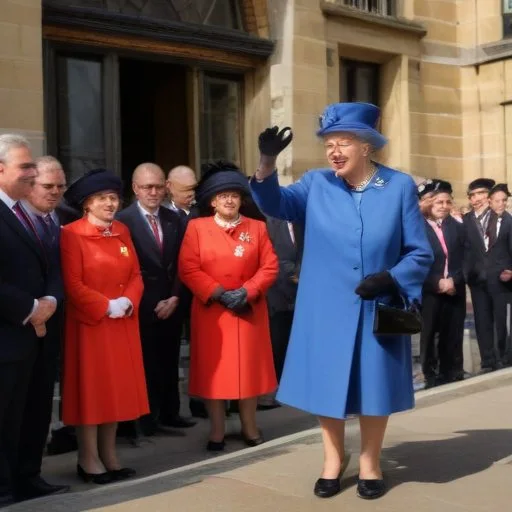
For nearly three centuries, Scotland had been governed from London, with decisions on key matters such as health, education, and justice being made by the UK Parliament. However, the Scottish people had long been advocating for greater autonomy and self-governance. The movement for devolution, led by figures such as Donald Dewar and Jim Sillars, had gained momentum in the 1990s, culminating in the passage of the Scotland Act in 1998.
The newly established Scottish Parliament consisted of 129 Members of the Scottish Parliament (MSPs), elected by proportional representation. The Parliament was tasked with exercising legislative powers over a range of devolved matters, including health, education, justice, and rural affairs. The Scottish Executive, led by First Minister Donald Dewar, was responsible for implementing the policies and decisions of the Parliament.
On the same day, Wales also took a significant step towards greater autonomy. The powers of the Welsh Secretary, previously responsible for governing Wales from London, were transferred to the Welsh Assembly. This move marked the beginning of a new era of devolution in Wales, with the Assembly gaining greater control over matters such as agriculture, education, and health.
The devolution of power to Scotland and Wales had significant consequences for the governance of the UK. It marked a shift towards a more decentralized system, with more decision-making power being exercised at the regional level. The move also paved the way for further devolution in other parts of the UK, such as Northern Ireland and England.
The devolution of power also had significant cultural and social implications. It allowed Scotland and Wales to assert their distinct identities and cultural traditions, and to take greater control over their own affairs.
" Today, we embark on a new era of devolution, which will bring new opportunities and new challenges. But we will face them together, as a nation." - Donald Dewar, First Minister of Scotland
"This is a momentous day for Wales, marking a significant step towards a more decentralized system of government." - Ron Davies, Welsh politician
The devolution of power to Scotland and Wales had significant cultural and social implications. It allowed for the expression of distinct regional identities and cultural traditions, and paved the way for greater cultural exchange and cooperation between the different nations of the UK.
The move also had an impact on the UK's international relations, with Scotland and Wales gaining greater recognition and autonomy on the global stage.
The devolution of power was not without controversy, with some critics arguing that it would lead to a fragmentation of the UK and create tensions between different regions. However, the move was widely welcomed by the Scottish and Welsh people, who saw it as a key step towards greater autonomy and self-governance.
In the years that followed, the Scottish Parliament and Welsh Assembly would face numerous challenges and controversies, from debates over funding and resources to disagreements over policy and legislation. However, the devolution of power marked a significant milestone in the UK's journey towards greater decentralization and regional autonomy.
Donald Dewar: The Architect of Devolution
Donald Dewar, the first First Minister of Scotland, was a key figure in the devolution movement. Born in 1937, Dewar was a Scottish Labour politician who dedicated his life to achieving greater autonomy for Scotland. He was a strong advocate for social justice and believed that devolution was essential for Scotland's economic and cultural development.
Dewar played a crucial role in the passage of the Scotland Act in 1998, which paved the way for the establishment of the Scottish Parliament. His leadership and vision were instrumental in shaping the devolution settlement, and he worked tirelessly to ensure a smooth transition of power from London to Edinburgh.
As the first First Minister of Scotland, Dewar faced numerous challenges, including establishing a new government and implementing policies that reflected the needs and aspirations of the Scottish people. Despite these challenges, he remained committed to his vision of a devolved Scotland, and his legacy continues to shape the country's politics and governance.

The Cultural Rebirth of Scotland and Wales
The devolution of power to Scotland and Wales had a profound impact on the cultural identities of both nations. For centuries, Scotland and Wales had been subject to the cultural dominance of England, and their unique cultural traditions had been largely suppressed.
Devolution provided an opportunity for Scotland and Wales to reassert their cultural identities and promote their distinct cultural traditions. The Scottish Parliament and Welsh Assembly were empowered to make decisions on cultural policy, resulting in a flourishing of cultural activity in both nations.
In Scotland, for example, the Scottish Government invested heavily in promoting Scottish culture, including the establishment of the National Theatre of Scotland and the Scottish Ballet. Similarly, in Wales, the Welsh Assembly provided funding for cultural initiatives, such as the development of the Welsh language and the promotion of Welsh literature.
Devolution and the UK's Constitutional Evolution
The devolution of power to Scotland and Wales marked a significant milestone in the UK's constitutional evolution. The transfer of powers from London to Edinburgh and Cardiff reflected a shift towards a more decentralized system of government, with greater autonomy for Scotland and Wales.
The devolution settlement also raised important questions about the nature of the UK's constitution and the relationship between its constituent nations. The devolution of power challenged the traditional notion of a unitary state, where power is concentrated in London, and paved the way for a more federal system of government.
The implications of devolution were far-reaching, with significant consequences for the governance of the UK as a whole. It highlighted the need for a more flexible and adaptable constitution, capable of responding to the diverse needs and aspirations of the UK's nations and regions.

Devolution in a Global Context
The devolution of power to Scotland and Wales took place against a backdrop of growing nationalism and regionalism across the world. The 1990s saw a surge in devolutionary movements, from Catalonia to Quebec, as regions and nations sought greater autonomy and self-governance.
The UK's devolution settlement was closely watched by other countries, and its success or failure was seen as a test case for devolutionary movements elsewhere. The international community took an interest in the UK's experiment with devolution, with many countries seeking to learn from its successes and challenges.
In an increasingly interconnected world, the devolution of power to Scotland and Wales highlighted the importance of responding to regional and national identities, and promoting greater autonomy and self-governance.
The Economic Impact of Devolution
The devolution of power to Scotland and Wales had significant economic implications for both nations. The transfer of powers over areas such as education, health, and rural affairs gave the Scottish Parliament and Welsh Assembly greater control over their own economic development.
The devolution settlement also led to the creation of new economic institutions, such as the Scottish Enterprise and the Welsh Development Agency, which were tasked with promoting economic growth and development in Scotland and Wales.
The economic impact of devolution was complex and multifaceted. On the one hand, devolution provided an opportunity for Scotland and Wales to develop their own economic strategies, tailored to their unique needs and circumstances. On the other hand, the transfer of powers also raised concerns about the potential for uneven economic development and the need for greater coordination between the UK's nations and regions.