


The year was 1900, and the world was witnessing a strategic shift in the global balance of power. The Second German Naval Law, spearheaded by Kaiser Wilhelm II, called for a bold expansion of the Imperial German Navy, effectively doubling its size and sparking a heated naval arms race with Britain.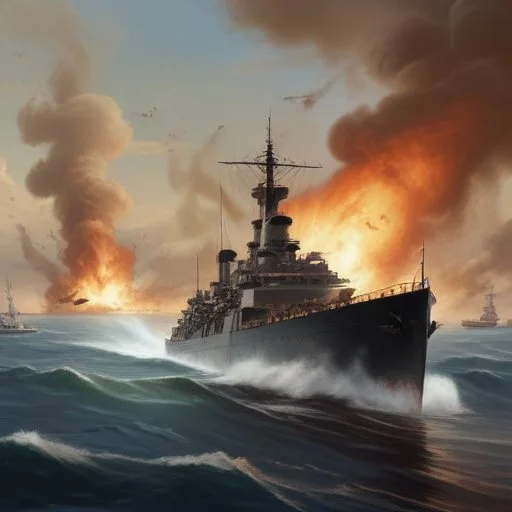
The Second German Naval Law, passed on June 14, 1900, marked a significant turning point in the history of the Imperial German Navy. This legislation aimed to increase the navy's capacity by 100%, making it a formidable force in European waters. The law's architect, Kaiser Wilhelm II, was driven by a deep-seated desire to assert Germany's dominance on the world stage.
Kaiser Wilhelm II, also known as the "Kaiser," was a complex and ambitious leader who ruled Germany from 1888 to 1918. He was driven by a passion for naval power and a desire to challenge Britain's long-standing maritime supremacy. Wilhelm's vision for a stronger German navy was fueled by a sense of national pride and a belief that a powerful fleet was essential for Germany's economic and colonial growth.
The Anglo-German naval arms race had far-reaching consequences for global politics. The escalation of tensions between Germany and Britain created an atmosphere of distrust, contributing to the outbreak of World War I in 1914. The naval arms race also sparked a wave of military modernization, as nations around the world scrambled to keep pace with the latest advances in naval technology.
The naval arms race was not just a military rivalry, but also a reflection of national identity and pride. The competition between Germany and Britain was fueled by a sense of patriotism and a desire to assert dominance on the world stage. The naval arms race captured the imagination of the public, inspiring a wave of popular literature, art, and music that celebrated the glory of naval power.
As the historian Paul Kennedy noted, "The naval arms race of the early twentieth century was a classic example of the way in which a sense of rivalry and competition can drive the development of military technology."
The Anglo-German naval arms race left a lasting impact on global politics, contributing to the outbreak of World War I and shaping the course of international relations in the decades that followed. Today, the legacy of the naval arms race serves as a reminder of the dangers of unchecked military competition and the importance of diplomacy in preventing conflict.
In the words of Kaiser Wilhelm II, "A powerful navy is the best guarantee of peace."
The story of the Second German Naval Law and the Anglo-German naval arms race serves as a powerful reminder of the importance of diplomacy and cooperation in preventing conflict. As we look back on this pivotal moment in history, we are reminded of the need for nations to work together to promote peace and stability in an increasingly complex and interconnected world.
Alfred von Tirpitz, the German Admiral and Secretary of State for the Naval Office, played a crucial role in the development and implementation of the Second German Naval Law. Tirpitz was a close advisor to Kaiser Wilhelm II and shared his vision for a powerful German navy. He was instrumental in convincing the Kaiser to support the naval expansion program, and his expertise in naval warfare was invaluable in shaping the country's naval strategy.
Tirpitz was a strong believer in the importance of a powerful navy for Germany's economic and colonial growth. He argued that a strong navy would not only protect German interests abroad but also deter potential rivals from challenging Germany's position.

In the late 19th and early 20th centuries, Europe was witnessing a significant shift in the global balance of power. The unification of Germany in 1871 had created a new power center in Europe, and the country was rapidly industrializing and expanding its economy.
This growth was accompanied by a growing sense of nationalism and a desire for colonial expansion. The "Scramble for Africa" had seen European powers rush to claim territories and resources on the African continent, and the competition for influence and territory was intensifying.
In this context, the Second German Naval Law and the subsequent naval arms race with Britain can be seen as a bid by Germany to assert its claim to great power status and challenge Britain's dominance of the seas.
The naval arms race between Germany and Britain was driven by fundamentally different strategic approaches. Britain, with its long history of naval supremacy, focused on maintaining a fleet that could protect its global empire and trade routes.
In contrast, Germany's naval strategy was centered on the concept of "Risikogedanke" or "risk theory," which emphasized the need for a strong navy to deter potential rivals and protect German interests in European waters.
This fundamental difference in approach led to a competition in ship design and construction, with each side seeking to outdo the other in terms of innovation and firepower.
The launch of the HMS Dreadnought in 1906 marked a significant turning point in the history of naval warfare. This revolutionary battleship was the first to be built with an "all-big-gun" main armament, featuring a uniform main battery of heavy guns.
The Dreadnought's design was quickly adopted by other navies, including Germany, which responded with its own Dreadnought-class battleships. This led to a cycle of innovation and one-upmanship, as each side sought to develop new technologies and designs that could outdo its rivals.
The Dreadnought revolution had far-reaching consequences for naval warfare, rendering earlier ship designs obsolete and setting the stage for the development of even more advanced warships in the years to come.
The naval arms race between Germany and Britain had significant economic costs for both countries. The massive investment in shipbuilding and naval infrastructure required enormous resources, diverting funds from other areas of the economy.
In Germany, the naval expansion program led to significant increases in government spending, which contributed to rising inflation and budget deficits. The economic burden of naval expansion was felt across the country, with taxpayers shouldering the costs of Germany's bid for great power status.
Britain, too, felt the economic pinch of the naval arms race, with the cost of maintaining its naval supremacy weighing heavily on the national treasury. The economic rivalries and tensions sparked by the naval arms race would have far-reaching consequences for the global economy in the years to come.