


On the wintry night of December 29, 1940, the city of London, England, was plunged into chaos as the Luftwaffe unleashed a devastating barrage of incendiary bombs, sparking the Second Great Fire of London, a catastrophic event that would claim the lives of nearly 200 civilians and leave a trail of destruction in its wake.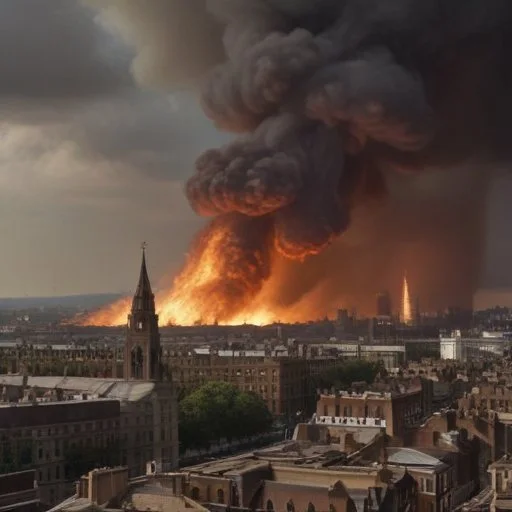
The Blitz, a campaign of strategic bombing by the German Air Force, had London firmly in its sights, and the historic heart of the city was about to bear the brunt of the attack. The sky turned a deep, fiery red as St. Paul's Cathedral, a symbol of British resilience, stood tall amidst the inferno, its dome gleaming like a beacon of hope in the midst of chaos.
The firebombs, dropped by the Luftwaffe, ignited a series of ferocious fires that raged across the city, engulfing everything in their path. The conflagration was so intense that it created its own wind, fueling the flames and spreading the destruction. The city's narrow streets and alleys became death traps, as people were trapped by the advancing walls of fire.
In the midst of the chaos, ordinary Londoners became heroes, risking their lives to rescue those trapped in the blaze. Firefighters, doctors, and nurses worked tirelessly to contain the fires and tend to the wounded. The bravery and selflessness of these individuals would be etched in the memory of the city forever.
In the days that followed, the full extent of the destruction became clear. The Second Great Fire of London had left a trail of devastation, with entire city blocks reduced to rubble and ash. The city's infrastructure was severely damaged, and the people of London were left to pick up the pieces and rebuild their lives.
But even in the midst of tragedy, there was a sense of defiance and resilience. The people of London vowed to rebuild their city, stronger and more resilient than before. The Second Great Fire of London would become a turning point in the city's history, a symbol of the city's unbreakable spirit and its determination to rise from the ashes.
In the aftermath of the fire, food played a vital role in bringing the community together. Simple, hearty dishes like Wartime Soup and Blitz Bread became staples of the Londoners' diet, providing sustenance and comfort in times of hardship. These recipes, passed down through generations, would become a testament to the city's ability to find strength in the face of adversity.
Combine all ingredients in a pot and simmer until the vegetables are tender. Serve hot, garnished with fresh herbs, if desired.
The Second Great Fire of London would leave an indelible mark on the city's history, a testament to the bravery and resilience of its people. As the city rebuilt and recovered, it would emerge stronger and more united than ever before, its spirit unbroken by the flames of war.
The historical significance of the Second Great Fire of London extends beyond its destructive impact on the city. It also marks a turning point in the British war effort, as the event galvanized public opinion and solidified support for the Allied forces. The fire, occurring just a year after the start of World War II, served as a stark reminder of the devastating consequences of war and the importance of British resilience in the face of adversity.
Historians have often pointed to the fire as a pivotal moment in the British war narrative, as it highlighted the need for collective action and civic responsibility in the face of crisis. The event also served as a catalyst for urban planning and reconstruction efforts, shaping the modern landscape of London and influencing city planning strategies for generations to come.
In the annals of British history, the Second Great Fire of London stands as a testament to the nation's capacity for resilience and reconstruction in the face of catastrophic loss.
The environmental impact of the Second Great Fire of London was substantial, with widespread destruction of buildings, infrastructure, and natural habitats. The fire, fueled by incendiary bombs and strong winds, released massive amounts of smoke and particulate matter into the atmosphere, contributing to poor air quality and respiratory problems for weeks after the event.
The fire also had a devastating impact on local wildlife, as habitats were destroyed and animals were displaced or killed in the blaze. The reconstruction efforts that followed, while necessary for the city's rebirth, often prioritized speed and pragmatism over environmental sustainability, exacerbating the city's environmental challenges in the decades that followed.
The cultural impact of the Second Great Fire of London was profound, as the event became a symbol of British resilience and defiance in the face of Nazi aggression. The fire, and the subsequent reconstruction efforts, influenced art, literature, and music, as creatives sought to make sense of the trauma and destruction.
The fire also had a lasting impact on British identity, as it reinforced the nation's reputation for stoicism and resolve in the face of adversity. The event has been commemorated in works of literature, such as Samuel Beckett's Watt, and continues to inspire artistic and cultural works to this day.
The geopolitical context of the Second Great Fire of London is critical to understanding the event's significance. The fire occurred during a period of heightened tension between Nazi Germany and the United Kingdom, and was part of a broader campaign of strategic bombing by the German Air Force.
The event marked a turning point in the war, as the British government, galvanized by public outrage and concern, responded with increased ferocity, launching a series of bombing raids on German cities. The fire, and the subsequent escalation of hostilities, marked a decisive shift in the balance of power, as the Allies began to gain the upper hand in the conflict.
The Second Great Fire of London shares striking parallels with other historic conflagrations, such as the Great Fire of London in 1666 and the Great Chicago Fire of 1871. Each of these events, while distinct in terms of cause and context, shares a common thread – the capacity for human resilience and reconstruction in the face of seemingly insurmountable disaster.
Comparative analysis of these events reveals interesting patterns and themes, including the role of civic leadership, the importance of community response, and the long-term impact on urban planning and development. Such comparisons provide valuable insights into the ways in which human societies respond to, and recover from, catastrophic events.