


The six-week siege of Nanking, the capital of China, by Japanese troops under the command of Lt. Gen. Yasuhiko Asaka, is infamously remembered as one of the most brutal and devastating conflicts of the Second Sino-Japanese War. This assault, which lasted from August 1937 to February 1938, left an indelible mark on the city, resulting in the loss of countless lives, widespread destruction, and unimaginable horror.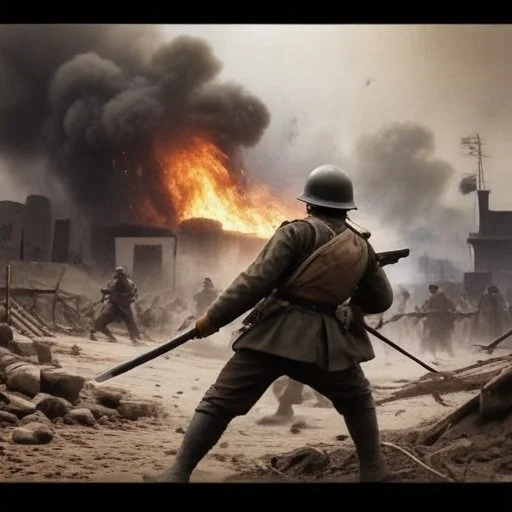
In the years leading up to the Second Sino-Japanese War, tensions between China and Japan had been escalating. Japan, with its rapidly expanding empire, had long sought to increase its control over China, and the Chinese resistance to Japanese aggression had been growing in response.
As the war raged on, the Japanese army, known for its ruthless tactics, pushed deep into China, capturing key cities and strategic locations. In August 1937, the Japanese forces, under the command of Lt. Gen. Yasuhiko Asaka, set their sights on Nanking, the capital of China.
The Japanese troops launched a massive assault on Nanking, catching the Chinese defenders off guard. Despite being vastly outnumbered, the Chinese forces put up a valiant struggle, but they were no match for the Japanese war machine.
The battle raged on for six long weeks, with the Japanese forces storming into the city, looting, burning, and destroying everything in their path. The streets of Nanking ran red with the blood of its citizens, as the Japanese troops unleashed a wave of violence and terror upon the city.
The Battle of Nanking is infamous for the atrocities committed by the Japanese troops during the siege. Rape, murder, and pillage became the norm, as the Japanese army ran amok, killing and maiming thousands of civilians, including women, children, and the elderly.
The Nanking Massacre, as it came to be known, is considered one of the darkest episodes in modern history, with estimates suggesting that over 150,000 civilians were killed, and thousands more were raped, tortured, and left for dead.
The fall of Nanking and the subsequent atrocities committed by the Japanese troops left a deep scar on the city and its people. The city lay in ruins, with many of its historic landmarks and cultural treasures destroyed or looted.
The Battle of Nanking had far-reaching consequences, both within China and beyond. The atrocity shocked the world, drawing international condemnation and scorn. The League of Nations, the precursor to the United Nations, was criticized for its inaction in the face of Japanese aggression.
In the years that followed, the Japanese invasion of China continued, with the war ultimately lasting until 1945. The legacy of the Battle of Nanking continues to be felt today, serving as a stark reminder of the horrors of war and the importance of preserving peace and humanity.
"The Rape of Nanking should be a lesson to the world, a stark reminder of the horrors that can be unleashed when humanity is abandoned.
"I cannot bear to think of the atrocities that were committed in Nanking. It is a stain on humanity that can never be erased.
"The memory of Nanking will live on, a testament to the resilience of the human spirit and the importance of preserving peace and justice."
The Battle of Nanking serves as a poignant reminder of the devastating consequences of war and the importance of preserving humanity in the face of conflict. The legacy of Nanking continues to be felt today, shaping our understanding of the importance of diplomacy, international cooperation, and the preservation of peace.
The road to Nanking was paved with a series of Japanese military victories, starting with the Marco Polo Bridge Incident in July 1937. The Japanese army, under the command of General Matsui Iwane, capitalised on the momentum, capturing key cities and strategic locations in northern China. The fall of Shanghai in November 1937 marked a significant turning point, as the Japanese army began its march towards Nanking, the capital of China.
The Japanese military strategy, known as the "Three Alls Policy", involved the burning of cities, looting of resources, and killing of civilians. This brutal approach was designed to break the Chinese spirit and pave the way for Japanese occupation. The strategy was executed with ruthless efficiency, leaving a trail of destruction and devastation in its wake.
One of the most significant factors contributing to the Japanese success was their superior air power. The Japanese air force, led by Lieutenant General Yoshida Zengo, launched a series of bombing raids on Nanking, targeting key infrastructure and civilian populations. The bombing campaign weakened the Chinese defenses and paved the way for the eventual capture of the city.
Lt. Gen. Yasuhiko Asaka was a decorated Japanese military officer, who played a pivotal role in the capture of Nanking. Born into a noble family, Asaka was educated at the Imperial Japanese Army Academy and went on to serve in various military campaigns, including the Russo-Japanese War.
Asaka's leadership during the Battle of Nanking was marked by brutality and ruthlessness. He was responsible for issuing orders that led to the atrocities committed during the Nanking Massacre. Despite his role in one of the darkest episodes of modern history, Asaka was never prosecuted for war crimes and lived a comfortable life until his death in 1981.
Asaka's legacy is a complex one, with some historians portraying him as a skilled military strategist, while others condemn him as a war criminal. Regardless, his role in the Battle of Nanking serves as a stark reminder of the devastating consequences of militarism and aggression.
The diaries of John Rabe, a German businessman living in Nanking during the siege, provide a harrowing account of the atrocities committed by the Japanese army. Rabe, who was a member of the Nazi party, was shocked by the brutality of the Japanese and wrote extensively about the violence and destruction he witnessed.
Rabe's diaries, along with those of other foreigners living in Nanking, serve as a valuable historical resource, offering a unique perspective on the events that unfolded during the siege. The diaries have been translated into numerous languages and are widely recognized as an important historical document.
The Nanking Massacre Memorial Hall, established in 1985, houses a vast collection of artifacts and documents related to the siege, including Rabe's diaries. The museum serves as a poignant reminder of the devastating consequences of war and aggression, and is a testament to the resilience of the human spirit.
The Battle of Nanking had a profound impact on Chinese culture, leading to a period of national shame and introspection. The atrocities committed during the siege were met with widespread outrage and condemnation, both domestically and internationally.
The event also had a significant impact on Chinese art and literature, with many artists and writers responding to the trauma and devastation caused by the siege. The Chinese artist, Xu Beihong, created a series of powerful paintings and sketches that captured the horror and despair of the event.
The legacy of Nanking continues to shape Chinese identity and inform cultural narratives to this day. The event serves as a powerful symbol of national resistance and resilience, and is commemorated annually on December 13, the anniversary of the fall of Nanking.
The economic impact of the Battle of Nanking was severe, with the city's industrial and commercial infrastructure severely damaged. The siege led to a significant decline in industrial production, and the city's economy struggled to recover in the years that followed.
The Japanese occupation of Nanking also led to the exploitation of China's natural resources, including its vast coal and iron ore deposits. The Japanese army looted and plundered the city's riches, shipping vast quantities of resources back to Japan.
The economic legacy of Nanking continues to shape China's economic development to this day. The event serves as a powerful reminder of the devastating consequences of war and occupation, and the need for economic cooperation and development.