


The Sepoy Mutiny of 1857, also known as the Indian Rebellion of 1857, was a pivotal moment in India's struggle for independence, sparked by the defiant act of a single sepoy, Mangal Pandey. This uprising against the East India Company's rule in India would go on to become one of the most significant events in Indian history, leaving a lasting impact on the country's trajectory towards freedom.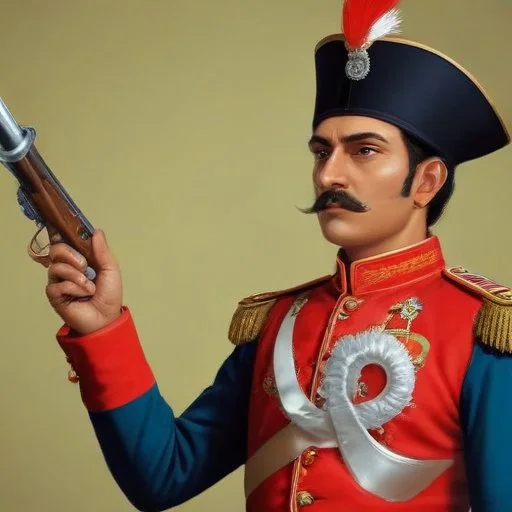
In the mid-19th century, India was under the control of the East India Company, a British trading giant that had gradually expanded its influence over the subcontinent. The company's exploitation of India's resources, coupled with its insensitive treatment of the local population, had created widespread resentment among Indians. The introduction of the Enfield rifle, with its greased cartridges rumored to be made from pig and cow fat, was the final straw, sparking outrage among both Hindu and Muslim soldiers.
On March 29, 1857, Mangal Pandey, a sepoy in the 34th Regiment, Bengal Native Infantry, refused to use the new Enfield rifle cartridges, deeming them sacrilegious. When ordered to arrest Pandey, he attacked his British sergeant, sparking a chain reaction of events that would shake the very foundations of British rule in India.
The Sepoy Mutiny marked a significant turning point in Indian history, leading to the dissolution of the East India Company and the establishment of direct British rule in India. The rebellion also spurred the Indian independence movement, paving the way for future freedom fighters like Mahatma Gandhi.
Mangal Pandey's act of defiance inspired a generation of Indians to resist British rule, making him a cultural icon and a symbol of Indian resistance. His bravery also sparked a sense of national pride, which would continue to grow in the years leading up to India's eventual independence.
Eyewitness accounts from British soldiers and Indian rebels alike paint a vivid picture of the chaos and bloodshed that characterized the Sepoy Mutiny. One such account, by a British officer, describes the rebels as "fanatics, driven by a mad desire for independence."
| March 29, 1857 | Mangal Pandey refuses to use the Enfield rifle cartridges |
| May 10, 1857 | The Indian Rebellion of 1857 begins |
| May 12, 1857 | The rebels capture Delhi |
| September 1857 | The rebellion is crushed |
Mangal Pandey's bravery and defiance continue to inspire generations of Indians, serving as a beacon of hope and courage in the face of oppression. His legacy reminds us that even the smallest acts of resistance can spark a movement, and that freedom is always worth fighting for.
Mangal Pandey's Early Life and Motivations
Mangal Pandey, the Indian sepoy who sparked the Sepoy Mutiny, was born in 1827 in the village of Nagwa, in the Ballia district of Uttar Pradesh. Little is known about his early life, but it is believed that he was born into a humble family of Brahmins. Pandey's motivations for joining the British East India Company's army are unclear, but it is likely that he was attracted by the promise of steady employment and a sense of adventure.
Pandey's experiences as a sepoy in the 34th Regiment, Bengal Native Infantry, would shape his worldview and inform his decision to rebel against the British. His sense of duty, honor, and loyalty to his fellow sepoys and countrymen ultimately led him to take a stand against the British, sparking a chain reaction of events that would change the course of Indian history.

The Sepoy Mutiny's Impact on Indian Literature and Art
The Sepoy Mutiny had a profound impact on Indian literature and art, inspiring a generation of writers, poets, and artists to create works that reflected the country's struggle for independence. The rebellion's ideals of freedom and self-determination resonated deeply with Indian intellectuals, who saw the mutiny as a symbol of resistance against colonial rule.
Notable writers such as Bankim Chandra Chattopadhyay and Rabindranath Tagore drew inspiration from the Sepoy Mutiny, incorporating themes of nationalism and anti-colonialism into their works. The rebellion also inspired a new wave of Indian art, characterized by vivid depictions of the mutiny and its leaders.
The Geopolitical Context of the Sepoy Mutiny
The Sepoy Mutiny took place against the backdrop of a rapidly changing geopolitical landscape. The British East India Company's expansionist policies had led to the consolidation of its power in India, while the decline of the Mughal Empire had created a power vacuum that the British were eager to fill.
The rebellion was influenced by global events, such as the Crimean War and the Opium Wars, which had weakened the British Empire's grip on its colonies. The Sepoy Mutiny, in turn, had far-reaching consequences for the British Empire, forcing it to re-evaluate its colonial policies and eventually leading to the dissolution of the East India Company.

Historiographical Debates Surrounding the Sepoy Mutiny
The Sepoy Mutiny has been the subject of intense historiographical debate, with historians disagreeing on the rebellion's causes, significance, and impact. Some have viewed the mutiny as a nationalist uprising, while others have seen it as a reactionary response to British colonial rule.
Some historians have argued that the Sepoy Mutiny was a failed attempt at revolution, while others have seen it as a crucial step towards Indian independence. The rebellion has also been examined through the lens of Marxist theory, with some historians interpreting it as a class-based struggle against colonialism.
The Sepoy Mutiny's Impact on British Colonial Policy
The Sepoy Mutiny had a profound impact on British colonial policy, forcing the British government to re-evaluate its approach to governing India. The rebellion led to the dissolution of the East India Company and the establishment of direct British rule in India, with the British government taking over the administration of the country.
The mutiny also led to significant reforms in the British Indian army, including the introduction of new recruitment policies and training programs. The rebellion marked a turning point in British colonial policy, as the British began to adopt a more conciliatory approach to governing India, paving the way for eventual Indian independence.