


July 7, 2005, will forever be etched in the minds of Londoners as a day of unprecedented horror and devastation. On that fateful morning, four coordinated terrorist attacks ravaged the city's transport system, claiming the lives of 56 innocent people, including the four suicide bombers, and leaving over 700 others injured.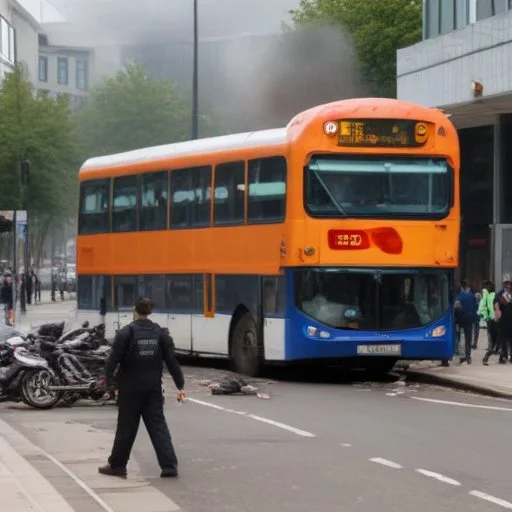
In the months leading up to the attacks, the UK was grappling with its role in the Iraq War and the growing disillusionment among its Muslim population. The Iraq invasion, coupled with the country's stringent anti-terrorism laws, had created a sense of disenfranchisement among British Muslims, making them vulnerable to extremist ideologies.
What drove these ordinary young men to commit such atrocities? The investigation would later reveal a complex web of religious radicalization, political ideologies, and personal grievances.
| 8:50 a.m. | Three bombs explode on Underground trains at Aldgate, Edgware Road, and Russell Square stations. |
| 9:47 a.m. | A fourth bomb detonates on a double-decker bus at Tavistock Square. |
| 10:00 a.m. | Emergency services respond to the scenes, with rescue efforts hampered by the chaos and destruction. |
In the aftermath of the attacks, London witnessed an outpouring of grief, solidarity, and resilience. The city's emergency services, from police to paramedics, worked tirelessly to evacuate and treat the victims. As the full extent of the devastation became clear, the British government launched a massive investigation, dubbed Operation Theseus, to identify the perpetrators and bring them to justice.
The 7/7 bombings marked a turning point in the UK's counter-terrorism efforts, leading to the establishment of new laws, security protocols, and intelligence agencies.
July 7, 2005, serves as a grim reminder of the devastating consequences of terrorism and the importance of addressing the root causes of radicalization. The attacks underscored the need for more effective counter-terrorism strategies, improved community engagement, and a nuanced understanding of the complex interplay between politics, religion, and identity.
As the world commemorates this tragedy, it is essential to reflect on the progress made and the challenges still ahead, ensuring that the sacrifices of that fateful day are not forgotten and that the horrors of terrorism are never repeated.
The 7/7 bombings highlighted significant intelligence failures within the UK's security apparatus. Despite warnings from the Iraqi government and other international partners, British authorities failed to detect the plot. Operation Crevice, a British intelligence operation, had been monitoring the activities of Mohammad Sidique Khan and others, but their focus was on disrupting potential plots rather than preventing an imminent attack. The 7/7 bombings led to a radical overhaul of the UK's intelligence agencies, including the establishment of the Office for Security and Counter-Terrorism (OSCT) to coordinate counter-terrorism efforts.Intelligence Failures: A Critical Examination

Detective Colin Gibbs, a seasoned Scotland Yard investigator, was tasked with leading the 7/7 inquiry. Gibbs' experience in counter-terrorism investigations proved invaluable, as he pieced together the evidence to identify the bombers and their motives. Under Gibbs' guidance, the investigation uncovered a complex web of connections between the bombers and extremist groups, shedding light on the radicalization process that drove them to commit such atrocities.The Investigator: Detective Colin Gibbs
The 7/7 bombings inspired a wave of creative responses, as artists, writers, and musicians sought to process the tragedy and its aftermath. London's literary community responded with a collection of short stories, poetry, and essays, capturing the mood and sentiment of the city in the days and weeks that followed. From songs to sculptures, the creative output was a testament to the power of art in the face of tragedy, providing a cathartic release for those affected by the attacks.The Creative Response: Art, Literature, and Music

The 7/7 bombings had a significant impact on the UK's economy, with estimates suggesting a £1 billion loss in tourism revenue in the year following the attacks. The bombings also led to increased security spending, with the UK government allocating an additional £2.5 billion to counter-terrorism efforts. The attacks highlighted the vulnerability of urban infrastructure to terrorist attacks, prompting a re-evaluation of security protocols and emergency response strategies.The Economic Fallout: Assessing the Cost
The 7/7 bombings led to a fundamental shift in the UK's counter-terrorism policy, with a greater emphasis on community engagement and counter-radicalization initiatives. The UK government introduced the Prevent strategy, aimed at preventing the radicalization of vulnerable individuals and promoting social cohesion. The attacks underscored the need for more effective international cooperation in combating terrorism, leading to increased collaboration between intelligence agencies and law enforcement bodies worldwide.Reforming Counter-Terrorism Policy: A New Era