


On August 15, 1914, a devastating fire ravaged through Taliesin, the Wisconsin home and studio of renowned American architect Frank Lloyd Wright, claiming the lives of seven people, including Wright's mistress, Mamah Borthwick, and her two children. This horrific act of violence, carried out by Wright's servant Julian Carlton, left a permanent scar on Wright's life and work, forever changing the course of his personal and professional trajectory.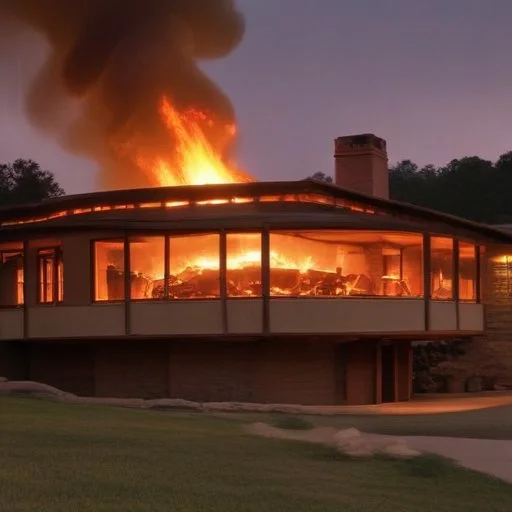
Little is known about Julian Carlton's background, but it is clear that he was a quiet and reserved individual who had been working at Taliesin for only a year before the tragedy. His motives behind the brutal attack remain a mystery to this day, leaving many to speculate about the events that led to such a heinous act.
The Taliesin tragedy sent shockwaves through the architectural community and beyond, leaving many to wonder how such a senseless act of violence could occur in the midst of Wright's idyllic Wisconsin retreat. The fire not only destroyed Wright's home and studio but also left him personally and professionally shattered.
In the face of unimaginable tragedy, Frank Lloyd Wright persevered, channeling his grief and anger into some of his most iconic works. The Taliesin tragedy may have broken his heart, but it did not break his spirit. In fact, it seemed to fuel his creative genius, leading to some of the most innovative and groundbreaking designs of the 20th century.
The Taliesin tragedy not only changed the course of Wright's life but also inspired a new generation of architects and designers. The event served as a poignant reminder of the human cost of tragedy and the power of resilience and determination in the face of adversity.
In the end, the Taliesin tragedy stands as a testament to the enduring legacy of Frank Lloyd Wright, a man who refused to let tragedy define him, but instead used it as fuel to inspire a new era of innovation and creativity.
In the summer of 1914, Europe was on the brink of war, and the United States was reeling from a series of devastating industrial accidents and labor disputes. Meanwhile, in Wisconsin, Frank Lloyd Wright was busy building his dream home and studio, Taliesin. The peaceful surroundings and serene landscape of the property belied the turmoil brewing beneath the surface.
Wright's personal life was already complicated, with his affair with Mamah Borthwick causing a scandal in Oak Park, Illinois. The stage was set for a catastrophic event, and on August 15, 1914, tragedy struck in the form of a brutal attack by Julian Carlton.

Julian Carlton remains an enigma, a shadowy figure whose motives behind the Taliesin tragedy may never be fully understood. Born in 1884, Carlton grew up in a time of racial tension and social upheaval in the United States. Little is known about his early life, but it is clear that he was a quiet and reserved individual who kept to himself.
Carlton's decision to work at Taliesin was likely motivated by a desire for security and stability. However, his introverted nature and potential feelings of isolation may have contributed to the simmering resentment that ultimately boiled over into violence.
The Taliesin tragedy sent shockwaves through the architectural community, but its impact extended far beyond the world of design. The event became a symbol of the darker aspects of human nature, a reminder that even in the most idyllic of settings, tragedy can strike without warning.
The incident also sparked a national conversation about racial tensions and the treatment of African Americans in the United States. Carlton's actions were seen by some as a twisted form of rebellion against the oppressive systems that had failed him.

The investigation into the Taliesin tragedy uncovered a trail of clues that revealed the brutal nature of the attack. A charred door, a broken window, and a burned-out room told the story of a deliberate and calculated act of violence.
Julian Carlton's own words, scrawled on a piece of paper found at the scene, provided a chilling insight into his state of mind: "I did it because I wanted to."
The fire that ravaged Taliesin not only destroyed Wright's home and studio but also had a profound impact on the surrounding environment. The blaze burned over 10 acres of land, destroying native vegetation and habitat.
In the aftermath of the tragedy, Wright was forced to rebuild, incorporating new designs and materials that would minimize the risk of future fires. The incident marked a turning point in Wright's architectural approach, with a renewed focus on sustainability and environmental responsibility.