


The Siege of Sarajevo, notorious for being the longest siege in modern history, finally came to an end in 1996, bringing a fragile sense of relief to a city battered by four years of brutal conflict. This devastating episode in Bosnian history claimed over 11,000 lives, left countless others wounded, and displaced thousands – all at the hands of Bosnian Serb forces, led by the enigmatic Radovan Karadžić.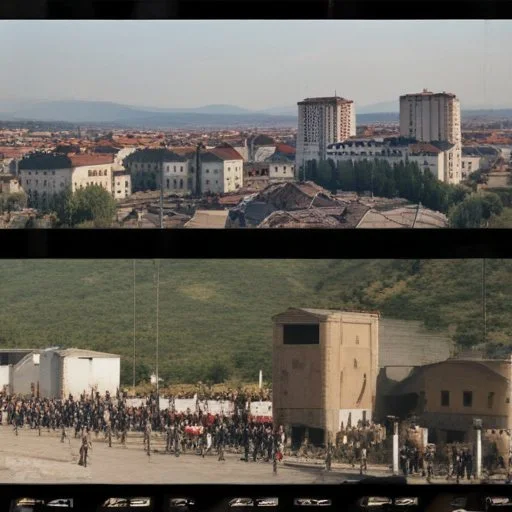
In the aftermath of Yugoslavia's dissolution, the Balkan region was a hotbed of ethnic tensions. Bosnia and Herzegovina, with its complex mix of Bosniaks, Croats, and Serbs, was particularly volatile. The spark that ignited the Bosnian War was the Bosnian Serb rejection of Bosnia's independence, leading to a bloody conflict that would ravage the region.
April 1992: Bosnian Serb forces, led by Karadžić, surround Sarajevo, cutting off essential supplies and unleashing a relentless barrage of artillery fire and sniper attacks.
1993: The siege intensifies, with the city's residents facing daily bombardments, food and water shortages, and a humanitarian crisis.
1995: NATO launches a series of airstrikes against Bosnian Serb positions, paving the way for the eventual ceasefire.
November 1995: The Dayton Peace Accords are signed, marking the beginning of the end of the Bosnian War and the Siege of Sarajevo.
February 1996: The siege officially ends, with Bosnian Serb forces withdrawing from their positions around the city.
The Siege of Sarajevo left an indelible mark on the city and its people. The aftermath saw a massive rebuilding effort, with international organizations and governments contributing to the reconstruction of Sarajevo.
The Dayton Peace Accords established a fragile peace, with Bosnia and Herzegovina emerging as a fragile, multinational state.
The siege also had a profound impact on international relations, with the European Union and United States re-evaluating their responses to humanitarian crises and ethnic conflicts.
Despite the devastation, Sarajevo's cultural scene continued to thrive, with artists, musicians, and writers using their work to document and process the trauma of the siege.
The siege also saw an outpouring of international support, with celebrities, activists, and ordinary citizens rallying around the people of Sarajevo.
Sarajevo's residents, too, demonstrated remarkable resilience, with stories of everyday heroism, community, and solidarity emerging from the darkness of the siege.
The Siege of Sarajevo remains a contentious issue, with debates surrounding the international community's response (or lack thereof) to the crisis.
The legacy of the siege continues to impact Bosnia and Herzegovina, with ongoing ethnic tensions and political instability.
Yet, the siege also serves as a powerful reminder of the human cost of war and the importance of international cooperation in preventing such tragedies.
"Sarajevo is a city of wounds, but also of hope." – Alija Izetbegović
"The Siege of Sarajevo was a stark reminder of the darkness that can descend when humanity fails." – Richard Holbrooke
As the dust settles on the Siege of Sarajevo, the world is left to contemplate the lessons of this brutal conflict. In the aftermath, the people of Sarajevo continue to rebuild their city, their lives, and their hopes for a brighter future – a testament to the indomitable human spirit.
The roots of the Siege of Sarajevo can be traced back to the complex history of the Balkans, where the boundaries of empires and nations have ebbed and flowed for centuries. In the 19th century, Bosnia and Herzegovina was a province of the Ottoman Empire, before being annexed by Austria-Hungary in 1908. After World War I, it became part of the Kingdom of Yugoslavia, only to be occupied by Axis powers during World War II.
In the aftermath of World War II, Bosnia and Herzegovina became one of the six republics of the Socialist Federal Republic of Yugoslavia, led by Josip Broz Tito. However, the seeds of ethnic tension were already sown, with Bosniaks, Croats, and Serbs maintaining distinct cultural and religious identities. As Yugoslavia began to dissolve in the 1990s, these tensions would ignite into a devastating conflict.

Born in 1945, Radovan Karadžić was a complex figure, with a background in psychiatry and a passion for poetry. However, his rise to prominence in Bosnian Serb politics was marked by a ruthless determination to secure Serb dominance in Bosnia and Herzegovina. As the leader of the Bosnian Serb army, he would become responsible for some of the worst atrocities of the Bosnian War.
Karadžić's charismatic leadership and nationalist rhetoric galvanized Bosnian Serb support, but also earned him international condemnation. His eventual indictment for war crimes and genocide marked the beginning of the end for the Bosnian Serb regime.
As the bombs fell on Sarajevo, the city's cultural scene became a beacon of hope and resistance. Artists, musicians, and writers continued to create, using their work to document and process the trauma of the siege. The Sarajevo Film Festival, founded in 1995, became a symbol of the city's defiance and creativity.
International artists and activists also rallied around Sarajevo, with figures like Bono, George Clooney, and Susan Sontag using their platforms to raise awareness and funds for the besieged city. This outpouring of support not only helped to alleviate the humanitarian crisis but also highlighted the power of art to bring people together in the face of adversity.

The international community's response to the Siege of Sarajevo was marked by a delicate balance of diplomacy and military intervention. The United States, European Union, and United Nations navigated a complex web of alliances and interests, seeking to end the conflict without exacerbating ethnic tensions.
The eventual deployment of NATO forces in 1995 marked a turning point in the conflict, paving the way for the Dayton Peace Accords. However, the delay in intervention has been criticized, with many arguing that earlier action could have prevented the worst atrocities of the war.
The Bosnian War was not just a local conflict but a symptom of a broader geopolitical shift in the Balkans. The collapse of Yugoslavia had created a power vacuum, with neighboring countries and international powers vying for influence in the region.
The war also highlighted the divisions within Europe, with the European Union struggling to respond to the crisis. The eventual intervention of NATO forces marked a new era of transatlantic cooperation, but also laid bare the limitations of European security structures in the face of ethnic conflict.