


The Sino-British Joint Declaration, signed on December 19, 1984, in Beijing, marked a significant milestone in the history of Hong Kong, as China would resume sovereignty over the territory and the United Kingdom would restore it to China, effective July 1, 1997.
This landmark agreement, signed by Chinese leader Deng Xiaoping and British Prime Minister Margaret Thatcher, symbolized a significant shift in the regional balance of power, as the UK acknowledged China's sovereignty over Hong Kong, which had been a British Crown colony since 1842.
In the mid-19th century, the British Empire expanded its territories through the Opium Wars, seizing control of Hong Kong Island from China. The Treaty of Nanking, signed in 1842, formally ceded Hong Kong to Britain. Over the years, Hong Kong evolved into a thriving economic hub, enjoying a high degree of autonomy under British rule.
Deng Xiaoping, the paramount leader of China, played a crucial role in negotiations, seeking to assert China's sovereignty over Hong Kong. Margaret Thatcher, the Iron Lady of the UK, led the British delegation, aiming to ensure a smooth transition and maintain British interests in the region.
The Sino-British Joint Declaration had far-reaching consequences, shaping Hong Kong's future and influencing the region's politics and economy.
The Sino-British Joint Declaration also had a profound impact on Hong Kong's cultural and social landscape.
The Sino-British Joint Declaration was not without its controversies, sparking debates and concerns about Hong Kong's future.
"One country, two systems" - Deng Xiaoping's vision for Hong Kong's future, emphasizing China's sovereignty while maintaining the territory's autonomy.
"We will not betray our responsibilities to the people of Hong Kong" - Margaret Thatcher, reaffirming Britain's commitment to the territory's future.
The Sino-British Joint Declaration draws parallels with other instances of territorial transfers, such as the return of Macau to China in 1999.
In his memoirs, Chris Patten, the last British Governor of Hong Kong, recalled the mixture of emotions and uncertainty surrounding the handover, as Hong Kong's residents prepared for the transition.
The Sino-British Joint Declaration has had a lasting impact on Hong Kong's development, shaping its politics, economy, and culture.
The agreement set a precedent for future territorial transfers, influencing China's approach to reunification with Taiwan.
| 1842 | Treaty of Nanking: Hong Kong ceded to Britain |
| 1984 | Sino-British Joint Declaration signed |
| 1997 | China resumes sovereignty over Hong Kong |
The Sino-British Joint Declaration was the first international agreement to be signed by China and a Western country since the Opium Wars.
Hong Kong's flag features the Bauhinia flower, a symbol of the territory's unique identity.
The Sino-British Joint Declaration serves as a testament to the power of diplomacy and cooperation, demonstrating the ability of nations to resolve complex issues through dialogue and negotiation.
The agreement has inspired generations of Hong Kong residents, fostering a sense of pride and identity in their unique cultural heritage.
Deng Xiaoping, the paramount leader of China, played a crucial role in negotiating the Sino-British Joint Declaration. His vision for a reunified China, where Hong Kong would maintain its autonomy while being part of the mainland, was instrumental in shaping the agreement.
With his pragmatic approach to politics, Deng Xiaoping navigated the complexities of international diplomacy, ultimately securing a historic agreement that marked a significant shift in the balance of power in the region.
His leadership and diplomatic prowess ensured that China's sovereignty over Hong Kong was recognized, while also guaranteeing the territory's continued economic prosperity and cultural autonomy.

The Sino-British Joint Declaration shares striking parallels with the Macau Handover, another significant territorial transfer in the region. Both agreements underscored China's commitment to reunification, while respecting the unique cultural and economic identities of the transferred territories.
Like Hong Kong, Macau was a former European colony with a distinct cultural heritage. The 1987 Sino-Portuguese Joint Declaration, which paved the way for Macau's return to China in 1999, reflected a similar approach to the Sino-British Joint Declaration, prioritizing economic cooperation and cultural exchange.
These two agreements demonstrate China's ability to negotiate and implement complex territorial transfers, while maintaining peaceful relations with its international partners.
The Sino-British Joint Declaration marked a cultural renaissance in Hong Kong, as the territory began to reconnect with its Chinese roots. The agreement facilitated increased cultural exchange between China and Hong Kong, leading to a renewed interest in traditional Chinese arts, literature, and music.
Hong Kong's education system underwent significant reforms, with a greater emphasis on Chinese language, history, and culture. This led to a new generation of Hong Kongers who were proud of their cultural heritage and eager to engage with their Chinese identity.
The agreement paved the way for the establishment of cultural institutions, such as the Hong Kong Museum of History, which aimed to promote a deeper understanding of Hong Kong's history and cultural significance.
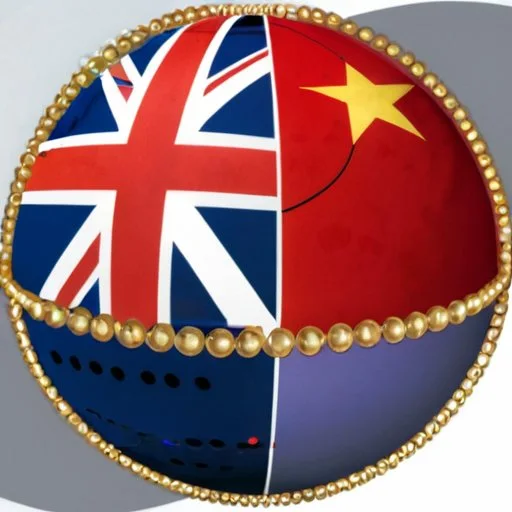
The Sino-British Joint Declaration had a profound impact on Hong Kong's economy, as China pledged to maintain the territory's capitalist system and high degree of autonomy.
The agreement facilitated increased economic cooperation between China and the UK, strengthening trade relations and investments. Hong Kong's economy continued to thrive, with the territory emerging as a major financial hub in the region.
The agreement also led to the establishment of the Closer Economic Partnership Arrangement (CEPA), which further solidified Hong Kong's position as a gateway to China's vast market.
The Sino-British Joint Declaration was negotiated against the backdrop of significant geopolitical changes in the late 20th century. The decline of British colonialism and the rise of China as a global power created a unique opportunity for the two nations to redefine their relationship.
The agreement reflected a shift in the regional balance of power, with China emerging as a dominant force in East Asia. The Sino-British Joint Declaration marked a significant milestone in China's re-emergence as a global power, as the country began to assert its sovereignty over its territories and expand its international influence.
The agreement also had implications for the global economy, as China's economic rise began to reshape the international trade landscape.