


The night of August 14, 1791, was etched in the memories of the enslaved Africans in Saint-Domingue, as they gathered in the hauntingly beautiful Bois Caman, a site shrouded in mystery and secrecy. It was here, under the guidance of the revered houngan Dutty Boukman, that a Vodou ceremony of liberation was born, marking the genesis of the Haitian Revolution, a watershed moment that would shatter the chains of bondage and propel the nation towards independence.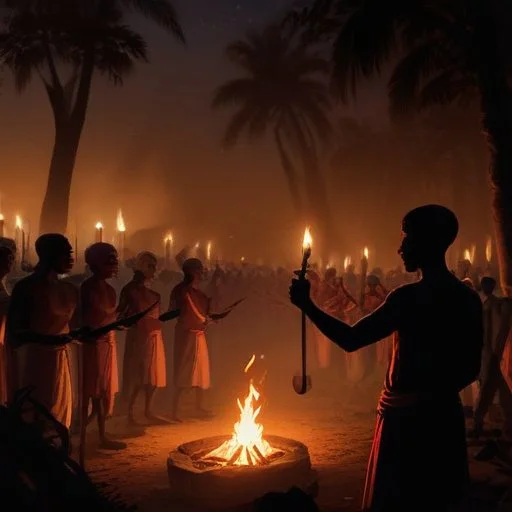
Saint-Domingue, then a French colony, was a hotbed of brutal oppression, where enslaved Africans were subjected to the inhumane whims of their French masters. The Code Noir, a set of laws governing slavery, had created a system of systemic brutality, forcing the enslaved to toil in inhumane conditions, stripped of their dignity and humanity. Yet, amidst this darkness, a spark of resistance was kindling, fueled by the defiance and resilience of the African diaspora.
Dutty Boukman, a charismatic and powerful houngan, was the chosen leader of this revolutionary movement. Born in Jamaica, Boukman had been brought to Saint-Domingue as a slave, but his unwavering spirit and mastery of Vodou had earned him the respect and admiration of his fellow enslaved Africans. With his profound understanding of the ancient traditions and mystical powers of Vodou, Boukman was the perfect catalyst to ignite the flames of rebellion.
As the drums pulsed and the whispers of the Vodou loa echoed through the Bois Caman night air, Boukman's fervent call to arms electrified the gathering. The enslaved Africans, their eyes ablaze with determination, pledged their allegiance to the cause of freedom, swearing to overthrow their French oppressors and forge a new path towards independence. This was no ordinary ceremony – it was a declaration of war, a defiant cry for liberty that would resound throughout the ages.
The Vodou ceremony at Bois Caman was the spark that ignited the Haitian Revolution, a 13-year struggle that would culminate in the creation of the world's first independent black nation. The rebellion, led by figures like Boukman, Toussaint Louverture, and Jean-Jacques Dessalines, would ultimately force the French to surrender, with Haiti declaring its independence on January 1, 1804. This monumental victory would have far-reaching implications, inspiring similar movements for liberation across the globe.
The Vodou ceremony at Bois Caman was a testament to the enduring power of African cultural traditions, which had been preserved and adapted in the face of brutal oppression. The fusion of African, indigenous, and European influences had given birth to a unique cultural identity, one that would continue to shape the Haitian nation. This ceremony, in particular, highlighted the significance of Vodou as a symbol of resistance, a potent force that would continue to inspire generations to come.
In the aftermath of the ceremony, a sense of hope and defiance spread like wildfire through the plantations. Enslaved Africans, once cowed by their French masters, now walked with newfound pride, their hearts beating with a sense of purpose. One former slave, recalling the events of that fateful night, would later remark, "We knew that we were no longer alone, that our struggles were not in vain. We had found our voice, and it would echo through the ages."
The Vodou ceremony at Bois Caman would have a profound impact on the course of history, inspiring a new wave of liberation movements across the Americas. From the slave revolts in the United States to the independence struggles in Latin America, the Haitian Revolution, sparked by that pivotal ceremony, would become a beacon of hope for generations to come.
The Vodou ceremony at Bois Caman, led by the enigmatic houngan Dutty Boukman, was more than just a rebellion – it was a declaration of humanity, a defiant cry for freedom that would echo through the ages. As we reflect on this pivotal moment in history, we are reminded of the boundless power of the human spirit, and the unwavering determination of those who dared to challenge the status quo, forging a new path towards liberation and independence.
Little is known about the early life of Dutty Boukman, the charismatic houngan who led the Vodou ceremony at Bois Caman. Born in Jamaica, Boukman was brought to Saint-Domingue as a slave, where he endured the brutal conditions of the plantation system. Despite the hardships, Boukman's spirit remained unbroken, and he became a respected leader among the enslaved Africans. His mastery of Vodou and his ability to rally his fellow slaves made him a natural leader in the rebellion against the French colonizers.
While Boukman's life is shrouded in mystery, his impact on the Haitian Revolution is undeniable. His call to arms at Bois Caman sparked a chain reaction of events that would culminate in the creation of the world's first independent black nation. Today, Boukman is remembered as a hero and a symbol of resistance against oppression.
Vodou played a vital role in the Haitian Revolution, serving as a powerful symbol of resistance against the French colonizers. The Vodou ceremony at Bois Caman, led by Dutty Boukman, was more than just a call to arms – it was a declaration of cultural identity and a rejection of the oppressive system imposed by the French. Through Vodou, the enslaved Africans were able to tap into their African heritage and draw strength from their ancestral traditions.
The fusion of African, indigenous, and European influences in Vodou created a unique cultural identity that would define the Haitian nation. Vodou became a potent force in the rebellion, inspiring courage and defiance in the face of overwhelming odds. Today, Vodou remains an integral part of Haitian culture, a testament to the power of cultural heritage in shaping the course of history.
The Vodou ceremony at Bois Caman was the culmination of years of resistance and defiance against the French colonizers. The enslaved Africans in Saint-Domingue had long suffered under the brutal Code Noir, a system of laws designed to maintain their subjugation. As the 18th century drew to a close, the rumblings of rebellion grew louder, fueled by the defiance of leaders like Dutty Boukman.
In the months leading up to the ceremony, Boukman and other leaders secretly met to plan their rebellion. The choice of Bois Caman as the site of the ceremony was deliberate – its remote location and mystical aura made it the perfect setting for a ritual of liberation. The night of August 14, 1791, would go down in history as the moment when the Haitian Revolution was born.
The Haitian Revolution took place against the backdrop of a tumultuous era in world history. The French Revolution had just toppled the monarchy in France, and the ideals of liberty, equality, and fraternity were spreading across the globe. The Americas were a hotbed of colonial activity, with European powers vying for control of the New World.
In this context, the Haitian Revolution was a seismic event that sent shockwaves throughout the colonial world. The creation of the first independent black nation was a beacon of hope for people of color everywhere, inspiring similar movements for liberation across the globe. The Haitian Revolution would forever change the course of world history, marking a significant turning point in the struggle for freedom and equality.
The Haitian Revolution was a watershed moment in the struggle for independence and self-determination. The creation of the first independent black nation sent a powerful message to the colonial powers of Europe – that people of color would no longer be subject to the whims of their oppressors. The Haitian Revolution marked a significant shift in the balance of power, as the formerly enslaved Africans took control of their own destiny.
The Haitian Revolution also had far-reaching implications for the modern concept of human rights. The revolution's emphasis on liberty, equality, and fraternity helped to shape the modern understanding of these fundamental human rights. Today, the Haitian Revolution is remembered as a key milestone in the struggle for human rights and social justice.