


In the annals of Algerian history, one fateful night in 1997 will forever be etched in the collective consciousness of the nation – the Souhane massacre. On this ill-fated evening, armed militiamen rampaged through the quaint village of Souhane, leaving in their wake a trail of carnage that would claim the lives of over 60 innocent civilians and abduct 15 more, including women and children.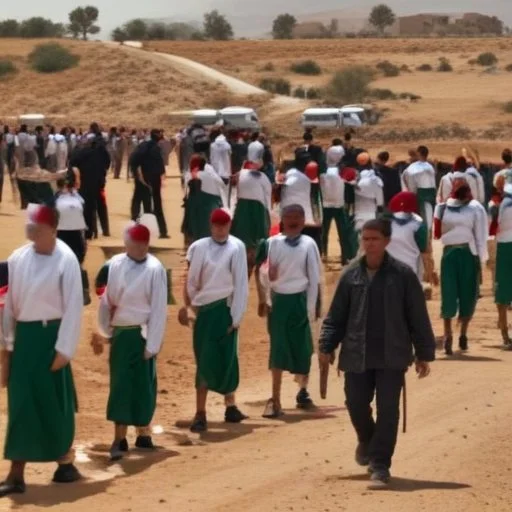
Nestled in the heart of Algeria's Mediterranean coast, Souhane was a peaceful village, far removed from the tumultuous landscape of the country's civil war. However, on that fateful night, the village's tranquility was shattered as the sound of gunfire and screams pierced the air. The attackers, suspected to be Islamist militants, descended upon the village with ruthless efficiency, slaughtering men, women, and children indiscriminately.
The Souhane massacre sent shockwaves throughout Algeria, with the nation mourning the loss of innocent lives and struggling to come to terms with the senseless brutality. The attack was widely condemned by international leaders, human rights organizations, and the Algerian government, which vowed to bring the perpetrators to justice.
The survivors of the massacre were left to pick up the pieces of their shattered lives, grappling with the trauma of that horrific night. The village of Souhane was never the same, with the once-thriving community struggling to rebuild and heal. The Algerian government established a commission to investigate the massacre, but the perpetrators were never brought to trial, leaving the victims' families seeking justice.
The Souhane massacre bears eerie similarities to other tragedies of the Algerian civil war, such as the Bentalha massacre of 1997, which claimed the lives of over 200 civilians. Both incidents were characterized by the brutal efficiency of the perpetrators and the devastating impact on the civilian population. The Souhane massacre, however, stands out for its sheer brutality and the brazen nature of the attack.
"I remember the sound of gunfire and the cries of my neighbors. I was hiding under my bed, too afraid to move. When it was over, I came out to find my family, my friends, my entire village – gone." – A Souhane massacre survivor
The Souhane massacre will forever be etched in the collective memory of Algeria, a grim reminder of the devastating consequences of religious extremism and political violence. As the nation continues to grapple with the legacies of its civil war, the massacre serves as a poignant reminder of the human cost of conflict and the importance of promoting peace, tolerance, and understanding.
Ahmed Bouteflika: The President Who Promised Justice
Ahmed Bouteflika, the Algerian President at the time of the Souhane massacre, was a key figure in the country's response to the tragedy. Bouteflika, who had come to power in 1999, promised to bring the perpetrators to justice and provide reparations to the victims' families.
Despite his promises, Bouteflika's government was criticized for its lack of progress in investigating the massacre and bringing those responsible to trial. Many saw his response as inadequate, and the lack of accountability was a major point of contention for the families of the victims.
However, Bouteflika's government did establish a commission to investigate the massacre, and it provided some compensation to the victims' families. While these efforts were seen as insufficient by many, they marked a small step towards acknowledging the tragedy and seeking justice.
The Souhane Massacre in Algerian Literature
The Souhane massacre has had a significant impact on Algerian literature, with many writers exploring the event and its aftermath in their work. Novels like Rachida by Tahar Djaout and The Attack by Yasmina Khadra grappling with the trauma and horror of the massacre.
These literary works not only pay tribute to the victims but also serve as a way to process the collective trauma of the Algerian people. They provide a unique perspective on the event, highlighting the human cost of the violence and the struggles of those who survived.
The literary response to the Souhane massacre has also helped to keep the memory of the event alive, ensuring that it is not forgotten and that lessons are learned from the tragedy.
The Algerian Civil War: A Geopolitical Context
The Souhane massacre took place during the Algerian civil war, a brutal conflict that lasted from 1991 to 2002. The war was sparked by the cancellation of elections that the Islamic Salvation Front (FIS) was poised to win.
The conflict involved multiple factions, including the Algerian government, Islamist groups like the FIS and the GIA, and other armed militias. The war was marked by brutal violence, massacres, and human rights abuses, with civilians often caught in the crossfire.
The geopolitical context of the war was complex, with international powers like the United States and France supporting the Algerian government, while others like Iran and Sudan backed the Islamist groups.

Historians and the Souhane Massacre
Historians have approached the Souhane massacre from different perspectives, with some focusing on the political and military context of the event, while others have examined its social and cultural impact.
Some historians have seen the massacre as a turning point in the Algerian civil war, marking a shift towards increased violence and extremism. Others have argued that it was a symptom of deeper structural issues, such as poverty, inequality, and political repression.
Despite these differing interpretations, historians agree that the Souhane massacre was a pivotal event in Algerian history, one that continues to shape the country's politics, society, and culture to this day.
The Politics of Violence: Understanding the Souhane Massacre
The Souhane massacre was a brutal example of the violence that characterized the Algerian civil war. However, it was more than just a senseless act of violence – it was a deliberate political strategy aimed at intimidating and terrorizing civilians.
The massacre was likely orchestrated by Islamist groups, who sought to create a climate of fear and instability. However, the Algerian government also bore responsibility, as its own security forces were accused of human rights abuses and extrajudicial killings.
Understanding the political context of the Souhane massacre is crucial to grasping the complexity of the Algerian civil war and the motivations of its various factions.