


On April 26, 1994, South Africa embarked on a historic journey, hosting its first multiracial election, which would ultimately signal the demise of apartheid and usher in a new era of democracy and reconciliation. The election, won by Nelson Mandela's African National Congress (ANC), marked a watershed moment in the country's struggle for equality and justice.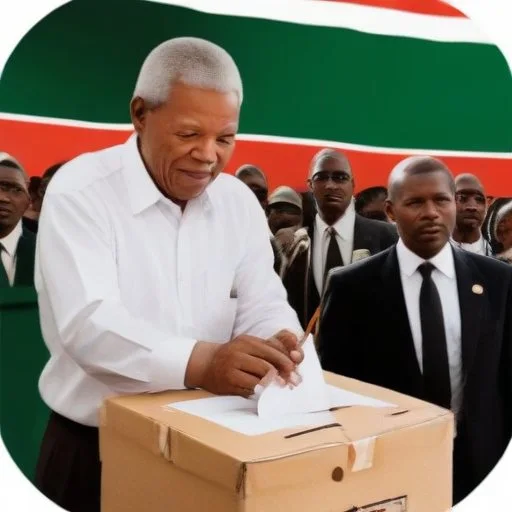
The path to democracy was paved by decades of resistance against the apartheid regime, which had systematically disenfranchised and oppressed the country's majority black population. The ANC, founded in 1912, had long been at the forefront of the fight against apartheid, with Mandela, a charismatic leader and anti-apartheid activist, at its helm.
The transition to democracy was facilitated by a series of negotiations and compromises between the ANC, the National Party, and other stakeholders. The Interim Constitution, adopted in 1993, paved the way for the country's first non-racial, democratic election. The campaign was characterized by a sense of euphoria and trepidation, as South Africans from all walks of life prepared to exercise their right to vote for the first time.
As South Africans flocked to the polls, the atmosphere was electric. The election, monitored by international observers, was largely peaceful and free of incident. The ANC, with its message of unity and reconciliation, swept to victory, securing 62.6% of the vote. Nelson Mandela, now the country's first black president, addressed the nation, pledging to work towards healing the wounds of apartheid and building a united, equal society.
The election had a profound impact on South African culture and society. It marked a shift towards inclusivity and diversity, as people from all racial and ethnic backgrounds came together to celebrate their newfound freedom. The election also sparked a renewed sense of national pride and identity, as South Africans began to forge a new, post-apartheid narrative.
Despite the election's success, controversies surrounding vote-rigging and intimidation marred the process. However, these allegations were largely dismissed by international observers, who declared the election free and fair.
"Never, never, and never again shall it be that this beautiful land will again experience the oppression of one by another." – Nelson Mandela, in his victory speech
The election set the stage for a new era of cooperation and reconciliation in South Africa. It paved the way for the country's Truth and Reconciliation Commission, established in 1995, which aimed to address the atrocities committed during the apartheid era.
Nelson Mandela's leadership during this period earned him the Nobel Peace Prize in 1993, which he shared with former President F.W. de Klerk.
The triumph of the ANC in South Africa's first multiracial election continues to inspire generations of activists, politicians, and ordinary people around the world. It stands as a testament to the power of democracy and the human spirit, and serves as a beacon of hope for those fighting for equality and justice.
Nelson Mandela's life was a testament to his unwavering commitment to the fight against apartheid. Born in 1918, Mandela was raised in a small village in rural South Africa. He was educated at Fort Hare University and later attended the University of the Witwatersrand, where he studied law. It was during his university days that Mandela became involved in the anti-apartheid movement, eventually co-founding the ANC Youth League in 1944.
Mandela's leadership skills and charisma quickly made him a prominent figure in the ANC. He was arrested in 1962 and sentenced to life imprisonment, but continued to inspire the anti-apartheid movement from behind bars. Released in 1990, Mandela played a crucial role in negotiating the transition to democracy, and his message of unity and reconciliation resonated with people from all walks of life.
The apartheid regime in South Africa was not an isolated phenomenon. It was part of a broader global context of racial segregation and discrimination that characterized the 20th century. The United States, with its own history of segregation and civil rights struggles, was a key player in the international community's response to apartheid.
In the 1950s and 1960s, the international community began to take notice of the atrocities committed by the apartheid regime. The United Nations condemned apartheid in 1962, and many countries imposed economic sanctions on South Africa. The anti-apartheid movement gained momentum globally, with protests and boycotts becoming increasingly common.
The 1994 election was a watershed moment in South African cultural history. For the first time, people from all racial and ethnic backgrounds came together to exercise their right to vote. The election marked a shift towards inclusivity and diversity, as South Africans began to forge a new, post-apartheid narrative.
The election also had a profound impact on South African art and literature. Many artists and writers used their work to reflect on the country's past, present, and future. The election sparked a renewed sense of national pride and identity, as South Africans began to explore what it meant to be South African.
The transition to democracy was not without its challenges. The National Party, which had ruled South Africa since 1948, was hesitant to relinquish power. However, the party's leader, F.W. de Klerk, recognized that the writing was on the wall and began to negotiate with the ANC in the late 1980s.
The negotiations were marked by intense political maneuvering. The ANC, led by Mandela, sought to ensure that the transition to democracy was genuine, while the National Party sought to protect its own interests. The negotiations were facilitated by the International Community, which applied pressure on both sides to reach an agreement.
The 1994 election had significant economic implications for South Africa. The country's economy, which had been stagnant for decades, began to grow rapidly. Foreign investment poured in, and the country's credit rating improved dramatically.
The election also marked a shift towards economic empowerment for black South Africans. The ANC government implemented policies aimed at addressing the economic disparities of the past, including affirmative action and black economic empowerment.