


The South Korean presidential election of 1980 will forever be remembered as a sham, a mere formality that rubber-stamped General Chun Doo-hwan's authoritarian grip on power. In a farcical process, the National Conference for Unification elected Chun as the President of the Fourth Republic of Korea, unopposed and unchallenged.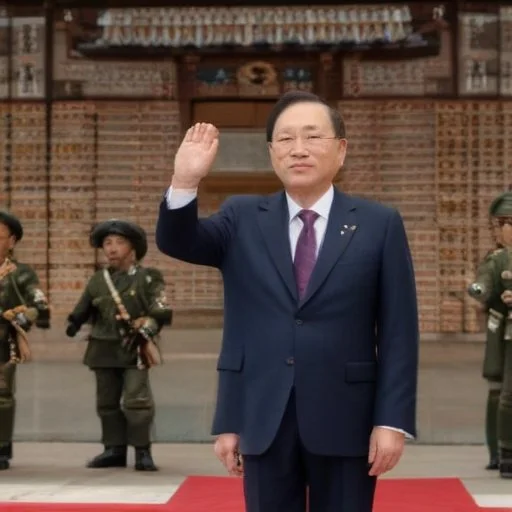
The seeds of Chun's rise to power were sown in the chaos following the assassination of President Park Chung-hee in 1979. A skilled military strategist and charismatic leader, Chun capitalized on the power vacuum, masterfully manipulating the political landscape to his advantage. The May 17th Coup d'état of 1980, which Chun orchestrated, marked the beginning of his ascent to the highest office in the land.
The National Conference for Unification, a nominally democratic body, was instead a carefully crafted instrument of Chun's control. Comprising handpicked delegates, the conference was little more than a rubber stamp, providing a veneer of legitimacy to Chun's military-backed regime. With no viable opponents, Chun's election was a foregone conclusion, solidifying his grasp on power.
Chun's presidency marked the beginning of a nine-year period of authoritarian rule, characterized by suppression of dissent, censorship, and human rights abuses. The regime's efficient mechanisms of control and surveillance ensured that opposition was swiftly quashed, creating a climate of fear and intimidation.
Chun's presidency was marred by widespread criticism, both domestically and internationally. Human rights organizations and foreign governments condemned the regime's brutal suppression of dissent, while ordinary Koreans lived in fear of the authorities. The election was widely seen as a sham, undermining the legitimacy of Chun's rule.
The 1980 presidential election, far from being a democratic milestone, served as a catalyst for Chun's consolidation of power. The consequences of this election were far-reaching, shaping the course of South Korea's political landscape for years to come. Today, the event serves as a cautionary tale, highlighting the dangers of unchecked power and the importance of democratic accountability.
In conclusion, the 1980 South Korean presidential election was a pivotal moment in the country's history, marking the beginning of a dark period of authoritarian rule. As we reflect on this event, we are reminded of the importance of democratic values, human rights, and the need for eternal vigilance in protecting the principles of freedom and justice.
The 1979 assassination of President Park Chung-hee sent shockwaves throughout South Korea, creating a power vacuum that General Chun Doo-hwan would soon exploit. In the immediate aftermath, a group of high-ranking military officials, including Chun, formed the Special Committee for National Security Measures. This committee, tasked with restoring order and stability, would become the nucleus of Chun's power base.
The committee's early actions were shrouded in secrecy, with closed-door meetings and unofficial decrees issued under the guise of "national security." As Chun's influence grew, so too did his ambition, and he began to orchestrate a series of strategic maneuvers that would ultimately propel him to the presidency.
One such maneuver involved purging the military and government of potential rivals, a move that allowed Chun to consolidate power and eliminate opposition. By the spring of 1980, his grip on the country was all but assured, paving the way for the sham presidential election that would formalize his rule.

General Chun Doo-hwan's rise to power was as much a testament to his cunning and strategic thinking as it was to his charisma and charm. A skilled military strategist, Chun was known for his ability to think on his feet and adapt to changing circumstances.
Born in 1933, Chun came from a humble background, but his natural talent and ambition drove him to succeed in the military. He rose quickly through the ranks, earning the respect and admiration of his peers.
However, Chun's ambition and desire for power soon consumed him, leading him to abandon his democratic ideals and embrace authoritarianism. His ruthless suppression of dissent and opposition would become the hallmark of his regime, earning him the scorn and contempt of many Koreans.
The 1980 South Korean presidential election bears striking similarities to other sham elections in history, where authoritarian leaders have used manipulated democratic processes to consolidate power.
In Egypt, for example, President Anwar El-Sadat's 1976 referendum, which granted him sweeping powers, was widely seen as a sham. Similarly, in Chile, Augusto Pinochet's 1980 plebiscite, which extended his rule, was marked by widespread human rights abuses and electoral manipulation.
In each of these cases, authoritarian leaders exploited power vacuums, used propaganda and coercion to silence opposition, and manipulated electoral processes to legitimize their rule. The parallels between these events and Chun's rise to power in South Korea are striking, highlighting the dangers of unchecked power and the importance of democratic accountability.

The cultural impact of General Chun Doo-hwan's regime was profound and far-reaching, affecting every aspect of Korean life. The regime's strict censorship and propaganda machinery ensured that the media was tightly controlled, with dissenting voices silenced or co-opted.
Artists, writers, and intellectuals were particularly vulnerable to persecution, with many forced to flee the country or face imprisonment. The regime's brutal suppression of the Gwangju Democratization Movement in 1980, which killed hundreds of protesters, would become a defining moment in Korean history, inspiring a generation of activists and artists to challenge the regime.
Despite the regime's attempts to stifle creativity and free expression, Korean culture continued to thrive, with underground art movements and dissident writers finding ways to circumvent censorship and express their dissent.
The 1980 South Korean presidential election took place against the backdrop of a rapidly changing global geopolitical landscape. The Cold War was at its height, and the United States, South Korea's key ally, was deeply invested in maintaining regional stability.
As a result, the Reagan administration, which took office in 1981, was initially slow to criticize Chun's regime, preferring to view him as a bulwark against communist expansion in Asia. However, as human rights abuses and suppression of dissent continued, international pressure mounted, and the United States was eventually forced to re-evaluate its relationship with the regime.
The election also had significant implications for regional politics, with Japan and other neighboring countries watching with interest as Chun's regime consolidated power. The event marked a turning point in South Korea's relationships with its regional partners, setting the stage for a complex and often fraught period of diplomatic maneuvering.