


On a fateful night in 1983, the fate of humanity hung precariously in the balance, and one man, Soviet Air Force officer Stanislav Petrov, stood alone as the guardian of the apocalypse. His split-second decision to trust his instincts over the automated response protocols would prevent a catastrophic nuclear retaliation, saving the world from the brink of destruction.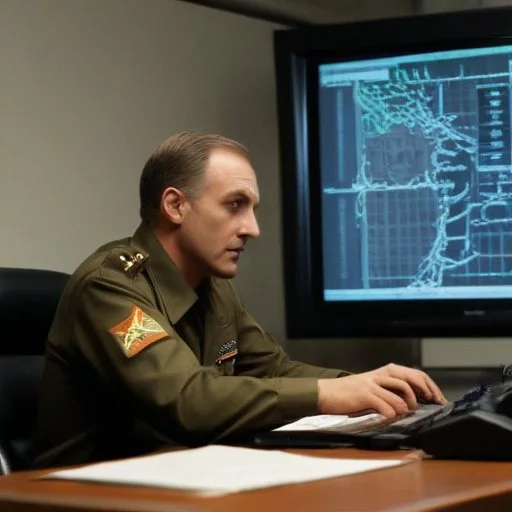
Stanislav Petrov was no ordinary man. Born in 1939, in Vladivostok, Russia, he grew up with a sense of duty and responsibility. As a young officer, he was handpicked to join the Soviet Air Force's most elite unit, tasked with monitoring the country's early warning systems for potential nuclear threats.
Petrov's years of service had instilled in him a deep understanding of the complexities of the systems and the importance of remaining vigilant. He had seen false alarms before, and his experience had taught him to trust his instincts.
On September 26, 1983, Petrov sat in the dimly lit command center, surrounded by rows of humming computer terminals. The silence was shattered when a flashing warning screen screamed INCOMING MISSILE ATTACK from the United States. The automated system indicated that five Minuteman intercontinental ballistic missiles were headed towards Russia, and the protocol dictated an immediate nuclear response.
But Petrov's gut told him something was off. The systems were still in their infancy, and the detectors had cried wolf before. He recalled a similar false alarm just months prior, which had been caused by a rare alignment of sunlight and clouds. He knew that the odds of a genuine attack without any prior warning signs were low.
Petrov took a deep breath and made the decision to override the automated response protocols, dismissing the warnings as a computer glitch. It was a choice that would haunt him for years to come, but one that he knew was right.
In that moment, Petrov's actions single-handedly prevented a catastrophic nuclear retaliation that would have unraveled the fabric of human existence. The weight of his decision was crushingly immense, but he remained steadfast, trusting his instincts and experience.
The world was blissfully unaware of the close call, and the incident was classified for over a decade. Petrov's actions were only recognized in the 1990s, when the details of that fateful night were declassified.
The incident had a profound impact on the Soviet Union's nuclear early warning systems, leading to significant reforms and improvements. It also sparked a renewed focus on diplomatic relations between the United States and the Soviet Union, contributing to the eventual reduction of nuclear stockpiles.
Stanislav Petrov's actions on that night in 1983 serve as a testament to the power of human judgment and experience. He remains an unsung hero, whose bravery and intuition saved humanity from the brink of destruction.
As we look back on that fateful night, we are reminded of the importance of remaining vigilant, trusting our instincts, and taking responsibility for our actions. Petrov's legacy serves as a beacon of hope, inspiring future generations to strive for a world where such close calls are a relic of the past.
In a world where machines and computers increasingly dominate our lives, Petrov's story serves as a poignant reminder of the importance of human intuition and experience. As we navigate the complexities of the modern world, we would do well to remember the heroism of Stanislav Petrov, the guardian of the apocalypse.
The 1980s were marked by heightened tensions between the United States and the Soviet Union, with proxy wars, espionage, and rhetorical battles fueling the flames of the Cold War. The era was defined by a sense of mutually assured destruction, where a single misstep could spark a global catastrophe. It was in this precarious environment that Stanislav Petrov made his fateful decision, one that would serve as a catalyst for a re-evaluation of the nuclear standoff.
The Soviet Union's early warning systems were still in their infancy, and the false alarm that September night was not an isolated incident. Just a few months prior, a similar alert had been triggered by a rare alignment of sunlight and clouds. These close calls highlighted the vulnerabilities of the system, and the need for a more robust and reliable means of detecting potential threats.
The geopolitical context of the time played a significant role in shaping the events of that night. The Soviet Union was still reeling from the aftermath of the Afghan War, and the economy was struggling to keep pace with the West. The last thing the Soviet leadership needed was a costly and potentially catastrophic conflict with the United States.
Stanislav Petrov's decision-making process was influenced by his personality and work ethic. A meticulous and detail-oriented individual, he was known for his attention to detail and ability to remain calm under pressure. These traits, honed through years of service in the Soviet Air Force, allowed him to approach the situation with a clear head and a critical eye.
Petrov's character was also shaped by his upbringing and family. Born in Vladivostok, he was instilled with a strong sense of duty and responsibility from a young age. This sense of duty, combined with his natural instincts and experience, allowed him to make the difficult decision to override the automated response protocols.
"I was just doing my job, and I did what I thought was right." This simple statement belies the complexity of Petrov's character, one that was marked by a deep sense of responsibility and a willingness to take the road less traveled.The incident that September night had far-reaching implications for the Soviet Union's nuclear policy. The false alarm highlighted the vulnerabilities of the early warning systems, and the need for a more robust and reliable means of detecting potential threats. This led to a re-evaluation of the Soviet Union's nuclear doctrine, with a greater emphasis on verification and diplomacy.
The incident also sparked a renewed focus on diplomatic relations between the United States and the Soviet Union. The near-miss served as a catalyst for a series of high-level talks, aimed at reducing tensions and preventing future close calls. This rapprochement would ultimately contribute to the eventual reduction of nuclear stockpiles and the end of the Cold War.
The political aftermath of the incident saw a shift in the Soviet Union's stance on nuclear arms, with a greater emphasis on disarmament and international cooperation.
The incident that September night had a profound impact on popular culture, with Stanislav Petrov becoming an unlikely hero. His story has been immortalized in films, books, and documentaries, serving as a testament to the power of human judgment and intuition.
The incident also sparked a renewed interest in the Cold War era, with many artists and writers drawing inspiration from the events of that fateful night. This cultural fascination with the Cold War serves as a reminder of the importance of understanding our shared history, and the need to learn from the lessons of the past.
"The Man Who Saved the World", a 2014 film about Petrov's life, serves as a testament to the enduring power of his story, one that continues to captivate audiences around the world.Stanislav Petrov's story has been subject to varying interpretations and perspectives over the years. Some historians have hailed him as a hero, who single-handedly prevented a catastrophic nuclear war. Others have argued that his actions were a product of a flawed system, one that relied too heavily on human intuition and flawed technology.
Regardless of interpretation, Petrov's story serves as a fascinating case study in the complexities of historical narrative. His decision to override the automated response protocols raises important questions about the role of human agency in historical events, and the importance of individual perspectives in shaping our understanding of the past.
Historians continue to grapple with the implications of Petrov's decision, one that serves as a powerful reminder of the complexities and contingencies of historical events.