


In a remote corner of the Kazakh desert, on August 29, 1949, the Soviet Union shook the world by detonating its first atomic bomb, codenamed RDS-1, or "First Lightning" – a 22-kiloton behemoth that marked the country's triumphant entry into the nuclear club.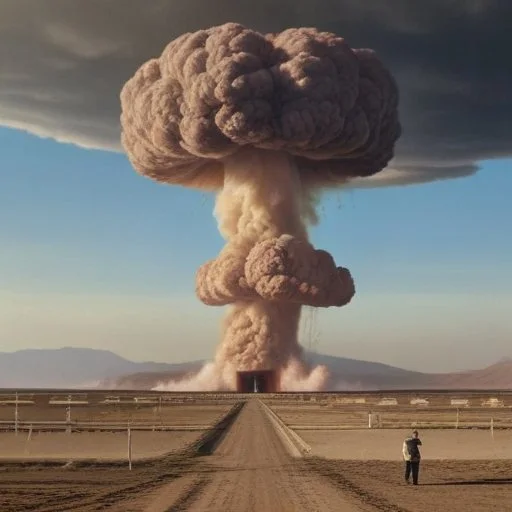
This historic event not only demonstrated the Soviet Union's capability to develop and deploy nuclear weapons but also sent a powerful message to the Western bloc, effectively ending the United States' monopoly on nuclear power.
Igor Kurchatov, a brilliant physicist and head of the Soviet nuclear program, led the team of scientists and engineers who toiled tirelessly to bridge the nuclear gap with the West. Kurchatov's exceptional leadership and vision played a crucial role in the success of the project, earning him the nickname "The Chief" among his peers.
The successful detonation of RDS-1 sent shockwaves around the world, prompting the United States to re-evaluate its nuclear arsenal and strategies. The event also sparked a nuclear arms race between the two superpowers, which would continue for decades.
The Soviet Union's entry into the nuclear club had far-reaching cultural and social implications, from inspiring a new generation of scientists and engineers to fuelling fears of nuclear war and disarmament movements.
The RDS-1 test not only demonstrated the Soviet Union's military prowess but also contributed significantly to the country's scientific and technological advancements. Today, the legacy of the Soviet atomic bomb project continues to shape the nation's nuclear policy and diplomacy.
"We must build the bomb, no matter what."
— Igor Kurchatov, quoted in his memoirs, emphasizing the urgency and importance of the Soviet atomic bomb project.
The Soviet atomic bomb project serves as a testament to the power of human ingenuity, perseverance, and collaboration. It showcases the remarkable achievements possible when brilliant minds come together to pursue a common goal, despite the challenges and obstacles they may face.
Igor Kurchatov was awarded the title of Hero of Socialist Labor for his outstanding contribution to the Soviet atomic bomb project. He also received the Stalin Prize, the highest scientific honor in the Soviet Union at the time.
The development of the RDS-1 bomb was a culmination of several years of intense research and experimentation. In the early 1940s, the Soviet Union had begun to gather intelligence on the American atomic bomb project, and Stalin had made it clear that the Soviet Union would not be left behind. The project was shrouded in secrecy, with only a select few aware of its existence. Despite the challenges, Igor Kurchatov's team made rapid progress, with the first nuclear reactor being built in 1946.
The team faced numerous setbacks, including a lack of resources and a scarcity of skilled personnel. However, they persevered, driven by the knowledge that the fate of the Soviet Union depended on their success. In the months leading up to the test, the team worked tirelessly to ensure that every detail was perfect. On August 29, 1949, their hard work paid off, as the RDS-1 bomb was successfully detonated at the Semipalatinsk Test Site.

Igor Kurchatov's leadership played a crucial role in the success of the RDS-1 project. A brilliant physicist and charismatic leader, Kurchatov inspired confidence in his team, even in the darkest of times. His exceptional knowledge of nuclear physics and his ability to think outside the box helped to overcome the numerous technical challenges that the team faced.
Kurchatov's dedication to the project was unwavering, and he spent countless hours working alongside his team, often under extreme pressure. His commitment to the Soviet Union and its people drove him to push the boundaries of what was thought possible, and his vision for a nuclear-armed Soviet Union was unwavering.
The detonation of the RDS-1 bomb had a profound impact on Soviet culture, inspiring a new generation of scientists and engineers. The event sparked a wave of national pride, with the Soviet Union's achievement hailed as a symbol of its technological prowess and military might.
The cultural impact of the RDS-1 bomb was not limited to the Soviet Union. Across the world, the event was seen as a demonstration of the Soviet Union's capabilities, and it sparked a new era of nuclear anxiety. The fear of nuclear war and the need for disarmament became a dominant theme in popular culture, influencing art, literature, and music.

The development of the RDS-1 bomb marked a significant milestone in the Soviet Union's technological advancement. The project required the development of new technologies, including advanced nuclear reactors and complex radiation detection systems.
The success of the RDS-1 bomb paved the way for further technological innovation, driving the development of more advanced nuclear weapons and civilian applications. The Soviet Union's nuclear program became a symbol of its scientific and technological prowess, and it played a key role in shaping the nation's nuclear policy and diplomacy.
The detonation of the RDS-1 bomb marked a significant shift in the global balance of power, with the Soviet Union emerging as a major nuclear power. The event sent a powerful message to the Western Bloc, and it sparked a new era of nuclear diplomacy and brinksmanship.
The Cold War had entered a new phase, with the threat of nuclear war hanging over the world like a sword of Damocles. The Soviet Union's nuclear capabilities had fundamentally altered the rules of the game, and it would take the world years to adjust to the new reality.