


The Sverdlovsk anthrax outbreak is infamously known for being one of the worst biological accidents in history, claiming the lives of at least 66 people and an unknown number of livestock in 1979. This catastrophic event was the result of a ventilation system malfunction at a Soviet biowarfare laboratory in Sverdlovsk, Russia, which released a deadly cloud of anthrax spores into the atmosphere.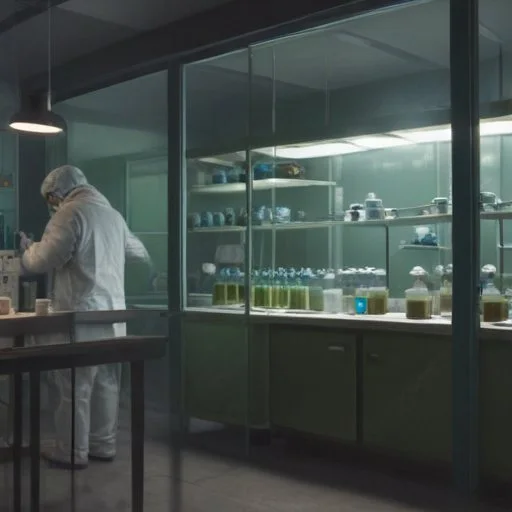
In the height of the Cold War, the Soviet Union was secretly developing biological weapons at a laboratory in Sverdlovsk, a city in the Ural Mountains region of Russia. The laboratory, known as Compound 19, was one of the largest biowarfare facilities in the world, employing hundreds of scientists and technicians. The primary goal of the laboratory was to develop and produce biological agents, including anthrax, for use in biological warfare.
On April 2, 1979, a routine maintenance procedure went horribly wrong. A ventilation system malfunction occurred, releasing a large quantity of anthrax spores into the atmosphere. The accident was not immediately reported, and it took several days for the authorities to acknowledge the incident. The delay in response led to a significant spread of the disease, making it difficult to contain the outbreak.
The Sverdlovsk anthrax outbreak had far-reaching consequences, both domestically and internationally. The incident highlighted the dangers of biological warfare and the importance of strict safety protocols in handling deadly pathogens. The incident also led to increased tensions between the Soviet Union and the United States, with the latter accusing the former of violating the Biological Weapons Convention.
The incident also led to significant changes in the way biological laboratories operate, with a greater emphasis on safety and security. The incident spurred the development of new techniques for detecting and identifying biological agents, as well as the development of new vaccines and treatments for anthrax.
The Sverdlovsk anthrax outbreak had a profound impact on the people of Sverdlovsk and the surrounding areas. The incident led to widespread fear and anxiety, and many people were forced to live in quarantine for extended periods. The incident also led to a greater awareness of the dangers of biological warfare and the importance of transparency in scientific research.
The incident has also been the subject of several books, films, and documentaries, including the award-winning film "Anthrax" (2001), which tells the story of the incident and its aftermath.
The Sverdlovsk anthrax outbreak was shrouded in secrecy, and the Soviet government was accused of covering up the incident and downplaying its severity. The incident has been the subject of much speculation and conspiracy theories, with some claiming that the incident was intentional or part of a larger biological warfare program.
The incident has also raised questions about the ethics of biological warfare research and the potential risks and consequences of such research. The incident has sparked a heated debate about the need for greater transparency and accountability in scientific research, particularly in the field of biotechnology.
The Sverdlovsk anthrax outbreak has been the subject of numerous historical accounts and investigations, each offering a unique perspective on the events surrounding the incident. One of the most comprehensive accounts is provided by Dr. kanatjan Alibekov, a former Soviet scientist who defected to the United States in 1992. In his book "Biohazard," Alibekov provides a detailed account of the incident, including the events leading up to the accident and the subsequent cover-up.
Another important account is provided by the Soviet journalist and dissident, Yuri Shchekochikhin, who was one of the first to report on the incident. Shchekochikhin's reporting helped to expose the true extent of the incident and highlighted the Soviet government's attempts to conceal the truth.

The Sverdlovsk anthrax outbreak is often compared to other significant biological accidents, such as the 1986 Chernobyl nuclear disaster. While both incidents were catastrophic in terms of their impact on human life and the environment, they differ significantly in terms of their causes and consequences. The Chernobyl disaster was the result of a safety test gone wrong, whereas the Sverdlovsk outbreak was the result of a ventilation system malfunction.
Another significant comparison can be made with the 2001 anthrax attacks in the United States, which occurred just weeks after the 9/11 attacks. Like the Sverdlovsk outbreak, the 2001 attacks highlighted the vulnerability of civilians to biological agents and raised concerns about the potential for bioterrorism.
The Sverdlovsk anthrax outbreak had a significant impact on popular culture, inspiring numerous books, films, and documentaries. One of the most notable examples is the award-winning film "Anthrax" (2001), which tells the story of the incident and its aftermath.
The incident also inspired several literary works, including "The Anthrax Files" by Dr. Leonard Cole, which provides a detailed account of the incident and its implications for biological warfare.

The Sverdlovsk anthrax outbreak led to significant advances in the field of microbiology and epidemiology. The incident highlighted the importance of developing effective vaccines and treatments for anthrax, leading to increased research and investment in these areas.
The incident also led to the development of new techniques for detecting and identifying biological agents, including the use of PCR (polymerase chain reaction) and other molecular biological methods.
The Sverdlovsk anthrax outbreak had a significant impact on the development of biotechnology, leading to increased investment in safety protocols and containment procedures. The incident highlighted the importance of developing safe and secure facilities for handling dangerous pathogens.
The incident also led to the development of new technologies for detecting and responding to biological accidents, including the use of sensors and other detection systems.