


The Battle of Shumshu, fought on August 18, 1945, is remembered as the pivotal moment when Soviet forces launched a surprise attack on the northernmost island of the Kuril Islands, catapulting the Soviet Union into the Pacific Theater of World War II. This bold move marked the beginning of the Soviet invasion of the Kuril Islands, a strategic archipelago rich in natural resources and critical for Soviet interests in the region.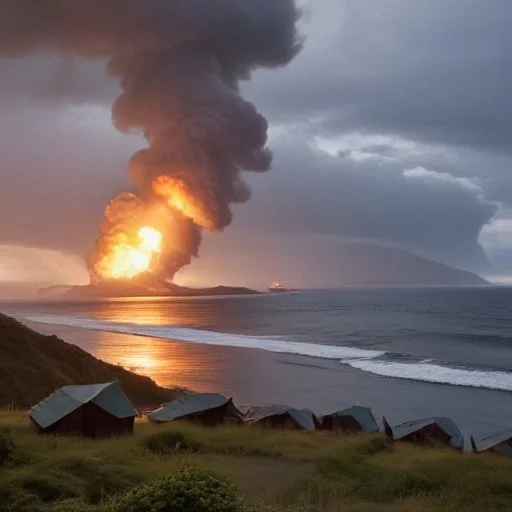
The deployment of Soviet troops on Shumshu Island was masterfully planned and executed under the thick veil of dense fog. As the sun rose on that fateful morning, Japanese defenders were caught off guard as Soviet forces emerged from the mist, landing at Takeda Beach with a fierce determination. The element of surprise proved decisive, as Japanese coastal defenses were quickly overwhelmed, allowing the Soviet Union to push inland and secure a foothold on the island.
The Soviet invasion of the Kuril Islands was a calculated move to secure the region's vast natural resources, including fisheries, timber, and minerals. The archipelago's strategic location also provided the Soviet Union with a crucial foothold in the Pacific, enabling them to project power and influence in the post-war era. The Battle of Shumshu marked a significant shift in the Soviet Union's Pacific ambitions, setting the stage for a new era of competition and cooperation with neighboring nations.
The Battle of Shumshu holds a special place in the annals of Soviet and Japanese history, symbolizing the complexities of their wartime relationship and the subsequent Cold War rivalry. For the Soviet Union, the invasion of the Kuril Islands marked a significant expansion of their Pacific presence, while for Japan, it represented a painful reminder of their wartime defeat and the subsequent occupation. The battle continues to shape the cultural narrative of both nations, influencing their relationships and interactions to this day.
The Battle of Shumshu and the subsequent Soviet occupation of the Kuril Islands had far-reaching implications for the region and the world at large. The invasion marked a significant shift in the global balance of power, as the Soviet Union emerged as a major player in the Pacific. The battle also set the stage for the complex and often contentious relationship between the Soviet Union and Japan in the post-war era, influencing generations of diplomats, policymakers, and ordinary citizens.
In conclusion, the Battle of Shumshu was a pivotal moment in the Soviet Union's Pacific ambitions, marking a significant expansion of their influence and power in the region. As we reflect on this chapter in history, we are reminded of the importance of cooperation, diplomacy, and mutual understanding in shaping the course of international relations.
"The Kuril Islands are the keys to the Pacific, and whoever controls them will hold the fate of the region in their hands." - Aleksandr Vasilevsky
General Aleksandr Vasilevsky was the brilliant strategist who orchestrated the Soviet Union's surprise attack on Shumshu Island. Born in 1895, Vasilevsky rose through the ranks of the Red Army, distinguishing himself in numerous campaigns, including the Battle of Stalingrad. He was a key advisor to Stalin and played a crucial role in planning the Soviet Union's Eastern Front operations during World War II. Vasilevsky's strategic genius and ability to adapt to changing circumstances made him the perfect candidate to lead the invasion of the Kuril Islands.
Vasilevsky's leadership during the Battle of Shumshu earned him the title of Hero of the Soviet Union, the highest honor bestowed by the Soviet government. His success in securing the Kuril Islands cemented his reputation as one of the most skilled military minds of the 20th century.
The Soviet Union's decision to invade the Kuril Islands was deeply rooted in its geopolitical context. Following the end of World War II, the Soviet Union sought to expand its influence in the Pacific, countering the growing presence of the United States in the region. The Kuril Islands, rich in natural resources and strategically located, offered a unique opportunity for the Soviet Union to project power and secure its interests.
The Soviet Union's Pacific ambitions were also driven by its desire to secure a maritime border with Japan, which had long been a source of tension between the two nations. By occupying the Kuril Islands, the Soviet Union gained a significant advantage in its negotiations with Japan, enabling it to exert greater influence over the region.
The Soviet invasion of the Kuril Islands had a profound environmental impact on the region. The intense fighting and subsequent occupation led to widespread destruction of habitats and ecosystems. The island's unique biodiversity, which included species found nowhere else in the world, was severely threatened by the conflict.
The Soviet occupation also led to the exploitation of the Kuril Islands' natural resources, including fishing and logging. The unsustainable practices employed by the Soviet Union had long-term consequences for the region's environment, including deforestation, pollution, and the depletion of fish stocks.

The Soviet invasion of the Kuril Islands shares similarities with other island campaigns throughout history. The battle for Shumshu Island bears resemblance to the Allied campaign in the Pacific during World War II, where island-hopping was a crucial strategy for securing the Pacific Theater.
Additionally, the Soviet invasion of the Kuril Islands draws parallels with the Japanese occupation of neighboring islands during World War II. Both campaigns demonstrate the strategic importance of island territories in modern warfare and the far-reaching consequences of their occupation.
The Soviet Union's decision to invade the Kuril Islands was the culmination of a complex series of events. Following the atomic bombings of Hiroshima and Nagasaki, the Soviet Union declared war on Japan, citing concerns over Japanese aggression in Manchuria and the need to secure the region's natural resources.
In the weeks leading up to the Battle of Shumshu, the Soviet Union secretly mobilized its troops, assembling a formidable force of over 100,000 soldiers. Meanwhile, the Japanese defenders on Shumshu Island remained largely unaware of the impending attack, relying on outdated intelligence and inadequate defenses. The resulting mismatch in preparation and firepower proved decisive in the outcome of the battle.