


The Soviet liner Mikhail Lermontov, a luxurious cruise ship named after the renowned Russian poet, is infamous for its catastrophic grounding in the picturesque Marlborough Sounds, New Zealand, on a fateful evening in 1986. This maritime disaster, which occurred on February 16, 1986, would go on to be remembered for the extraordinary rescue efforts that ensured the safe evacuation of hundreds of passengers amidst the chaos.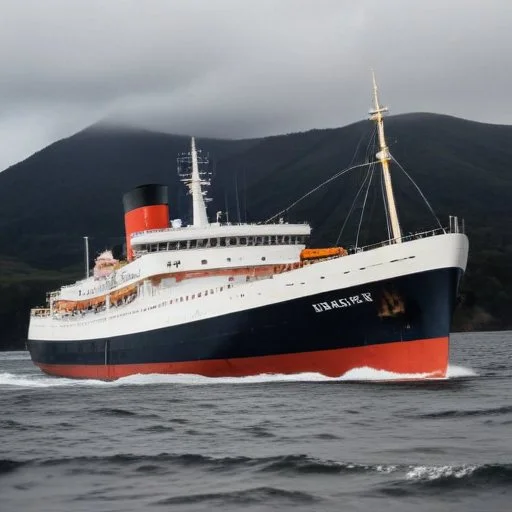
Built in 1972, the Mikhail Lermontov was a 20,000-ton behemoth of luxury, boasting opulent amenities and accommodations that catered to the elite. The ship's grandeur was rivaled only by its impressive size, making it a formidable presence on the high seas. As the flagship of the Soviet Union's merchant marine fleet, the Mikhail Lermontov embodied the essence of Soviet sophistication and grandeur.
On that fateful evening, the Mikhail Lermontov, under the command of Captain Vladislav Vizing, strayed off course while navigating the treacherous waters of the Marlborough Sounds. The ship's radar and navigation systems failed to detect the shallow waters, resulting in a devastating collision with the rugged coastline. The impact caused significant damage to the ship's hull, leaving it precariously perched on the rocks.
As news of the disaster spread, a massive rescue operation was launched, involving local authorities, rescue teams, and volunteers. Over 400 passengers and crew members were safely evacuated, with many more rescued in the subsequent days. The operation was nothing short of miraculous, with rescue teams braving treacherous conditions to reach the stranded passengers.
The Mikhail Lermontov disaster led to a significant overhaul of maritime safety regulations, with a greater emphasis on navigational safety and emergency preparedness. The incident also sparked a renewed focus on environmental protection, as the ship's grounding highlighted the importance of preserving the delicate marine ecosystem.
The Mikhail Lermontov disaster holds a special place in New Zealand's cultural heritage, serving as a testament to the country's resilience and capacity for community-driven action. The incident has inspired numerous works of art, literature, and music, cementing its place in the nation's collective consciousness.
The Mikhail Lermontov's ill-fated voyage serves as a poignant reminder of the importance of safety, preparedness, and community. As we reflect on this maritime disaster, we are reminded of the indomitable human spirit that perseveres in the face of adversity. The story of the Mikhail Lermontov is one of tragedy, triumph, and transformation – a testament to the power of human resilience and coordination in the face of catastrophic error.
Captain Vladislav Vizing, the commander of the Mikhail Lermontov, had a storied career in the Soviet merchant marine fleet. Born in 1935, Vizing began his maritime career as a young man, working his way up the ranks to become one of the most experienced captains in the fleet.
Despite his impressive credentials, Vizing's navigation errors led to the grounding of the Mikhail Lermontov. An investigation into the incident revealed a series of critical mistakes, including inadequate radar use and poor communication with the ship's crew.
Vizing's career was forever marred by the disaster, and he was subsequently relieved of his command. However, his legacy serves as a cautionary tale for mariners around the world, highlighting the importance of vigilance and preparedness in navigating treacherous waters.

The Mikhail Lermontov disaster not only had significant human consequences but also had a lasting impact on the environment. The grounding of the ship released over 3,000 tons of oil into the pristine waters of the Marlborough Sounds, causing widespread damage to the local ecosystem.
The cleanup efforts were extensive, with a team of over 1,000 workers laboring to remove the wreckage and contain the spill. Despite their best efforts, the incident highlighted the need for more stringent environmental regulations and emergency preparedness measures.
In the years following the disaster, New Zealand implemented a range of measures to protect its delicate marine ecosystem, including increased funding for environmental research and conservation efforts.
The Mikhail Lermontov disaster has had a profound impact on New Zealand's cultural identity, resonating deeply with the nation's sense of resilience and community spirit. In the aftermath of the disaster, local artists, writers, and musicians responded with a flurry of creative works, capturing the raw emotions and drama of the event.
The incident has been immortalized in song, with folk musicians composing ballads about the bravery of the rescue teams and the tragedy of the ship's demise. Local writers have penned novels and poems, exploring the human drama and emotional toll of the disaster.
Today, the Mikhail Lermontov remains an integral part of New Zealand's cultural heritage, a testament to the nation's capacity for compassion, courage, and community-driven action.

The Mikhail Lermontov disaster led to a significant overhaul of maritime safety regulations, with a particular focus on technological innovations. In the years following the incident, there was a concerted effort to improve navigational systems, including the implementation of more advanced radar and GPS technologies.
The disaster also highlighted the need for more effective emergency response systems, prompting the development of advanced communication networks and rescue equipment.
Today, the maritime industry continues to benefit from the lessons learned from the Mikhail Lermontov disaster, with ongoing innovations in safety and emergency preparedness.
Historians have long debated the significance of the Mikhail Lermontov disaster, interpreting the event through a range of lenses, from Cold War politics to maritime labor relations.
Some scholars have framed the disaster as a symbol of Soviet hubris, arguing that the ship's grandeur and opulence reflected the excesses of the Soviet regime.
Others have viewed the event as a triumph of human resilience, highlighting the bravery and cooperation of the rescue teams and local residents.
As historians continue to reinterpret the Mikhail Lermontov, the event remains a rich and complex topic, offering insights into the complexities of human nature and the workings of history itself.