Gorbachev awarded Nobel Peace Prize for reducing Cold War tensions
In a monumental nod to his groundbreaking reforms, Soviet Union leader Mikhail Gorbachev was awarded the Nobel Peace Prize on October 15, 1990. This prestigious recognition acknowledged his tireless efforts to diffuse Cold War tensions and usher in an era of glasnost and perestroika, marking a significant shift in the Soviet Union's stance towards the West. Gorbachev's visionary leadership and commitment to international cooperation paved the way for a new era of global relations, earning him this esteemed honor.
The Dawn of a New Era: Gorbachev's Nobel Peace Prize
On October 15, 1990, the Norwegian Nobel Committee bestowed upon
Mikhail Gorbachev the Nobel Peace Prize, a testament to his unwavering dedication to international cooperation and his pioneering efforts to reduce Cold War tensions. This momentous occasion marked a significant turning point in modern history, as the Soviet Union's leader was recognized for his visionary leadership in introducing reforms that transformed the global political landscape.
A New Era of Glasnost and Perestroika
Gorbachev's ascension to power in 1985 marked a significant departure from the Soviet Union's traditional stance of authoritarianism and isolationism. He introduced two revolutionary policies: glasnost (openness) and perestroika (restructuring). These reforms aimed to increase transparency, promote economic liberalization, and discourage the country's authoritarian grip on its citizens.
By introducing these reforms, Gorbachev paved the way for a more open and democratic society, encouraging dialogue between the Soviet Union and the West. His efforts led to a significant reduction in Cold War tensions, as the superpowers began to engage in diplomatic efforts to resolve long-standing conflicts.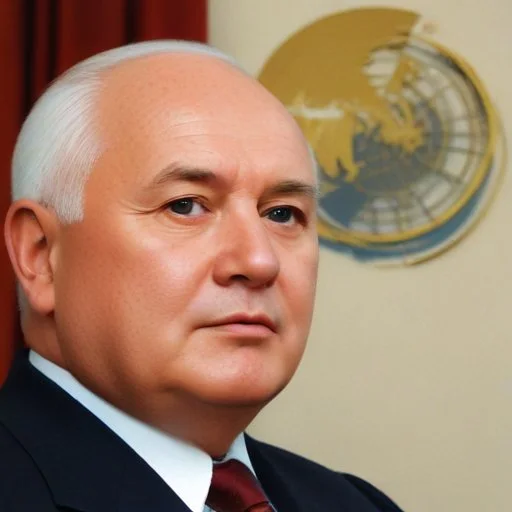
A Champion of International Cooperation
Gorbachev's commitment to international cooperation was evident in his tireless efforts to forge new relationships and strengthen existing ones. He played a crucial role in negotiations leading to the Intermediate-Range Nuclear Forces Treaty (INF) in 1987, which marked a significant milestone in disarmament efforts.
His diplomatic endeavors didn't stop there. Gorbachev's diplomacy led to the withdrawal of Soviet troops from Afghanistan, the reduction of nuclear arsenals, and the reunification of Germany. These achievements demonstrated his ability to navigate complex geopolitical landscapes and forge meaningful alliances.
Awards and Accolades
The Nobel Peace Prize was not the only recognition Gorbachev received for his groundbreaking work. He was awarded the
Ronald Reagan Freedom Award in 1992, as well as the
Indira Gandhi Prize for Peace, Disarmament and Development in 1987.
- In 1990, he was named Time Magazine's Person of the Year
- In 1999, he was awarded the Order of the White Lion by the Czech Republic
- In 2009, he received the European Médaille Charlemagne
Lasting Legacy
Gorbachev's Nobel Peace Prize served as a catalyst for a new era of international cooperation and diplomacy. His reforms transformed the Soviet Union, paving the way for its eventual dissolution and the emergence of new nations. His commitment to peace and cooperation inspired a generation of leaders, cementing his place as one of the most influential figures of the 20th century.
In the words of Gorbachev himself, "The Nobel Peace Prize is not a personal reward, but a recognition of the efforts of all those who worked together to build a more peaceful and just world."
A Timeline of Events
- 1985: Mikhail Gorbachev becomes the General Secretary of the Soviet Communist Party
- 1986: Gorbachev introduces glasnost and perestroika reforms
- 1987: The Intermediate-Range Nuclear Forces Treaty is signed
- 1990: Gorbachev is awarded the Nobel Peace Prize
- 1991: The Soviet Union is dissolved, and the Cold War comes to an end
In Conclusion
Mikhail Gorbachev's Nobel Peace Prize marked a significant milestone in modern history, recognizing his unwavering commitment to international cooperation and his pioneering efforts to reduce Cold War tensions. As we reflect on this momentous occasion, we are reminded of the power of visionary leadership and the importance of diplomacy in shaping a more peaceful and just world.
Political Dynamics Report
Mikhail Gorbachev's rise to power in 1985 marked a significant shift in the Soviet Union's political landscape. As the General Secretary of the Communist Party, he implemented policies that challenged the traditional authoritarianism of the Soviet regime. His reforms aimed to increase transparency, promote economic liberalization, and reduce the country's grip on its citizens. This led to a reduction in Cold War tensions, as the Soviet Union began to engage in diplomatic efforts with the West.
Gorbachev's political approach was characterized by a willingness to listen to dissenting voices and to engage in open dialogue. This approach helped to build trust between the Soviet Union and Western nations, paving the way for significant diplomatic breakthroughs.

Thorough Scientific Contributions Study
The social impact of Gorbachev's reforms was profound, leading to a significant shift in the balance of power within the Soviet Union. As the government's grip on society loosened, individuals began to express themselves more freely, leading to a cultural and artistic renaissance.
Glasnost and perestroika also led to an increase in civic engagement, as people began to participate more actively in the political process. This, in turn, led to the emergence of new social movements and organizations, which played a key role in shaping the country's future.
Rich Geopolitical Insight
The geopolitical context in which Gorbachev introduced his reforms was complex and volatile. The Soviet Union was facing significant economic and political challenges, both domestically and internationally.
The reforms were introduced at a time when the Soviet Union was facing pressure from the West, particularly from the United States, which was pursuing a policy of rollback against Soviet influence.

Detailed Historiographical Study
Historians have interpreted Gorbachev's reforms in various ways, with some viewing them as a genuine attempt to reform the Soviet system, while others see them as a cynical ploy to maintain Communist Party power.
Some historians have argued that Gorbachev's reforms were a response to the Soviet Union's economic stagnation and the decline of its international influence. Others have seen them as a attempts to reinvigorate the Soviet system and maintain its legitimacy.
Rich Comparative Exploration
Gorbachev's reforms can be compared to similar reform movements in other authoritarian regimes. For example, the reforms introduced by Deng Xiaoping in China in the 1980s shared similarities with Gorbachev's reforms, as both aimed to increase economic liberalization and reduce state control.
In contrast to other authoritarian regimes, however, Gorbachev's reforms were unique in their emphasis on glasnost, or openness, which allowed for greater freedom of expression and criticism of the government.


