


Jerry L. Ross's illustrious career spanned over two decades, with a remarkable record of seven spaceflights. Born on January 20, 1948, in Crown Point, Indiana, Ross developed an early interest in aviation, earning his pilot's license at the age of 17. He graduated from Purdue University with a Bachelor of Science degree in Mechanical Engineering and went on to serve in the United States Air Force. Ross's exceptional skills and expertise led to his selection as an astronaut candidate in 1980.
Ross's achievements extend beyond his seven spaceflights. He holds the record for the most spacewalks by an American astronaut, with a total of nine extravehicular activities (EVAs). His cumulative spaceflight time exceeds 1,393 hours, and he has traveled over 28 million miles in space.
Throughout his career, Ross received numerous awards and honors, including the NASA Distinguished Service Medal, the NASA Exceptional Service Medal, and the Defense Superior Service Medal. His remarkable achievements and dedication to space exploration have inspired generations of astronauts and space enthusiasts alike.

The successful deployment of the S0 truss marked a significant milestone in space technology. This massive structure, weighing over 27,000 pounds, demonstrated the capability to construct complex modules in space. The truss's design and installation paved the way for future ISS expansions, enabling the attachment of additional solar arrays and modules.
The S0 truss was designed to provide a foundation for the ISS's power generation and storage systems. Its installation required precision engineering and careful planning, involving intricate robotic arm maneuvers and spacewalks. The truss's success validated the use of robotic assembly and orbital construction techniques, setting a precedent for future space-based infrastructure development.
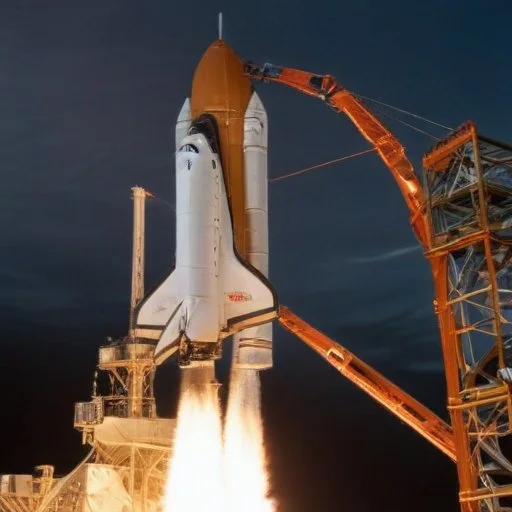
The STS110 mission showcased the Space Shuttle program's capabilities, demonstrating the ability to transport massive payloads to orbit and perform complex construction tasks. The mission's technological achievements have far-reaching implications, influencing the design and development of future space-based infrastructure projects.
The International Space Station, as a collaborative project, has a unique environmental footprint. The ISS's operations require significant energy resources, primarily generated from solar panels and Russian-built power modules. While the station's power consumption is substantial, it is relatively minor compared to Earth-based infrastructure projects.
The STS110 mission's successful deployment of the S0 truss has enabled the ISS to increase its power generation capabilities. This has allowed for the support of additional scientific experiments and research initiatives, many of which focus on understanding and mitigating the environmental impacts of human activities on Earth.
Furthermore, the ISS serves as a unique laboratory for studying the effects of microgravity on living organisms and ecosystems. Research conducted on the ISS provides valuable insights into the adaptation of biological systems to space environments, informing strategies for sustainable long-duration spaceflight and potential human settlements.
The ISS's ecological footprint extends beyond its operational energy consumption. The station's orbital debris, although carefully managed, contributes to the growing concern of space pollution. As the space industry continues to evolve, it is essential to address these environmental challenges and develop sustainable practices for space exploration and development.
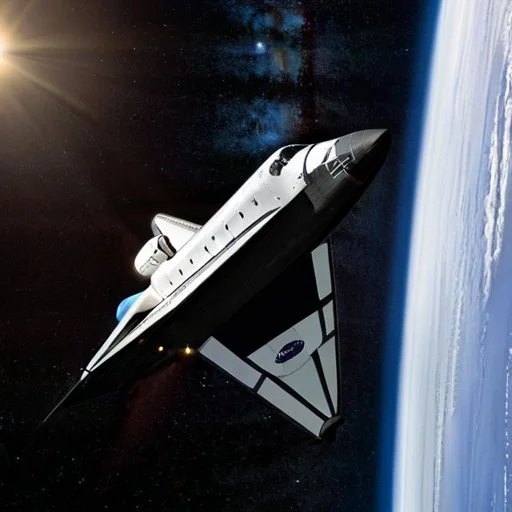
The International Space Station represents a triumph of international cooperation, with participation from over 15 countries and numerous space agencies. The STS110 mission, as part of this collaborative effort, embodied the spirit of global partnership and shared ambition.
The ISS has become an iconic symbol of human achievement, transcending national boundaries and inspiring generations worldwide. The station's presence in orbit serves as a reminder of the boundless possibilities of space exploration, fostering a sense of global citizenship and shared purpose.
The ISS has also played a significant role in promoting educational and cultural exchange programs. The station's crew members, representing diverse nationalities and backgrounds, engage in outreach activities, inspiring students and promoting interest in STEM education.
The ISS's cultural significance extends beyond its role as a scientific laboratory or a symbol of international cooperation. It represents humanity's innate desire to explore, discover, and push the boundaries of what is possible.
The STS110 mission's primary objective was to deliver the S0 truss segment to the ISS, but it also contributed significantly to our understanding of space-based research. The mission supported numerous scientific experiments, focusing on materials science, biology, and advanced technology development.
One of the mission's key scientific achievements was the deployment of the Materials International Space Station Experiment (MISSE). This experiment, attached to the S0 truss, exposed various materials to the space environment, providing valuable insights into their durability and performance in microgravity.
The STS110 mission also supported research on the effects of microgravity on plant growth and development. The "Seedling Growth" experiment, conducted during the mission, investigated the impacts of microgravity on root development and plant morphology.
The scientific contributions of the STS110 mission have far-reaching implications, informing strategies for future long-duration spaceflight and potential human settlements. The mission's experiments and research initiatives have paved the way for continued scientific discovery and advancements in space-based research.