


On June 5, 2002, the Space Shuttle Endeavour lifted off from Kennedy Space Center's Launch Pad 39A, carrying the Expedition 5 crew to the International Space Station (ISS), marking a pivotal moment in the ISS program. This mission, dubbed STS-111, would make history as astronaut Franklin Chang-Díaz became the second person to soar into the cosmos for an unprecedented seventh time.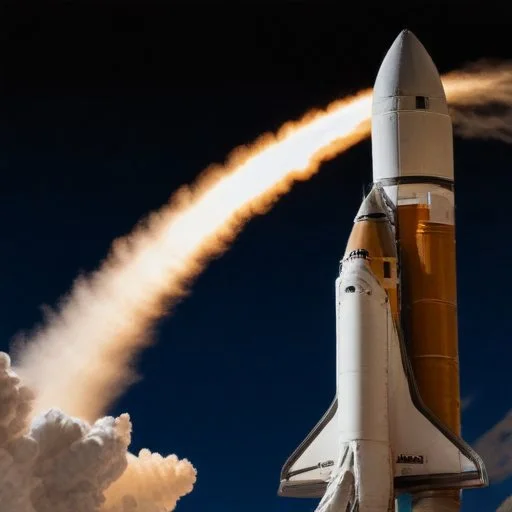
The primary objective of STS-111 was to rotate the ISS crew, replacing the Expedition 4 team, who had been residing on the station since December 2001, with the fresh faces of Expedition 5. This swap ensured continuous occupation and operation of the ISS, further solidifying its role as a hub for scientific research and experimentation.
Astronaut Franklin Chang-Díaz, a veteran of six previous spaceflights, etched his name in the annals of space exploration history as he embarked on his seventh journey to the cosmos. Born in Costa Rica, Chang-Díaz's remarkable career spanned over two decades, with his first spaceflight dating back to 1986. His exceptional skillset and dedication earned him the distinction of being one of the most experienced astronauts in NASA's history.
The STS-111 mission not only achieved its primary objectives but also paved the way for future crew rotations, ensuring the continued operation and growth of the ISS. The success of this mission demonstrated NASA's capability to execute complex spaceflight operations, solidifying the agency's position as a leader in space exploration.
The STS-111 mission served as a stepping stone for future spaceflight endeavors, laying the groundwork for more ambitious projects, such as the development of new spacecraft and the exploration of the Moon and beyond. As we continue to push the boundaries of space travel, the legacy of STS-111 and the pioneering spirit of astronauts like Franklin Chang-Díaz will inspire generations to come.
Franklin Chang-Díaz's remarkable career spanned over two decades, with a total of seven spaceflights. Born in Costa Rica, Chang-Díaz became a naturalized U.S. citizen in 1977, allowing him to join NASA's Astronaut Candidate Program in 1980. His first spaceflight was on January 12, 1986, as a mission specialist on STS-61C.
Throughout his career, Chang-Díaz spent a total of 66 days, 18 hours, and 46 minutes in space. He flew on six Space Shuttle missions and was part of the team that deployed the Compton Gamma Ray Observatory, a satellite that revolutionized our understanding of the universe.
Chang-Díaz's achievements extend beyond his impressive spaceflight record. He holds a Ph.D. in applied plasma physics from MIT and has been recognized with numerous awards, including the NASA Distinguished Service Medal and the Chilean Air Force Medal of Aeronautical Merit.

The STS-111 mission marked a significant milestone in space exploration technology. The Space Shuttle Endeavour, launched on June 5, 2002, was equipped with advanced systems, including a New Digital Autopilot System and a Multi-Functional Electronic Display System.
The mission also demonstrated the capability of the Russian-built Rassvet module, which was attached to the ISS during the STS-111 mission. This module provided additional storage and research facilities, expanding the ISS's capabilities.
The success of STS-111 paved the way for future technological advancements in space exploration, including the development of new spacecraft and the exploration of the Moon and beyond.
The STS-111 mission marked a significant turning point in the history of space exploration. It demonstrated NASA's capability to execute complex spaceflight operations, ensuring the continued operation and growth of the ISS.
The mission also highlighted the importance of international cooperation in space exploration. The ISS, a collaborative project between space agencies around the world, symbolized a new era of global cooperation in the pursuit of scientific knowledge.
STS-111 paved the way for future spaceflight endeavors, inspiring generations of scientists, engineers, and astronauts to push the boundaries of space travel.

The STS-111 mission had a significant economic impact on the space industry. The mission marked a major milestone in the ISS program, which created thousands of jobs and generated billions of dollars in revenue.
The success of STS-111 also boosted the development of private space companies, such as SpaceX and Blue Origin, which have revolutionized the space industry with their innovative approaches to space travel.
The mission's economic impact extends beyond the space industry, as it also inspired new generations of scientists, engineers, and innovators, driving economic growth and development.
The STS-111 mission made significant contributions to our understanding of space and its effects on the human body. The mission's extended duration in space allowed for the collection of valuable data on the effects of microgravity on the human body.
The mission also enabled the deployment of scientific experiments on the ISS, including the Microgravity Science Glovebox, which allowed scientists to study the properties of fluids in microgravity.
The scientific discoveries made during STS-111 have paved the way for future research on the ISS, enabling scientists to better understand the universe and its many mysteries.