


The Space Shuttle Enterprise, perched atop a modified Boeing 747, took to the skies on its maiden flight, marking a pivotal moment in the Space Shuttle program. This inaugural journey, devoid of engines, was a crucial test of the Shuttle Carrier Aircraft's capabilities, paving the way for future orbital missions and cementing the shuttle's role as a reusable spacecraft.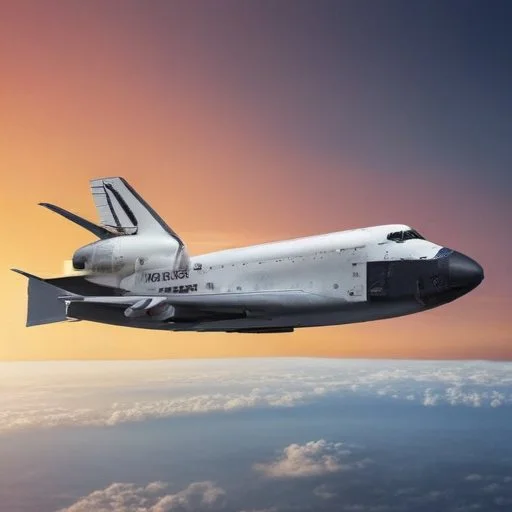
In the midst of the Cold War, the United States space program was poised to revolutionize space exploration. The Apollo era had come to a close, and the nation was seeking a new, cost-effective way to access space. The Space Shuttle program, conceived in the 1970s, aimed to develop a reusable spacecraft that could reduce the financial burden of launching payloads into orbit.
Naming the first Space Shuttle Enterprise was a nod to the iconic Starship from the popular television series Star Trek. This gesture not only acknowledged the show's influence on popularizing space exploration but also reflected the visionary spirit of the Space Shuttle program.
The two-hour and 18-minute flight was a resounding success, with the Enterprise separating from the 747 at 26,000 feet and gliding to a flawless landing at the Dryden Flight Research Center. This trial run demonstrated the feasibility of the shuttle's reusability concept and paved the way for the development of future Space Shuttles.
The success of the Enterprise's maiden flight validated the reusability concept, setting the stage for the development of future Space Shuttles. This milestone also marked a significant step towards reducing the cost of access to space, making it more feasible for scientific, commercial, and civilian organizations to launch payloads into orbit.
The Enterprise's maiden flight captured the imagination of the public, inspiring a new generation of engineers, scientists, and astronauts. The Space Shuttle program's emphasis on reusability and cost-effectiveness resonated with a nation seeking to explore space in a more efficient and sustainable manner.
The Enterprise's maiden flight served as a testament to the power of innovation and collaboration. This achievement was a direct result of the tireless efforts of thousands of individuals working together to push the boundaries of space exploration.
As the Space Shuttle Enterprise soared into the skies, it carried with it the hopes and dreams of a nation, marking the beginning of a new era in space exploration.
The Space Shuttle Enterprise's maiden flight had a profound impact on popular culture, inspiring a new wave of interest in space exploration. The shuttle's futuristic design and reusable capabilities captured the imagination of the public, transcending the realm of science and technology to become a cultural icon.
The Enterprise's name, inspired by the Starship from Star Trek, further solidified its place in the cultural consciousness. The nod to science fiction helped to bridge the gap between fact and fiction, making space exploration more accessible and relatable to a wider audience.

Fred Haise, the veteran astronaut who piloted the Enterprise on its maiden flight, was no stranger to adventure. A decorated naval aviator and test pilot, Haise had already made a name for himself as a member of the Apollo 13 mission.
Haise's experience and skill played a critical role in the success of the Enterprise's maiden flight. His ability to adapt to new situations and think on his feet was essential in navigating the uncharted territory of reusable spacecraft.
The Space Shuttle Enterprise's reusable design represented a significant technological leap forward, paving the way for more efficient and cost-effective space exploration.
The shuttle's thermal protection system, designed to protect it from the intense heat generated during re-entry, was a particular innovation. This technology would go on to play a crucial role in future Space Shuttle missions, enabling the safe return of spacecraft from orbit.

The success of the Space Shuttle Enterprise's maiden flight marked a significant shift in the economic landscape of space exploration. The reusable spacecraft concept promised to dramatically reduce the cost of launching payloads into orbit, making space more accessible to a wider range of organizations and industries.
The potential cost savings were substantial, with estimates suggesting that the Space Shuttle program could reduce the cost of access to space by as much as 90%. This new economics of space exploration opened up fresh opportunities for scientific research, commercial ventures, and even space tourism.
Historians have long debated the significance of the Space Shuttle Enterprise's maiden flight, with some viewing it as a turning point in the history of space exploration.
Some argue that the Enterprise's reusable design represented a fundamental shift in the mentality of space agencies, from a focus on singular, expensive missions to a more sustainable, long-term approach. Others see the Enterprise as a symbol of American ingenuity and determination, a testament to the nation's ability to push the boundaries of what is thought possible.