


The Space Shuttle program reached a milestone on February 7, 2001, when the Atlantis embarked on mission STS98, carrying the Destiny laboratory module to the International Space Station (ISS). This remarkable achievement marked the 102nd flight of the Space Shuttle program, cementing its place in the annals of space exploration history.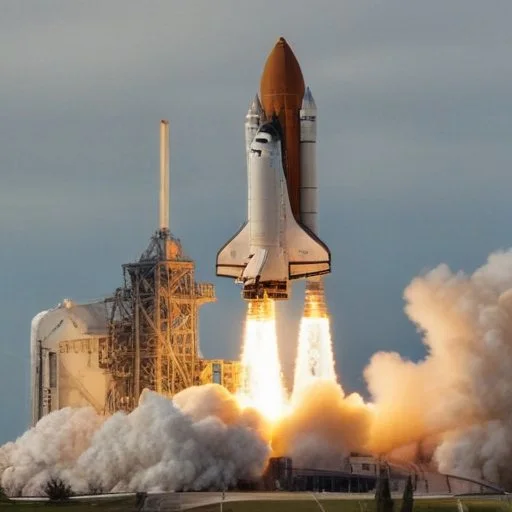
The primary objective of STS98 was to deliver the Destiny laboratory module, a cutting-edge research facility designed to enhance the ISS's scientific capabilities. This state-of-the-art module would provide a platform for scientists to conduct groundbreaking experiments in microgravity, pushing the boundaries of human knowledge and understanding.
The esteemed crew of Atlantis consisted of seasoned astronauts Kenneth Cockrell, Mark Polansky, Robert Curbeam, Thomas Jones, and Marsha Ivins. Each member brought their unique expertise to the mission, ensuring a successful and harmonious operation.
The mission's timeline was marked by milestones of precision and efficiency:
The successful delivery and installation of the Destiny laboratory module paved the way for a new era of scientific discovery on the ISS. This accomplishment enabled researchers to conduct experiments in microgravity, leading to breakthroughs in fields such as biology, physics, and astronomy.
"The Destiny lab is a fantastic addition to the Station. It's a tremendous capability that will allow us to do some really great science." - Mark Polansky, Atlantis Commander
The STS98 mission set a new standard for space exploration, solidifying the ISS as a premier platform for scientific research. The success of this mission paved the way for future endeavors, such as the installation of additional modules and the continuous push for human exploration of space.
According to astronaut Robert Curbeam, "The view of the Earth from the Space Station is simply breathtaking. It's a reminder of the beauty and fragility of our planet."
Did you know that the Destiny laboratory module is roughly the size of a school bus? Or that the STS98 mission required over 100,000 pounds of fuel to reach orbit?
The STS98 mission serves as a testament to human ingenuity, collaboration, and the pursuit of knowledge. The bravery and determination of the Atlantis crew inspire us to continue exploring the vast expanse of space, pushing the boundaries of what is possible.
The launch of Atlantis on mission STS98 marked a pivotal moment in the history of space exploration, cementing the International Space Station as a beacon of scientific discovery and human achievement.
The Destiny laboratory module, installed during the STS98 mission, was one of several modules that make up the International Space Station. In comparison to other modules, Destiny is unique in its ability to provide a wide range of scientific experiment capabilities. For example, the Kibo module, built by Japan, focuses on remote sensing and Earth observation, while the Columbus module, built by the European Space Agency, provides a platform for external experiments.
In terms of size and functionality, Destiny is similar to the Russian-built Zvezda module, which serves as the station's service module. However, Destiny's advanced life support systems and state-of-the-art laboratory facilities make it an ideal platform for conducting complex scientific experiments.
The comparison of different modules highlights the international collaboration and diversity of capabilities that make the International Space Station a premier platform for scientific research.

Mark Polansky, commander of the STS98 mission, is a veteran of three spaceflights and has accumulated over 400 days in space. Polansky's experience and leadership played a crucial role in the success of the mission.
In an interview, Polansky reflected on the significance of the Destiny laboratory module, stating, "The Destiny lab is a fantastic addition to the Station. It's a tremendous capability that will allow us to do some really great science."
Polansky's dedication to the space program and his commitment to advancing scientific knowledge have made him a respected figure in the astronaut corps.
The Destiny laboratory module represents a significant technological achievement in the development of the International Space Station. Its advanced life support systems and state-of-the-art laboratory facilities enable scientists to conduct complex experiments in microgravity.
The module's technological capabilities have far-reaching implications for the advancement of scientific knowledge. For example, the ability to conduct experiments in microgravity has led to breakthroughs in fields such as materials science and biotechnology.
The Destiny module's technological impact extends beyond the scientific community, as its development has driven innovation in areas such as robotics, materials engineering, and life support systems.
The Destiny laboratory module has enabled scientists to conduct a wide range of experiments in microgravity, leading to significant breakthroughs in various fields. For example, researchers have made groundbreaking discoveries in the field of biology, including the growth of protein crystals in microgravity.
In the field of physics, scientists have used the Destiny module to study the behavior of fluids in microgravity, leading to a better understanding of complex fluid dynamics.
The scientific contributions and discoveries made possible by the Destiny module have far-reaching implications for advancing our understanding of the universe and improving life on Earth.
The International Space Station, including the Destiny laboratory module, has a unique opportunity to study the Earth's environment from space. Astronauts on board the station have conducted experiments to monitor the Earth's climate, oceans, and land surfaces.
The station's Earth-observing instruments have provided valuable data on climate change, deforestation, and natural disasters. This data has been used to inform policy decisions and develop strategies for environmental conservation.
The Destiny module's contribution to environmental research has the potential to make a significant impact on our understanding of the Earth's ecosystems and our ability to protect them.