


On July 12, 2001, the Space Shuttle Atlantis embarked on a journey that would etch its name in the annals of space exploration history. Carrying the Quest Joint Airlock, a critical component for the International Space Station (ISS), Atlantis blasted off into the sky, marking a significant milestone in the Space Shuttle program.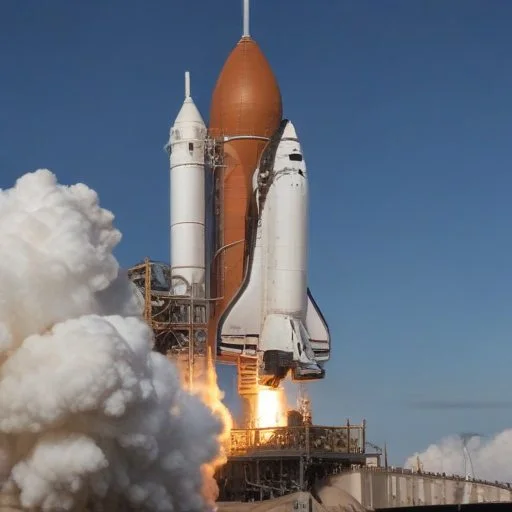
The Quest Joint Airlock, a 6.5-ton module, was designed to enable future spacewalks and enhance the ISS's functionality. This cylindrical module, measuring 20 feet long and 13 feet in diameter, would provide a safe haven for astronauts to venture out into space, conduct vital maintenance, and perform scientific experiments.
Led by Commander Steven W. Lindsey, the STS104 crew consisted of five seasoned astronauts: Charles Hobaugh, Michael L. Gernhardt, Janet L. Kavandi, and James F. Reilly II. This diverse team of space travelers hailed from various backgrounds, united by their passion for space exploration and dedication to advancing human knowledge.
Atlantis' crew embarked on a 12-day journey, navigating the complexities of space travel and overcoming challenges that came their way. During this period, they conducted a series of intricate maneuvers, including a grueling six-hour spacewalk, to install the Quest Joint Airlock on the ISS.
The success of STS104 paved the way for future spacewalks and research on the ISS. The Quest Joint Airlock enabled astronauts to conduct extended spacewalks, ultimately contributing to a deeper understanding of space and the cosmos. This mission also demonstrated the Shuttle program's capabilities, solidifying its position as a cornerstone of space exploration.
In the words of Commander Steven W. Lindsey, "STS104 marked a new chapter in space exploration, one that would take us further into the unknown and push the boundaries of human knowledge."
The STS104 mission, a testament to human ingenuity and collaboration, stands as a beacon of inspiration for future generations of space explorers. As we continue to venture into the unknown, the legacy of Atlantis and its brave crew will remain an integral part of our collective journey into the cosmos.
The STS104 mission marked a significant milestone in the development of the International Space Station (ISS). The Quest Joint Airlock module, installed during the mission, enabled future spacewalks and greatly enhanced the ISS's functionality. This critical component paved the way for numerous scientific experiments, maintenance operations, and further expansion of the ISS.
The ISS, a collaborative project between space agencies worldwide, aimed to create a habitable platform in low Earth orbit. The Quest Joint Airlock module played a vital role in achieving this goal, providing a safe and reliable environment for astronauts to venture out into space.
As the ISS continued to grow and evolve, it became a symbol of international cooperation and scientific progress. The STS104 mission, with its successful deployment of the Quest Joint Airlock, cemented its position as a crucial chapter in the ISS's history.

Commander Steven W. Lindsey: A Seasoned Space Traveler
Lindsey, a veteran of four Space Shuttle missions, brought a wealth of experience to the STS104 crew. As commander, he was responsible for overseeing the entire operation, from launch to landing.
With over 4,000 hours of flying experience, Lindsey was well-equipped to handle the challenges that arose during the mission. His leadership and expertise played a critical role in the successful deployment of the Quest Joint Airlock module.
The Quest Joint Airlock: A Technological Marvel
The Quest Joint Airlock module was a testament to human ingenuity and engineering prowess. This complex system consisted of multiple components, including a pressurized chamber, airlock, and docking port.
The module's design allowed for a high degree of flexibility, enabling astronauts to perform a wide range of tasks, from spacewalks to scientific experiments.
The Quest Joint Airlock's advanced technology also facilitated easier maintenance and upgrade procedures, ensuring the ISS remained operational and efficient for years to come.

The Cultural Significance of STS104
The STS104 mission served as a beacon of inspiration for people around the world, highlighting humanity's innate desire to explore and push beyond the boundaries of knowledge.
The mission's success demonstrated the power of international cooperation, showcasing the ability of nations to work together towards a common goal.
As a symbol of human achievement, the STS104 mission left an indelible mark on our collective cultural consciousness, inspiring future generations to pursue careers in science, technology, engineering, and mathematics (STEM).
The Scientific Contributions of STS104
The STS104 mission paved the way for numerous scientific experiments and discoveries on the ISS. The Quest Joint Airlock module enabled astronauts to conduct extended spacewalks, facilitating the deployment of new scientific equipment and instruments.
The mission's focus on scientific research led to breakthroughs in fields such as material science, biology, and astronomy.
The STS104 mission's contributions to scientific knowledge continue to have a lasting impact on our understanding of the universe and the human body's response to space travel.