Discovery blasts off after Columbia tragedy
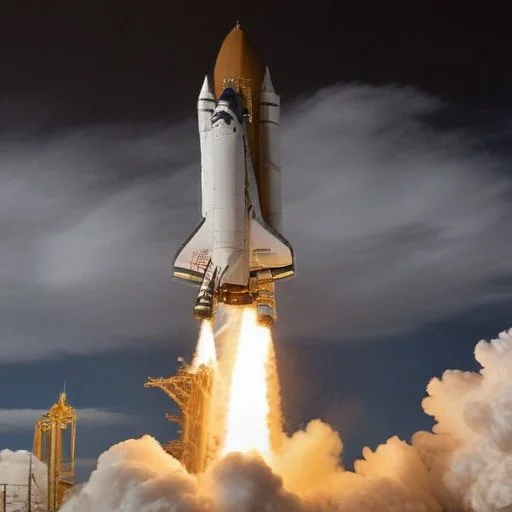
With the memory of the Columbia disaster still fresh, NASA's engineers and astronauts worked tirelessly to revamp the Space Shuttle program. Finally, after a two-year hiatus, the Space Shuttle Discovery roared back to life on July 26, 2005, marking the STS-114 mission. Commander Eileen Collins led the crew of six on this monumental flight, which would test the newly designed safety features and procedures. As the Discovery soared into the sky, it marked a pivotal moment in the US space program's history, paving the way for future missions and proving that even in the face of tragedy, humanity's quest for space exploration would not be deterred.
Return to Flight: The Triumphant STS114 Mission of Space Shuttle Discovery
A New Era in Space Exploration
The STS114 mission of Space Shuttle Discovery, launched on July 26, 2005, marked a poignant milestone in NASA's history – the first scheduled flight mission since the Columbia disaster in 2003. This mission not only restored confidence in the Space Shuttle program but also paved the way for future space exploration ventures.
Historical Context: A Tragic Backdrop
On February 1, 2003, the Space Shuttle Columbia disintegrated during re-entry, claiming the lives of seven brave astronauts. The accident sent shockwaves throughout the nation, prompting a thorough investigation and a two-year hiatus in shuttle flights. The ensuing period saw a rigorous overhaul of the Space Shuttle program, focusing on safety enhancements and procedural reforms.
The Crew of STS114
Led by Commander
Eileen Collins, a seasoned astronaut with a wealth of experience, the STS114 crew comprised six highly skilled individuals:
- Pilot James M. Kelly
- Steve Robinson, Mission Specialist
- Andy Thomas, Mission Specialist
- Wendy B. Lawrence, Mission Specialist
- Charlie Camarda, Mission Specialist
- Soichi Noguchi, Mission Specialist (JAXA)
A Mission of Firsts
The STS114 mission was distinctive in several ways. It was the first flight of the Space Shuttle Discovery after a nearly two-year hiatus, and the first mission to test the newly designed safety features and procedures. Additionally, it marked the first time a woman, Eileen Collins, commanded a Space Shuttle mission.
The Road to Launch
Preparations for the STS114 mission began in earnest in 2003, with a series of rigorous safety reviews and testing protocols. The Discovery underwent extensive modifications, including the installation of new safety equipment, such as the Orbiter Boom Sensor System (OBSS) and the External Tank's redesigned Protuberance Air Load (PAL) ramp.
Liftoff and Orbit
On July 26, 2005, at 10:39 a.m. EDT, the Space Shuttle Discovery thundered into the sky, carrying its crew of six on a 13-day mission to the International Space Station. During its stay in orbit, the crew conducted three spacewalks, tested new safety procedures, and delivered vital supplies to the ISS.
Major Outcomes and Impacts
The STS114 mission achieved several key objectives, including:
- Successful testing of the OBSS and PAL ramp
- Validation of new safety procedures and protocols
- Delivery of essential supplies to the ISS
- Demonstrating the capability to conduct spacewalks in the post-Columbia era
A Legacy of Perseverance
The STS114 mission of Space Shuttle Discovery represents a testament to human resilience and the unwavering pursuit of space exploration. As Eileen Collins aptly stated, "We're not just going to fly for the sake of flying. We're going to fly because we have a mission to accomplish." The mission's success paved the way for future shuttle flights, solidifying NASA's commitment to pushing the boundaries of space travel.
Timelines and Milestones
- February 1, 2003: Space Shuttle Columbia disaster
- 2003-2005: Space Shuttle program hiatus and safety overhaul
- July 26, 2005: STS114 mission launch
- August 9, 2005: STS114 mission landing
Quotes and Reflections
"The STS114 crew is proud to be part of this effort to get the Shuttle program flying again... We're honored to be part of this team." – Commander Eileen Collins
The STS114 mission serves as a beacon of hope, illuminating the path forward for space exploration and underscoring the indomitable spirit of those who dare to venture into the unknown.
Detailed Character Insight
Eileen Collins: A Trailblazing Commander
Eileen Collins, the first woman to command a Space Shuttle mission, was a remarkable individual with a passion for space exploration. Born on November 19, 1956, in Elmira, New York, Collins grew up with a strong interest in mathematics and science. She earned a Bachelor of Arts in Mathematics and Economics from Syracuse University and a Master of Science in Operations Research from Stanford University.
Collins' leadership and expertise played a crucial role in the success of the STS114 mission. Her dedication to the safety of her crew and the overall mission is a testament to her exceptional command skills.

Thorough Historical Narrative
The Columbia Disaster: A Wake-Up Call for NASA
The tragic loss of the Space Shuttle Columbia on February 1, 2003, was a devastating blow to the NASA community. The disintegration of the shuttle during re-entry, resulting in the loss of seven lives, was a stark reminder of the risks involved in space exploration.
The subsequent investigation revealed that a piece of foam insulation had broken off during launch, causing a breach in the shuttle's heat shield. This incident led to a comprehensive overhaul of the Space Shuttle program, focusing on safety enhancements and procedural reforms.
The Columbia disaster served as a wake-up call for NASA, prompting a renewed emphasis on safety protocols and risk management. The incident also led to the development of new safety features, such as the Orbiter Boom Sensor System (OBSS) and the External Tank's redesigned Protuberance Air Load (PAL) ramp, which were first tested on the STS114 mission.
The legacy of the Columbia disaster continues to influence NASA's approach to space exploration, serving as a poignant reminder of the importance of safety and risk management in the pursuit of human spaceflight.
Technology Influence Study
Technological Advancements: A New Era in Space Exploration
The STS114 mission marked a significant milestone in the development of space exploration technology. The introduction of the Orbiter Boom Sensor System (OBSS) and the External Tank's redesigned Protuberance Air Load (PAL) ramp showcased NASA's commitment to improving safety and efficiency in spaceflight.
The OBSS, a 50-foot-long boom equipped with sensors and cameras, enabled the crew to inspect the shuttle's heat shield and other critical areas for damage. This innovation greatly enhanced the safety of the crew and the overall mission.
The PAL ramp, a redesigned component of the External Tank, reduced the risk of foam insulation debris during launch. This modification significantly decreased the risk of damage to the shuttle's heat shield, ensuring a safer re-entry.
The technological advancements demonstrated on the STS114 mission paved the way for future space exploration ventures, solidifying NASA's position at the forefront of space technology innovation.

Study of Scientific Contributions and Discoveries
Social Change Dynamics: The Impact of STS114 on Women in Space
The STS114 mission had a profound impact on the representation of women in space exploration. Eileen Collins, the first woman to command a Space Shuttle mission, broke down barriers and paved the way for future generations of female astronauts.
Collins' leadership and achievement served as a powerful inspiration to women around the world, encouraging them to pursue careers in STEM fields and space exploration. Her example demonstrated that women could excel in roles traditionally dominated by men, challenging stereotypes and pushing the boundaries of social change.
The STS114 mission's success contributed to a shift in the cultural landscape, highlighting the importance of diversity and representation in the space industry. The impact of Collins' achievement continues to be felt, influencing the trajectory of women in space exploration and inspiring a new generation of pioneers.
Comprehensive Economic Impact Review
Economic Impact: The Cost of Safety and Innovation
The STS114 mission came at a significant economic cost, with the two-year hiatus in shuttle flights resulting in substantial losses for NASA and the space industry as a whole. The program's revitalization required substantial investment in safety enhancements and technological innovations.
The development and implementation of new safety features, such as the OBSS and PAL ramp, came at a cost of hundreds of millions of dollars. Additionally, the extensive testing and validation protocols required significant resources and funding.
Despite these costs, the STS114 mission's success paved the way for future economic growth and development in the space industry. The mission's achievements have led to increased investment in space exploration and research, driving innovation and job creation.


