


On April 26, 1937, the sleepy Basque town of Guernica, Spain, was reduced to smoldering ruins, forever etching its name in the annals of infamy as the first non-military target to be subjected to aerial bombardment. The senseless slaughter of civilians by the German Luftwaffe's relentless bombing campaign would become a rallying cry against the horrors of modern warfare.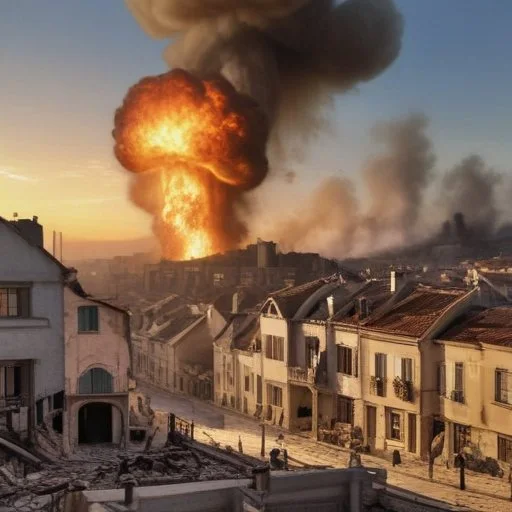
The Spanish Civil War, a complexities-ridden conflict pitting Republican forces against Nationalist rebels, had been raging since 1936. Guernica, a strategic location in the north, was a key stronghold for the Basque region's autonomy. However, its proximity to the front lines and the presence of a munitions factory made it an attractive target for the German-backed Nationalists.
At 4:30 pm on that fateful Monday, 26 German bombers, escorted by fighters, unleashed a deadly cargo of incendiary and high-explosive bombs upon the unsuspecting town. The resulting inferno engulfed the town, reducing buildings to rubble, and slaughtering men, women, and children alike. The aerial assault lasted for over two hours, leaving a trail of devastation in its wake.
The bombing of Guernica was a deliberate act of terror, designed to break the spirit of the Basque people and pave the way for a Nationalist victory. The Luftwaffe's tactics employed were a precursor to the Blitzkrieg, a doctrine of fast-paced, decisive warfare that would come to define the German military strategy in World War II.
The exact number of casualties remains unknown, but estimates suggest that between 1,000 to 1,650 civilians lost their lives in the bombing. The town's infrastructure was left in shambles, with over 70% of its buildings destroyed or damaged. The survivors were left to pick up the pieces, their lives forever scarred by the horrors they witnessed.
The bombing of Guernica inspired Pablo Picasso's iconic anti-war painting, "Guernica," a powerful indictment of the senseless violence. The monochromatic masterpiece, featuring screaming animals and shattered bodies, has become a timeless symbol of the devastating consequences of war.
The bombing of Guernica served as a grim precursor to the atrocities of World War II, where civilian populations would become routine targets. The event also led to a re-evaluation of the rules of war, with the establishment of the Geneva Conventions in 1949, which explicitly prohibited the targeting of non-combatants.
The bombing of Guernica continues to serve as a poignant reminder of the dangers of unchecked military aggression and the importance of protecting civilian lives in times of conflict. As we reflect on this dark chapter in human history, we are reminded that the true cost of war is always measured in the lives of the innocent.
The bombing of Guernica had a profound impact on the cultural landscape of Spain and beyond. The event inspired a wave of anti-war art, literature, and music, with Pablo Picasso's iconic painting "Guernica" becoming a powerful symbol of the devastating consequences of war.
The bombing also galvanized the international community, with protests and rallies erupting across the globe. In Spain, the event sparked a rich cultural response, with writers, artists, and intellectuals condemning the atrocities and calling for peace.
The cultural impact of Guernica extended far beyond the Basque region, with the event influencing art, literature, and music for generations to come. From Joan Miro's abstract paintings to Bertolt Brecht's epic poetry, Guernica became a symbol of resistance against oppression and a call to action for human rights.
The bombing of Guernica was a politically motivated act, designed to crush the spirit of the Basque people and pave the way for a Nationalist victory in the Spanish Civil War.
The German-backed Nationalist forces, led by General Francisco Franco, sought to suppress the autonomy of the Basque region and impose a unified Spanish state. The bombing of Guernica was a brutal demonstration of their willingness to use terror and violence to achieve their goals.
The event had significant political implications, with the international community condemning the atrocities and calling for Franco's regime to be held accountable. The bombing of Guernica remains a powerful symbol of the dangers of authoritarianism and the importance of protecting human rights.
In the aftermath of the bombing, the Basque people were left to pick up the pieces and rebuild their shattered lives. The event marked a turning point in the Spanish Civil War, with the Nationalist forces gaining the upper hand and the Republican forces struggling to respond.
As the war drew to a close, the legacy of Guernica continued to simmer, with the Basque people demanding justice and recognition for the atrocities they had suffered. The event remained a raw and open wound, with the Spanish government refusing to acknowledge its complicity in the bombing.
In the decades that followed, the Basque people continued to fight for their autonomy and human rights, with the legacy of Guernica remaining a powerful symbol of their struggle.
The bombing of Guernica was a product of the complex geopolitics of the 1930s, with fascist and nationalist ideologies on the rise across Europe.
The Spanish Civil War was a proxy conflict, with the German and Italian governments backing the Nationalist forces and the Soviet Union supporting the Republican government.
The bombing of Guernica was a key moment in this global struggle, with the German military using the event to test its new tactics and technologies. The event marked a significant escalation of the conflict, with the world powers drawn into the fray.
Jose Antonio Aguirre, the Basque President, was a key figure in the aftermath of the bombing, leading the calls for international condemnation and justice.
Aguirre's leadership and bravery in the face of overwhelming odds inspired a generation of Basque politicians and activists, who continued to fight for their autonomy and human rights.
Pablo Picasso, the artist, was another key figure, using his painting "Guernica" to condemn the atrocities and call for peace. His artistic response to the bombing remains one of the most powerful and enduring symbols of the event.