


In a historic address that would send shockwaves throughout the Soviet Union, Nikita Khrushchev, the Soviet leader, delivered a searing rebuke of his predecessor, Joseph Stalin, condemning the cult of personality that had surrounded the former leader's brutal regime.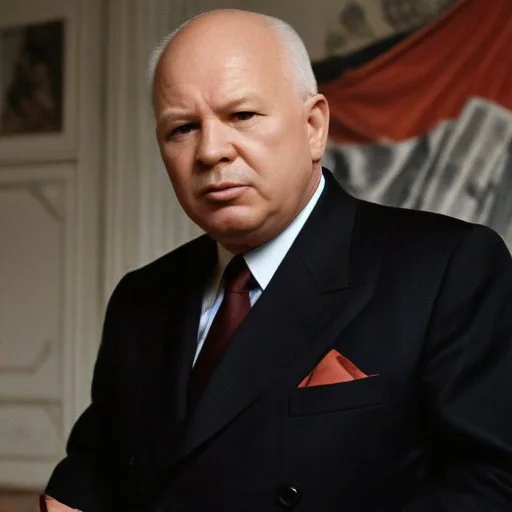
This speech, titled "On the Cult of Personality and Its Consequences," marked a pivotal moment in Soviet politics, as Khrushchev sought to distance himself and the communist party from Stalin's atrocities, paving the way for a new era of Soviet governance.
On February 25, 1956, Khrushchev stood before a closed session of the 20th Communist Party Congress, prepared to deliver a speech that would shake the foundations of Soviet politics. As he began to speak, the atmosphere in the room was tense, with many party members still reeling from the shock of Stalin's death three years prior.
With unflinching candor, Khrushchev ripped apart the myths surrounding Stalin's reign, exposing the brutal realities of his regime and condemning the cultlike worship that had surrounded the former leader. The speech was a masterful blend of political calculation and moral outrage, as Khrushchev skillfully navigated the treacherous landscape of Soviet politics to emerge as a champion of reform.
Stalin's rise to power was marked by a deliberate campaign to cultivate a cult of personality, with the Soviet media and propaganda machine working tirelessly to create an image of the leader as omniscient, infallible, and all-powerful.
This cult of personality was reinforced by Stalin's own paranoia and brutality, as he purged opponents and potential rivals, eliminating any threats to his rule. The Soviet people were forced to worship Stalin as a godlike figure, with his image plastered on billboards, newspapers, and propaganda posters.
Khrushchev's speech was a scathing critique of Stalin's regime, highlighting the devastating consequences of the cult of personality. He condemned the widespread repression, the arbitrary arrests, and the countless executions that had characterized Stalin's rule.
In a bold move, Khrushchev called for a return to the principles of Leninism, advocating for collective leadership, democratic centralism, and an end to the personality cult. This marked a significant shift in Soviet politics, as Khrushchev sought to restore the legitimacy of the communist party and distance himself from Stalin's atrocities.
The impact of Khrushchev's speech was immediate and far-reaching. The Soviet media was rocked, as newspapers and journals were forced to retract years of propaganda and acknowledge the truth about Stalin's regime.
The speech also sparked a wave of liberalization, as Khrushchev's reforms led to the release of political prisoners, the rehabilitation of innocent victims, and a relaxation of censorship. The Soviet people, finally free to speak their minds, began to question the legitimacy of the communist party and the myth of Stalin's infallibility.
Khrushchev's speech remains a testament to the power of courageous leadership, as he risked his own life and career to speak truth to power. The denunciation of Stalin's cult of personality marked a turning point in Soviet history, paving the way for a new era of reform and liberalization.
In the end, Khrushchev's bravery would be rewarded, as the Soviet Union slowly began to shed its authoritarian past, embracing a more democratic and inclusive future. The speech remains a powerful reminder of the importance of standing up against tyranny, and the transformative power of courage and conviction.
Historians have long debated the motivations behind Khrushchev's denunciation of Stalin. Some argue that it was a genuine attempt to reform the Soviet system, while others see it as a cynical ploy to consolidate power and eliminate potential rivals. Regardless of Khrushchev's true intentions, the speech marked a significant turning point in the historiography of the Soviet Union, as it forced a reevaluation of Stalin's legacy and the nature of communist rule.
One of the most significant consequences of the speech was the emergence of a new generation of Soviet historians, who were tasked with rewriting the official history of the Soviet Union. This led to a proliferation of new scholarship, as historians sought to uncover the truth about Stalin's regime and the atrocities that had been committed.
Today, Khrushchev's speech is recognized as a landmark moment in the development of Soviet historiography, and its impact can still be seen in the way that historians approach the study of communist rule and the legacy of Stalin.

Nikita Khrushchev was a complex and enigmatic figure, driven by a mix of ideological conviction and personal ambition. Born in 1894, Khrushchev rose through the ranks of the communist party, becoming a close ally of Stalin and eventually succeeding him as Soviet leader.
Despite his own role in Stalin's regime, Khrushchev was deeply troubled by the cult of personality that had developed around the former leader. He saw it as a threat to the legitimacy of the communist party, and recognized the need for reform in order to prevent a repeat of Stalin's abuses of power.
Khrushchev's decision to denounce Stalin was a brave and risky move, as it put him at odds with many of his former allies and threatened to upset the delicate balance of power in the Soviet Union. Despite these risks, Khrushchev remained committed to his vision of reform, and his speech marked a significant turning point in the history of the Soviet Union.
Khrushchev's denunciation of Stalin had a profound impact on Soviet culture, as it marked a shift away from the oppressive atmosphere of Stalin's regime and towards a more liberal and inclusive cultural environment.
The speech also had a significant impact on the Soviet artistic community, as it paved the way for a new generation of writers, artists, and musicians to explore themes that had previously been forbidden. This led to a flourishing of cultural activity, as creatives took advantage of the new freedoms afforded by Khrushchev's reforms.

The geopolitical context in which Khrushchev delivered his speech was one of heightened tension and uncertainty. The Soviet Union was still reeling from the aftermath of Stalin's death, and the world was bracing for the possibility of nuclear war.
In this context, Khrushchev's speech was a bold move, as it marked a significant departure from the aggressive and confrontational stance of Stalin's regime. By denouncing Stalin's cult of personality, Khrushchev was able to signal a new era of Soviet leadership, one that was committed to reform and liberalization.
Khrushchev's speech was a masterclass in political calculation, as he navigated the treacherous landscape of Soviet politics to emerge as a champion of reform.
The speech was carefully crafted to appeal to a broad range of audiences, from hardline communists to liberal reformers. By condemning Stalin's abuses of power, Khrushchev was able to position himself as a hero of the Soviet people, while also reassuring conservatives that he remained committed to the principles of communism.