


In the midst of Sri Lanka's brutal civil war, a tragedy of unprecedented proportions shook the nation to its core. On August 14, 2006, the Sri Lankan Air Force launched an air strike on a rebel-held territory, killing 61 innocent schoolgirls in the Chencholai bombing, leaving an indelible mark on the country's collective consciousness.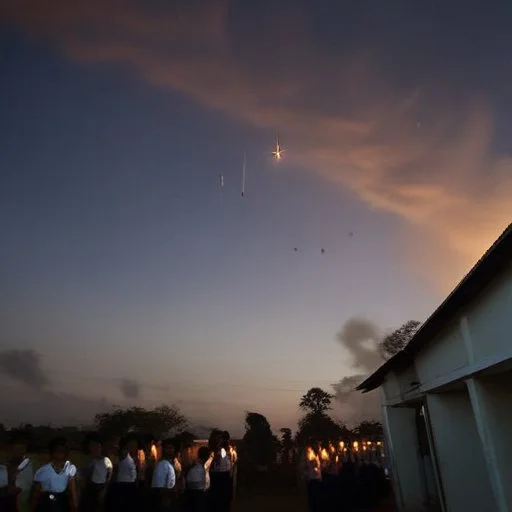
The day began like any other for the group of schoolgirls, aged 16-19, gathered at a vocational training center in Mullaitivu, a rebel-held area in northern Sri Lanka. Little did they know that their lives would be forever changed in a matter of minutes. The air strike, part of the government's military campaign against the Liberation Tigers of Tamil Eelam (LTTE), caught the girls off guard, leaving behind a trail of devastation and despair.
The news of the Chencholai bombing sent shockwaves across the nation, with families, friends, and communities reeling from the loss. The sheer scale of the tragedy was difficult to comprehend, and the nation struggled to come to terms with the senseless loss of so many young lives. The government, human rights groups, and international organizations condemned the attack, calling for an immediate end to the violence.
The Sri Lankan Civil War, which lasted from 1983 to 2009, was a brutal and complex conflict that pitted the government against the LTTE, a separatist organization fighting for Tamil independence. The war claimed tens of thousands of lives, displaced millions, and left deep scars on the nation's psyche. The Chencholai bombing served as a grim reminder of the devastating cost of war, where civilians, particularly children, are often the unintended victims.
In the years that followed, the people of Sri Lanka came together to honor the memory of the Chencholai schoolgirls. Memorials were erected, and anniversaries of the tragedy were marked with solemn ceremonies and protests. The incident also sparked a renewed push for peace and reconciliation, with many calling for accountability and justice for the victims and their families.
The Chencholai bombing serves as a poignant reminder of the devastating consequences of war and the need for peaceful conflict resolution. It has also led to greater awareness about the importance of protecting civilians, particularly children, in conflict zones. As the world continues to grapple with the challenges of conflict and violence, the story of the Chencholai schoolgirls remains a powerful testament to the human cost of war and the need for peace, justice, and reconciliation.
In memory of the Chencholai schoolgirls, we must recommit ourselves to promoting peace, protecting human rights, and promoting education as a fundamental right for all. We must also recognize the importance of accountability and justice in preventing such tragedies from occurring in the future. As we reflect on this tragic event, let us strive to create a world where children can grow up free from the horrors of war and where education is valued as a fundamental right, not a luxury.
The Chencholai bombing was not an isolated incident, but rather a culmination of a series of events that escalated the conflict between the Sri Lankan government and the LTTE. In the months leading up to the tragedy, the LTTE had been launching a series of attacks on government targets, prompting a retaliatory response from the Sri Lankan military.
The vocational training center, where the schoolgirls were gathered, was located in a rebel-held area, and the Sri Lankan government had been accusing the LTTE of using the center as a recruitment hub for child soldiers. This allegation has been vehemently denied by the LTTE, and human rights groups have consistently reported that the center was a legitimate facility providing vocational training to displaced Tamil youth.
Regardless of the circumstances, the Chencholai bombing marked a turning point in the conflict, as it sparked widespread international condemnation and calls for a ceasefire. The incident also led to a significant shift in the balance of power, as the LTTE began to lose ground to the Sri Lankan military in the ensuing months.

Kethesh Loganathan, a prominent human rights activist, played a crucial role in bringing attention to the Chencholai bombing. As the director of the Center for Poverty Analysis, Loganathan was a vocal critic of the Sri Lankan government's human rights record and had been documenting the impact of the conflict on civilians.
Loganathan's tireless efforts to highlight the plight of the Chencholai victims and their families earned him international recognition, and he became a key figure in the campaign for accountability and justice. Tragically, Loganathan was assassinated in 2006, just a few months after the Chencholai bombing, in a targeted attack that was widely condemned by human rights groups.
The Chencholai bombing bears striking similarities to other tragic incidents of civilian casualties in conflict zones. The 1983 'Black July' riots in Sri Lanka, which targeted the Tamil minority, and the 1995 Srebrenica massacre in Bosnia, which resulted in the deaths of over 8,000 Bosniak Muslims, are just a few examples of the devastating consequences of war on civilian populations.
These incidents highlight the need for greater accountability and protection of civilians in conflict zones. The Chencholai bombing serves as a poignant reminder of the importance of upholding international humanitarian law and ensuring that those responsible for such atrocities are held accountable.

The Chencholai bombing had a profound impact on Sri Lankan culture, particularly in the Tamil community. The tragedy became a rallying cry for the Tamil diaspora, sparking widespread protests and calls for justice.
The incident also inspired a wave of creative expression, with many Sri Lankan artists, writers, and musicians using their work to condemn the violence and pay tribute to the victims. The Chencholai bombing has become an important symbol of resistance and resilience in the face of oppression, and its legacy continues to inspire social and political activism in Sri Lanka.
The Chencholai bombing was a major embarrassment for the Sri Lankan government, which had been facing international criticism for its human rights record. The incident led to a significant shift in the government's strategy, as it began to seek a more military-based solution to the conflict.
The bombing also had significant implications for the international community, as it highlighted the need for greater engagement and pressure on the Sri Lankan government to respect human rights and international humanitarian law. The incident led to increased diplomatic efforts to pressure the government to launch an independent inquiry into the incident and to take steps to prevent such tragedies from occurring in the future.