


The Jaffna Lagoon, once a tranquil haven, became the site of unimaginable horror as the Sri Lanka Navy's brutal assault claimed the lives of approximately 35,100 innocent civilians. This devastating chapter in the Sri Lankan Civil War is etched in the memories of those who witnessed the atrocities, leaving an indelible mark on the nation's collective psyche.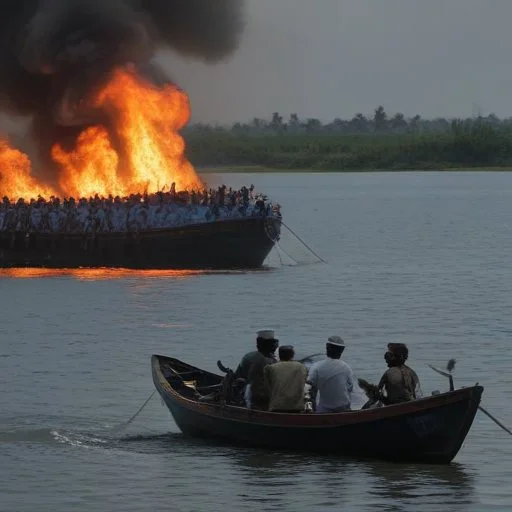
The Sri Lankan Civil War, which lasted from 1983 to 2009, was a complex web of ethnic and political tensions. The Liberation Tigers of Tamil Eelam (LTTE), a separatist group, sought independence for the Tamil minority, while the Sri Lankan government, dominated by the Sinhalese majority, fought to maintain control. The conflict escalated, resulting in human rights abuses, massacres, and displacement of civilians.
The Jaffna Lagoon massacre resulted in one of the highest civilian casualty counts in the Sri Lankan Civil War. The devastating attack not only claimed lives but also left survivors with physical and emotional scars, displaced families, and destroyed communities.
The Sri Lankan government's response to the massacre was criticized for its lack of accountability and transparency. The international community condemned the attack, calling for an investigation into the human rights abuses. However, the government's reluctance to acknowledge its culpability and provide justice to the victims and their families has led to ongoing resentment and mistrust.
Survivors of the massacre recount stories of panic, fear, and helplessness as they witnessed the brutal killing of their loved ones. A fisherman, who lost his entire family, remembers the horror of being dragged from the water, bleeding and exhausted, only to be met with indifference by the authorities.
The Jaffna Lagoon massacre serves as a stark reminder of the devastating consequences of unchecked military power and the importance of protecting civilians in conflict zones. However, the international community's failure to hold the Sri Lankan government accountable has set a dangerous precedent, emboldening other nations to prioritize military might over human life.
Despite the trauma and hardship, the people of Jaffna have shown remarkable resilience. Local organizations and individuals have worked tirelessly to rebuild communities, provide aid to survivors, and advocate for justice and accountability. Their courage and determination serve as a beacon of hope in the face of unimaginable tragedy.
The Jaffna Lagoon massacre stands as a testament to the devastating consequences of unchecked power and the importance of protecting human life. As we reflect on this dark chapter in Sri Lanka's history, we must recommit ourselves toLearn from the past, and strive towards a future where such atrocities are never repeated.
The Jaffna Peninsula, a region rich in history and culture, had long been a focal point of the Sri Lankan Civil War. The area's strategic location and natural resources made it a prized possession for both the LTTE and the Sri Lankan government. In the months leading up to the Jaffna Lagoon massacre, the LTTE had established a strong presence in the region, prompting the government to launch a series of military operations to regain control.
The Sri Lankan Navy's assault on the Jaffna Lagoon was not an isolated incident, but rather part of a broader campaign to quell the LTTE's influence in the region. In the years preceding the massacre, the government had launched numerous operations in the Jaffna Peninsula, resulting in thousands of civilian casualties and widespread displacement.
Understanding the historical context of the Jaffna Lagoon massacre is crucial in grasping the complexity of the Sri Lankan Civil War and its devastating consequences.
Kapilan, a Tamil fisherman, was one of the few survivors of the Jaffna Lagoon massacre. His harrowing account of the attack, in which he lost his entire family, is a testament to the brutality of the Sri Lankan Navy's assault. Kapilan's story is a powerful reminder of the human cost of the conflict and the need for accountability and justice.
In the aftermath of the massacre, Kapilan became an advocate for the rights of victims and their families, calling for an international investigation into the human rights abuses committed during the conflict. His courage and determination in the face of unimaginable tragedy serve as an inspiration to those seeking justice and accountability.
The Jaffna Lagoon massacre bears stark similarities to other instances of humanitarian crises in which civilians have been caught in the crossfire of conflict. The Siege of Sarajevo during the Bosnian War and the bombing of Aleppo during the Syrian Civil War are just two examples of the devastating consequences of military operations in urban areas.
In each of these instances, the international community's response has been criticized for its inadequacy, allowing perpetrators to go unpunished and victims to be denied justice. The parallels between these conflicts serve as a stark reminder of the need for effective international mechanisms to protect civilians in conflict zones.
The Jaffna Lagoon massacre has had a profound impact on the cultural heritage of the Jaffna Peninsula. The attack destroyed numerous cultural and religious sites, including Hindu temples and Christian churches, erasing a significant part of the region's cultural identity.
The cultural trauma inflicted by the massacre has been compounded by the Sri Lankan government's failure to acknowledge the victims' suffering and provide adequate reparations. The lack of accountability has contributed to a sense of mistrust and resentment among the Tamil community, further exacerbating the cultural divide between the Tamil and Sinhalese populations.
The Jaffna Lagoon massacre had significant economic repercussions, both locally and nationally. The destruction of fishing boats and infrastructure crippled the region's fishing industry, a vital source of livelihood for thousands of families.
The economic impact of the massacre was further compounded by the displacement of civilians, who were forced to flee their homes and abandon their livelihoods. The long-term economic consequences of the conflict have been felt across Sri Lanka, with the nation still struggling to recover from the devastating effects of the civil war.