


In the midst of Sri Lanka's brutal civil war, a dark chapter unfolded in the Eastern Province, forever etching a gruesome memory in the annals of history. The 1990 massacre, where Sri Lankan Army soldiers slaughtered 158 innocent civilians, remains a haunting testament to the unfathomable horrors of war.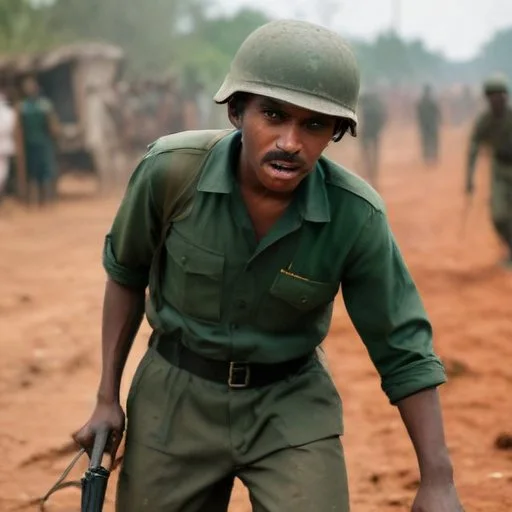
Sri Lanka, an island nation in the Indian Ocean, had been embroiled in a bloody civil war since 1983, pitting the government against the Liberation Tigers of Tamil Eelam (LTTE), a separatist group fighting for Tamil independence. The conflict had already claimed thousands of lives, displaced countless families, and left the nation on the brink of humanitarian crisis.
On a fateful morning, Sri Lankan Army soldiers stormed into a cluster of villages in the Eastern Province, unleashing a torrent of violence upon the unsuspecting civilians. The unprovoked attack, which would later become known as the Eastern Province massacre, left a trail of death and destruction in its wake.
The 158 civilian casualties, including women and children, were largely Tamil villagers, who were caught in the crossfire of a conflict that showed no signs of abating. The massacre sparked widespread outrage, further exacerbating the humanitarian crisis and deepening the mistrust between the government and the Tamil population.
The Eastern Province massacre marked a turning point in the Sri Lankan Civil War, galvanizing international opinion against the government and further entrenching the divisions between the Sinhalese and Tamil populations. The incident has since become a symbol of the horrors of war, serving as a poignant reminder of the need for peaceful conflict resolution.
The massacre had a profound impact on Sri Lankan society, with many artists, writers, and intellectuals using their works to condemn the violence and advocate for peace. The incident has also been immortalized in various forms of literature, music, and art, ensuring that the memory of the victims will never be forgotten.
The Roots of Ethnic Tension
The 1990 massacre was not an isolated incident, but rather a culmination of decades of simmering ethnic tension between the Sinhalese and Tamil populations. The roots of this tension can be traced back to the early 20th century, when the British colonial powers began to favor the Tamil minority in terms of education and employment opportunities.
This led to widespread resentment among the Sinhalese population, who felt that they were being marginalized in their own country. The situation was further complicated by the Indian Origins of the Tamil population, which led to fears of Indian domination.
The legacy of colonialism and the subsequent struggle for power and identity would continue to shape the trajectory of Sri Lankan politics, ultimately contributing to the outbreak of civil war.
The Controversial Legacy of General Ranjan Wijeratne
General Ranjan Wijeratne, the then-Defense Minister of Sri Lanka, was widely criticized for his role in the 1990 massacre. However, Wijeratne's legacy is more complex and multifaceted than his involvement in this single incident.
A decorated war hero, Wijeratne was instrumental in shaping Sri Lanka's military strategy during the early years of the civil war. Despite his controversial legacy, Wijeratne remains a polarizing figure in Sri Lankan politics, with some hailing him as a national hero and others condemning him as a war criminal.
Wijeratne's legacy serves as a poignant reminder of the complexities of conflict and the blurred lines between heroism and villainy.The Impact on Tamil Literature and Art
The 1990 massacre had a profound impact on Tamil literature and art, with many writers and artists using their work to condemn the violence and advocate for peace.
Notable examples include the works of Tamil poets such as Cheran and Sivaramani, who wrote passionately about the experiences of the Tamil people during the civil war.
The massacre also inspired a new generation of Tamil artists, who used their work to raise awareness about human rights abuses and promote reconciliation.
The International Response to the Crisis
The 1990 massacre marked a turning point in the international community's response to the Sri Lankan civil war, with many countries condemning the violence and calling for an end to the conflict.
The incident led to increased diplomatic pressure on the Sri Lankan government, with the United States and European Union imposing economic sanctions in response to human rights abuses.
The international community's response to the crisis would ultimately play a key role in shaping the trajectory of the conflict and promoting a peaceful resolution.The Regional Geopolitical Context
The 1990 massacre took place against the backdrop of a complex and volatile regional geopolitical landscape, with Sri Lanka situated strategically at the crossroads of South Asia.
The conflict in Sri Lanka was closely watched by neighboring countries, including India, Pakistan, and China, each of whom had their own interests and agendas in the region.
The regional dynamics of the conflict would ultimately play a significant role in shaping the trajectory of the war and the country's eventual descent into humanitarian crisis.