


The Mandhradevi temple in Maharashtra, India, will forever be etched in the nation's collective memory as the site of one of the deadliest stampedes in Indian history, claiming the lives of at least 258 devotees and leaving countless others scarred. On that fateful day, the temple's narrow staircases and corridors transformed into a gruesome battleground, where pilgrims were trampled or crushed in the chaos that ensued.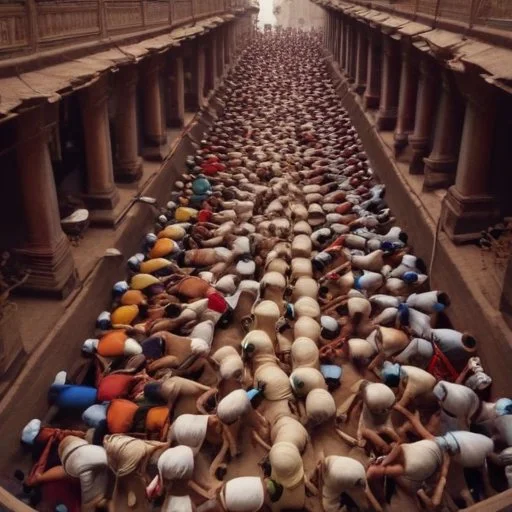
The Hindu festival of Navratri had brought thousands of devotees to the temple, seeking blessings and solace in the sacred space. As the crowd swelled, a seemingly innocuous rumor began to spread like wildfire, sparking panic among the masses. The resulting stampede was a manifestation of the collective fear and desperation that gripped the pilgrims, as they desperately sought to escape the perceived danger.
The tragedy was compounded by the temple's labyrinthine architecture, which made it difficult for people to navigate the narrow corridors and staircases. As panic set in, the crowd's instinctive response was to flee, leading to a domino effect of people tripping, falling, and getting trampled. The visuals of bodies piled up on top of each other, some still clutching their sacred offerings, would haunt the nation's psyche for years to come.
In the aftermath of the tragedy, an investigation was launched to determine the root cause of the disaster. The probe revealed a series of lapses in crowd management, inadequate infrastructure, and a lack of preparedness on the part of the temple authorities. The incident led to a thorough overhaul of safety protocols and emergency response systems at religious sites across the country.
The Mandhradevi temple stampede serves as a poignant reminder of the delicate balance between faith and safety. As we mourn the loss of innocent lives, we must also acknowledge the importance of infrastructure, planning, and crowd management in preventing such tragedies. The incident serves as a clarion call to re-evaluate our priorities and ensure that our sacred spaces remain safe havens for all.
The stampede highlighted the tension between traditional practices and modern safety standards. It sparked a national debate on the need for religious sites to adapt to the demands of growing crowds and urbanization. The incident also underscored the importance of effective communication, crowd control, and emergency response planning in preventing such tragedies.
In the years that followed, the Mandhradevi temple stampede became a landmark case study in crowd management and disaster response. It led to a series of reforms and safety initiatives, aimed at preventing similar tragedies at religious sites across India. As we remember the lives lost on that fateful day, we are reminded of the importance of learning from our mistakes and striving for a safer, more compassionate society.
The Mandhradevi temple stampede had a profound impact on Indian culture, highlighting the need for religious sites to adapt to modern safety standards. In the aftermath of the tragedy, many temples and religious institutions across the country began to re-evaluate their infrastructure and crowd management practices. This shift towards prioritizing safety and accessibility marked a significant turning point in the country's approach to religious gatherings and festivals.
Furthermore, the incident sparked a national conversation about the importance of crowd control and emergency response planning at religious sites. This led to the development of new guidelines and regulations for managing large crowds and preventing such tragedies in the future.
The cultural impact of the Mandhradevi temple stampede was also felt in the way it brought attention to the importance of effective communication and community engagement in preventing such disasters. It emphasized the need for religious leaders and authorities to work closely with local communities and authorities to ensure that festivals and gatherings are held in a safe and responsible manner.

The Mandhradevi temple, nestled in the heart of Maharashtra, has a rich history dating back to the 17th century. Legend has it that the temple was built by a local saint, who was said to have had a vision of the goddess Mandhradevi. Over the centuries, the temple became a popular pilgrimage site, attracting devotees from all over the country.
In the years leading up to the tragic stampede, the temple had witnessed a significant increase in the number of visitors, particularly during the festival of Navratri. This led to concerns about the temple's infrastructure and its ability to handle large crowds. Despite these concerns, the temple authorities had not taken adequate measures to address the issue.
The tragedy of the Mandhradevi temple stampede was a wake-up call for the authorities, forcing them to re-examine their priorities and take concrete steps to ensure the safety and well-being of devotees.
The Mandhradevi temple stampede shares eerie similarities with other tragic incidents that have occurred at religious sites around the world. In 2015, a stampede occurred at the Hajj pilgrimage in Mecca, Saudi Arabia, resulting in the deaths of over 700 people. Similarly, in 2013, a stampede at the Vishnu temple in India's Andhra Pradesh state killed over 30 people.
These incidents highlight the common factors that contribute to such tragedies, including inadequate infrastructure, poor crowd management, and a lack of effective communication. They also underscore the importance of learning from past mistakes and implementing measures to prevent such incidents in the future.
By studying these comparative cases, we can gain a deeper understanding of the complex factors that contribute to stampedes at religious sites and develop more effective strategies for preventing such tragedies.
The Mandhradevi temple stampede serves as a powerful case study for educating students about the importance of safety and crowd management at religious sites. It highlights the need for religious leaders and authorities to prioritize the safety and well-being of devotees. By using this incident as a teaching tool, educators can help students develop critical thinking skills and understand the complexities of managing large crowds.
Furthermore, the incident can be used to teach students about the importance of effective communication, emergency response planning, and community engagement in preventing such tragedies. It emphasizes the need for multidisciplinary approaches to problem-solving and the importance of collaborating with local authorities and communities.
By incorporating the Mandhradevi temple stampede into educational curricula, we can help shape a new generation of leaders and policymakers who are equipped to tackle complex challenges and prioritize the safety and well-being of citizens.
The Mandhradevi temple stampede raises profound philosophical and ideological questions about the nature of faith and safety. It challenges us to reflect on the tensions between individual freedom and collective safety. How do we balance the right to practice one's faith with the need to ensure the safety and well-being of others?
The incident also highlights the importance of re-evaluating our cultural and religious practices in the face of modern challenges. It asks us to consider whether our traditional practices are compatible with modern safety standards and whether we need to adapt our practices to prioritize safety.
Ultimately, the Mandhradevi temple stampede serves as a powerful reminder of the need for ongoing reflection and dialogue about the role of faith and safety in our lives.