


In the scorching summer of 1977, the North African landscape was set ablaze by a four-day war between Libya and Egypt, a conflict that would leave a lasting scar on the relations between the two nations. What began as a surprise attack on Egyptian border towns by Libyan forces, led by the enigmatic Muammar Gaddafi, would escalate into a ferocious battle that would claim hundreds of lives.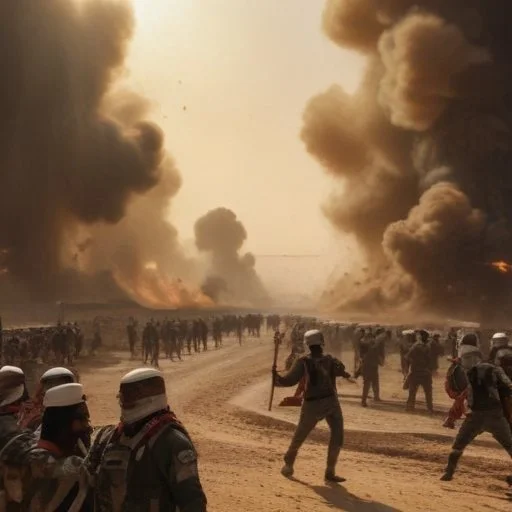
The roots of this conflict lay in the complex web of regional politics and territorial disputes that had been simmering for decades. Libya, with its vast oil reserves, had long been a thorn in the side of its neighbors, including Egypt. The Egypt-Libya border had been a point of contention since the 1950s, with both countries claiming ownership of the fertile oasis of Salum.
On July 21, 1977, Libyan forces crossed the border into Egypt, catching the Egyptian military off guard. The initial attack was swift and brutal, catching the Egyptian army by surprise. The Libyan army, bolstered by Gaddafi's eccentric leadership, had been quietly gathering strength along the border, preparing for this moment.
Egyptian President Anwar El-Sadat, determined to protect his nation's sovereignty, rallied his troops and launched a decisive counterattack. The Egyptian army, better trained and better equipped, pushed back the Libyan forces, slowly but surely. The tide of the war began to turn in Egypt's favor, as Libyan forces began to retreat.
After four days of intense fighting, a ceasefire was negotiated, bringing an end to the conflict. The war had left its mark, with hundreds of soldiers and civilians dead on both sides. The relations between Libya and Egypt, already strained, had reached a new low.
The war marked a significant deterioration in relations between Libya and Egypt, which would take years to repair. The conflict also highlighted the instability of the region, leading to increased tensions between neighboring countries. The war brought international attention to the region, with global leaders condemning the aggression.
The war also had significant cultural and social implications, with Egyptians and Libyans alike reeling from the shock of the conflict. The war would go on to shape the national identity of both countries, with the event becoming a symbol of resilience and determination.
| Date | Event |
|---|---|
| July 21, 1977 | Libyan forces cross the border into Egypt, launching a surprise attack |
| July 22, 1977 | Egyptian President Anwar El-Sadat rallies his troops and launches a counterattack |
| July 25, 1977 | A ceasefire is negotiated, bringing an end to the conflict |
The 1977 Libyan-Egyptian War may have lasted only four days, but its impact would be felt for years to come. The conflict served as a stark reminder of the volatility of the region, and the need for diplomatic efforts to prevent such conflicts in the future.
Today, the war serves as a cautionary tale, a reminder of the devastating consequences of unchecked aggression and the importance of dialogue and cooperation in maintaining regional stability.
Muammar Gaddafi's rise to power in Libya was marked by his charismatic personality and unpredictable behavior. Born in 1942, Gaddafi was a young officer in the Libyan army when he led a bloodless coup against King Idris in 1969. He quickly consolidated power, establishing himself as the de facto leader of Libya.
Gaddafi's leadership style was characterized by his mercurial personality, marked by sudden and unexpected decisions. This unpredictability often kept his opponents off balance, allowing him to maintain control over the country. Despite his authoritarian rule, Gaddafi was also known for his populist policies, which aimed to redistribute wealth and promote social welfare.
Gaddafi's personality played a significant role in the 1977 war with Egypt. His eccentric behavior and tendency to act impulsively contributed to the surprise attack on Egyptian border towns. The war was a manifestation of Gaddafi's aggressive foreign policy, which often prioritized territorial expansion over diplomatic relations.
The 1977 Libyan-Egyptian War took place against the backdrop of a complex geopolitical landscape. The Cold War was at its height, with the United States and the Soviet Union vying for influence in the region. The Arab-Israeli conflict, which had been simmering since the 1950s, had created a climate of tensions in the Middle East.
The 1973 Yom Kippur War had recently ended, leaving Egypt and Libya in a state of heightened alert. The war had also led to a significant increase in oil prices, which had far-reaching implications for the global economy. This economic uncertainty created an environment in which small conflicts could quickly escalate into larger wars.
The war was also influenced by the regional dynamics of the time. The Arab League, which consisted of Arab states, was divided in its response to the conflict. Some member states, such as Syria and Algeria, supported Libya, while others, like Saudi Arabia and Jordan, backed Egypt.
The 1977 Libyan-Egyptian War had a profound impact on the cultural identity of both countries. The war was seen as a symbol of national resilience, with both sides celebrating their bravery and determination in the face of adversity.
In Egypt, the war led to a renewed focus on national identity and a sense of pride in the country's military prowess. The war was commemorated through art, literature, and music, with many Egyptians expressing their patriotism through creative works.
In Libya, the war was seen as a symbol of Gaddafi's leadership and his ability to stand up to external threats. The war was used to promote a sense of national unity, with Gaddafi presenting himself as the defender of Libya's sovereignty.

The 1977 Libyan-Egyptian War had significant economic implications for both countries. The war led to a substantial increase in military spending, as both sides sought to modernize their armed forces and deter future aggression. In Egypt, the war led to a decline in tourism, which had been a significant contributor to the country's economy. The war also disrupted trade with Libya, leading to a shortage of essential goods and commodities. In Libya, the war led to a greater focus on oil production, as the country sought to maximize its oil revenues to fund its military expansion. This led to an increase in oil production, which had far-reaching implications for the global energy market.
The 1977 Libyan-Egyptian War had significant political consequences for both countries. The war marked a shift in the regional balance of power, with Egypt emerging as the dominant military power in the region.
In Egypt, the war led to a strengthening of Anwar El-Sadat's position, as he was able to present himself as a strong leader who had defended Egypt's sovereignty against aggression.
In Libya, the war led to a consolidation of Gaddafi's power, as he used the war to promote a sense of national unity and justify his authoritarian rule. The war also led to a deterioration in relations with neighboring countries, which had previously sought to maintain good relations with Libya.