


The 14th of July, 1789, will forever be etched in the annals of history as the day the people of Paris wrestled freedom from the shackles of monarchy. The Storming of the Bastille, a potent symbol of royal tyranny, marked the crescendo of widespread discontent, igniting the flames of the French Revolution.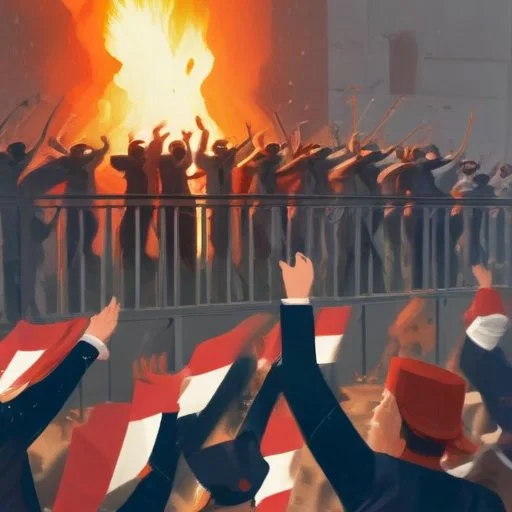
The years preceding the Storming of the Bastille were marked by economic crisis,Crop failures, and a crippling national debt. The burden of taxation fell squarely on the shoulders of the common man, while the aristocracy and clergy revelled in opulence. The bourgeoisie, once loyal to the monarchy, began to question the legitimacy of the ruling elite. The writings of Enlightenment thinkers like Rousseau, Voltaire, and Montesquieu sparked a fire of liberty in the hearts of the French people.
On the morning of July 14th, a crowd of approximately 1,000 individuals, comprised of artisans, merchants, and members of the National Guard, gathered before the imposing walls of the Bastille prison. This fortress, a symbol of royal authority, held seven prisoners, including four forgers, two lunatics, and a nobleman imprisoned for moral deviancy. The mob demanded the governor, Bernard de Launay, surrender the prison and release the prisoners. De Launay, refusing to yield, called upon the nearby Invalides regiment for reinforcement. The standoff had begun.
As tensions escalated, a group of rebels, led by Pierre-Augustin Hulin, stormed the gates, overwhelming the meagre forces defending the prison. Governor de Launay, realizing the futility of resistance, raised the white flag. The gates of the Bastille crashed open, freeing the prisoners and sparking jubilation among the crowd. The governor and his men were taken prisoner, and the triumphant mob paraded through the streets, brandishing the severed head of de Launay on a pike.
The fall of the Bastille sent shockwaves throughout France, inspiring similar uprisings in cities and towns. The National Assembly, responding to the people's cries for liberty, adopted the Declaration of the Rights of Man and of the Citizen, cementing the principles of the Revolution. The storming of the Bastille also marked the demise of the absolute monarchy, as King Louis XVI was forced to accept the authority of the National Assembly.
Today, Bastille Day is celebrated annually on July 14th, commemorating the triumph of the French people over tyranny. Military parades, fireworks, and feasts fill the streets of Paris, as the French people rejoice in their hard-won freedom. The spirit of '89 continues to inspire generations, a beacon of hope for all those seeking liberty, equality, and fraternity.
In conclusion, the Storming of the Bastille was a pivotal moment in French history, igniting the flames of revolution and forever changing the course of human events. As we gaze upon the crumbling walls of the Bastille, we are reminded of the indomitable spirit of the French people, who dared to challenge the status quo and forge a new era of liberty, equality, and fraternity.
Liberté, Égalité, Fraternité!
The enigmatic figure of Pierre-Augustin Hulin, leader of the rebels during the Storming of the Bastille, remains shrouded in mystery. Little is known about his early life, except that he was born in 1758 in Paris. Hulin's involvement in the Revolution began as a member of the French National Guard, where he quickly rose through the ranks due to his charismatic leadership and bravery. On the fateful day of July 14, 1789, Hulin's impassioned speech galvanized the crowd, urging them to storm the Bastille and free its prisoners.
Hulin's subsequent role in the Revolution is less clear, but he is believed to have continued fighting for the cause of liberty and equality. Some historians suggest he may have been involved in the formation of the radical Jacobin Club, which played a significant role in the Reign of Terror. Despite his contributions, Hulin's legacy has been overshadowed by more prominent figures of the Revolution.
The Storming of the Bastille had a profound impact on French culture, as it symbolized the overthrow of an oppressive regime and the birth of a new era of liberty and equality. The event inspired a wave of artistic expression, as writers, artists, and musicians sought to capture the spirit of the Revolution.
One of the most enduring cultural legacies of the Storming of the Bastille is the adoption of La Marseillaise as the French national anthem. Written in 1792, this stirring hymn has become an integral part of French identity, evoking the passion and idealism of the Revolution.
The Bastille's fall also influenced the development of French literature, as writers like Victor Hugo and Honoré de Balzac drew inspiration from the event. The Revolution's emphasis on reason, liberty, and equality shaped the intellectual and artistic currents of the time, paving the way for Romanticism and Realism.
The Storming of the Bastille was not an isolated event, but rather the culmination of a broader geopolitical context that had been unfolding for decades. The absolute monarchy, once the cornerstone of European politics, was facing challenges from rising nation-states like Prussia, Austria, and England.
France, in particular, was struggling to maintain its influence and territorial integrity in the face of these emerging powers. The burden of debt, incurred through costly wars and lavish spending, had weakened the French economy and eroded the people's trust in the monarchy.
The Storming of the Bastille marked a turning point in European history, as it challenged the traditional balance of power and inspired similar movements for liberty and democracy across the continent.
The historiographical significance of the Storming of the Bastille lies in its representation of the French Revolution's defining ideals: liberty, equality, and fraternity. Historians have long debated the event's role in shaping the Revolution's trajectory, with some arguing that it marked the beginning of a radicalization of the Revolution.
One of the most influential interpretations of the Storming of the Bastille comes from the Marxist historian, Georges Lefebvre, who viewed the event as a manifestation of the class struggle between the bourgeoisie and the aristocracy. Lefebvre's work has had a lasting impact on our understanding of the Revolution, emphasizing the role of economic and social factors in shaping historical events.
The economic consequences of the Storming of the Bastille were far-reaching, as the event marked a shift in the French economy's centralized power structure. The National Assembly's takeover of the national treasury and the abolition of feudal privileges paved the way for a more decentralized and liberal economic system.
The Revolution's emphasis on individual liberties and property rights created a more favorable business environment, attracting foreign investment and stimulating economic growth. The adoption of the Assignat, a paper currency, helped to finance the Revolution's military efforts and stabilize the economy.