


The Suez Crisis, a pivotal event in modern Middle Eastern history, is known for the bold military maneuver by Israeli forces who invaded the Sinai Peninsula, pushing Egyptian forces back toward the Suez Canal. This event, which took place on October 29, 1956, would go on to draw in major world powers and have far-reaching consequences for the region.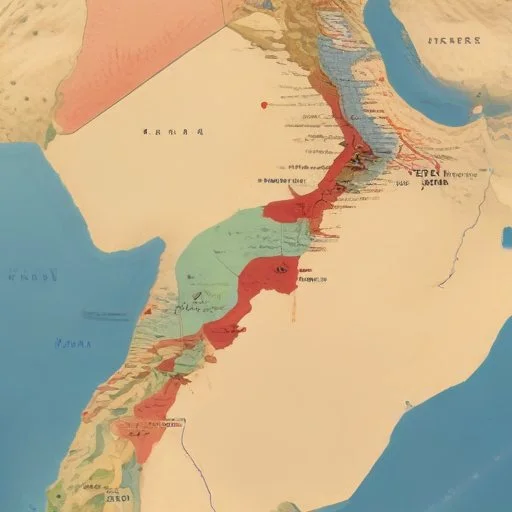
The seeds of the Suez Crisis were sown in the years following World War II, as the Middle East became a hotbed of political and ideological tensions. Egypt, led by President Gamal Abdel Nasser, was determined to assert its independence and regional influence, while Britain and France sought to maintain their colonial grip on the region. Israel, meanwhile, was looking to expand its territory and secure its borders.
In July 1956, Nasser nationalized the Suez Canal Company, a move that was met with fury from Britain and France. The two European powers, who were the majority shareholders in the company, saw this as an affront to their interests and a threat to their dominance in the region. Israel, sensing an opportunity to strike against its longtime foe, began making secret plans with Britain and France to take military action against Egypt.
On October 29, 1956, Israeli forces, led by General Moshe Dayan, launched a surprise attack on Egyptian forces in the Sinai Peninsula. The Egyptians, caught off guard, were quickly pushed back towards the Suez Canal. The Israeli military campaign was swift and decisive, with Egyptian forces offering little resistance.
As the Israeli military advanced deeper into Egyptian territory, international pressure began to mount. The United States, fearing a wider conflict, intervened diplomatically, calling for an immediate ceasefire. On November 6, 1956, a ceasefire was brokered, with Israeli forces withdrawing from the Sinai Peninsula.
The Suez Crisis had a profound impact on the cultural and social fabric of the Middle East. It marked a turning point in the Arab-Israeli conflict, fueling nationalist sentiment and anti-colonial movements across the region. The crisis also had a lasting impact on international relations, leading to a re-evaluation of the role of the United Nations in maintaining global peace and security.
The Suez Crisis remains a highly controversial event, with many viewing it as a failed attempt by colonial powers to reassert their dominance over the region. The crisis also sparked widespread criticism of Israel's military actions, which were seen as an aggression against Arab sovereignty.
"The Suez Crisis was a stark reminder that the age of empires is over, and that the era of national liberation has begun." - Gamal Abdel Nasser
"We will not be dictated to by the Great Powers. We will not be treated as if we were a colony." - David Ben-Gurion
The Suez Crisis, a pivotal event in modern Middle Eastern history, continues to shape regional politics and international relations to this day. As a testament to the enduring impact of this event, the crisis remains an important chapter in the ongoing struggle for peace and stability in the Middle East.
The Suez Crisis has been the subject of much historiographical debate, with different interpretations of the event emerging over time. Some historians have viewed the crisis as a wake-up call for the British and French, forcing them to confront the decline of their colonial empires. Others have seen it as a key moment in the Cold War, with the United States emerging as a dominant power in the Middle East. Regardless, the crisis remains a pivotal event in modern Middle Eastern history, with its legacy still felt today.
One of the most contentious issues among historians is the role of the United States in the crisis. Some have argued that the Eisenhower administration's decision to pressure Britain and France to withdraw was a turning point in the crisis, while others have seen it as a symbol of American imperialism. Regardless, the crisis marked a significant shift in the global balance of power, with the United States emerging as a dominant force in the Middle East.

David Ben-Gurion, the Israeli Prime Minister during the Suez Crisis, was a key figure in the lead-up to the conflict. A skilled politician and strategist, Ben-Gurion was determined to expand Israel's territory and secure its borders. He saw the nationalization of the Suez Canal Company as an opportunity to strike against Egypt, and secretly colluded with Britain and France to launch the military campaign.
Ben-Gurion's leadership during the crisis was marked by a combination of pragmatism and idealism. While he was willing to take bold action to secure Israel's interests, he was also driven by a desire to create a Jewish homeland. The Suez Crisis marked a turning point in Ben-Gurion's career, cementing his reputation as a shrewd and effective leader.
The Suez Crisis had a profound impact on the cultural and social fabric of the Middle East. The crisis marked a turning point in the Arab-Israeli conflict, fueling nationalist sentiment and anti-colonial movements across the region. It also led to a re-evaluation of the role of the United Nations in maintaining global peace and security.
The crisis also had a significant impact on the arts, with many writers, artists, and musicians responding to the event. In Egypt, the crisis inspired a wave of nationalist literature and art, while in Israel, it led to a renewed focus on security and defense. The crisis also sparked widespread debate and discussion, with many intellectuals and activists seeing it as a symbol of the struggle for independence and self-determination.

The Suez Crisis took place against the backdrop of a rapidly changing global landscape. The aftermath of World War II had seen the emergence of the United States and the Soviet Union as superpowers, and the decline of British and French colonial empires. The crisis marked a key moment in this process, as the United States emerged as a dominant force in the Middle East.
The crisis also highlighted the importance of the Middle East as a strategic region, with its rich oil resources and key waterways. The crisis marked a turning point in the Cold War, as the United States and the Soviet Union began to vie for influence in the region. It also led to a re-evaluation of the role of international organizations, such as the United Nations, in maintaining global peace and security.
The Suez Crisis had significant economic implications, both for the region and the world at large. The closure of the Suez Canal, a vital waterway for international trade, led to a surge in oil prices and a decline in global trade. The crisis also led to a significant increase in military spending, as countries in the region began to build up their armed forces.
The crisis also marked a turning point in the economic development of the Middle East. The decline of British and French colonial empires created new opportunities for economic growth and development, and the crisis marked the beginning of a new era of economic cooperation and competition in the region. The crisis also led to a re-evaluation of the role of international financial institutions, such as the International Monetary Fund, in maintaining global economic stability.