


Indonesia had been under Dutch colonial rule for over three centuries, and the struggle for independence had been a long and arduous one. Sukarno, along with other nationalists, had been fighting for independence for decades, facing imprisonment and exile along the way. However, the Japanese occupation of Indonesia during World War II had weakened the Dutch grip on the country, and the opportunity for independence had finally arrived.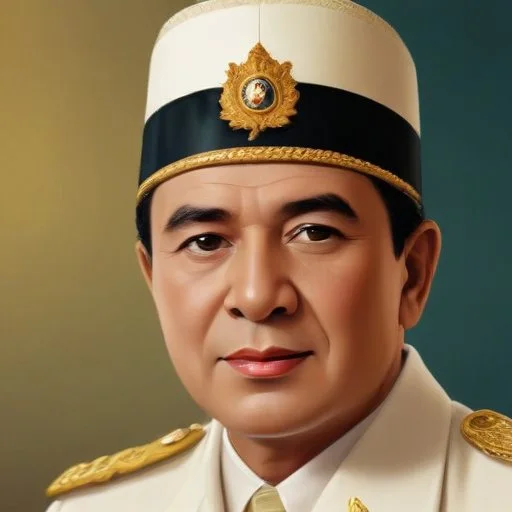
Sukarno was born in 1901 in Surabaya, Indonesia, and was raised in a family of modest means. Despite his humble beginnings, Sukarno was a natural leader, and his charismatic personality and oratory skills quickly made him a prominent figure in the nationalist movement. Throughout his life, Sukarno was driven by a deep passion for Indonesia and its people, and he was determined to lead his country to independence and prosperity.
As the first president of Indonesia, Sukarno had a clear vision for the future of his country. He believed in the importance of unity and cooperation among the Indonesian people, and he worked tirelessly to promote national unity and reconciliation. Sukarno also believed in the importance of economic development and modernization, and he launched a series of programs and initiatives aimed at improving the country's infrastructure, education, and healthcare systems.
Sukarno's presidency was not without its challenges and controversies. The country was facing economic and political instability, and Sukarno's authoritarian style of government was criticized by many. Additionally, Sukarno's close ties to the Indonesian military and his use of martial law to maintain control raised concerns about human rights and democracy.
Despite the challenges and controversies, Sukarno's legacy as a champion of Indonesian independence and unity remains unchallenged. He is remembered as a passionate and charismatic leader who fought tirelessly for his country and his people. Today, Sukarno is celebrated as a national hero in Indonesia, and his birthday, June 6, is celebrated as a national holiday.
Sukarno's inauguration as the first president of Indonesia marked a new era for the country and its people. Despite the challenges and controversies he faced, Sukarno remains a beloved and respected figure in Indonesian history, and his legacy continues to inspire and motivate Indonesians today.
The Japanese occupation of Indonesia during World War II had a profound impact on the country's struggle for independence. The occupation weakened the Dutch colonial powers and created an opportunity for the nationalists to take control. Sukarno, along with other leaders, saw this as a chance to declare independence and establish a new government.
The Japanese occupation also brought about significant economic and social changes to Indonesia. The economy was reorganized to support the Japanese war effort, and many Indonesians were forced to work in labor camps or recruited into the Japanese military.
Despite the challenges, the Japanese occupation also brought about a sense of national unity among Indonesians. The shared experience of occupation and resistance created a sense of solidarity and purpose, which would later become a key factor in the country's struggle for independence.

Sukarno's leadership style was characterized by his charisma and oratory skills, which earned him the nickname "The Great Leader of the Revolution". He was a skilled communicator who could rally crowds and inspire his followers to take action.
However, Sukarno's leadership was also marked by authoritarian tendencies. He was known to be intolerant of opposition and dissent, and his government was criticized for human rights abuses and suppression of free speech.
Despite these criticisms, Sukarno remained a popular figure among many Indonesians, who saw him as a symbol of national pride and resistance against colonial powers.
The declaration of Indonesian independence on August 17, 1945, was a significant event in the geopolitical context of Southeast Asia. The Japanese occupation had created a power vacuum in the region, and the Indonesian declaration of independence was seen as a challenge to the colonial powers and a threat to the status quo.
The international community was initially divided in its response to the Indonesian declaration of independence. The United States and the United Kingdom, who were allied with the Dutch, were skeptical of Sukarno's government and refused to recognize it.
However, the Soviet Union, which was seeking to expand its influence in the region, was quick to recognize the new Indonesian government and provide it with diplomatic and military support.

Sukarno's philosophy of politics was deeply influenced by his nationalist and anti-colonial beliefs. He believed that Indonesia had the right to self-determination and that the country should be free from foreign interference and domination.
Sukarno's ideology was also shaped by his readings of Marxist and socialist thought, which influenced his views on economic development and social justice.
However, Sukarno's ideology was not without its contradictions. He was a strong believer in the importance of national unity and solidarity, but his government was also criticized for its authoritarian tendencies and suppression of dissent.
Sukarno's presidency had a significant impact on Indonesian culture and identity. He promoted the use of the Indonesian language and encouraged the development of national arts and literature.
Sukarno's government also introduced a number of cultural policies aimed at promoting national unity and identity. For example, the government established a new national anthem and introduced a program of national holidays and celebrations.
However, Sukarno's cultural policies were not without controversy. Some critics argued that he was trying to impose a uniform national identity on the diverse cultural communities of Indonesia.