


The Amoco Cadiz, a supertanker carrying 1.6 million barrels of crude oil, made headlines on March 16, 1978, when it split in two after running aground on the Portsall Rocks, three miles off the coast of Brittany, France. This tragic event would go on to become the largest oil spill in history at that time, releasing a staggering 69 million gallons of oil into the pristine waters and devastating the region's ecosystem.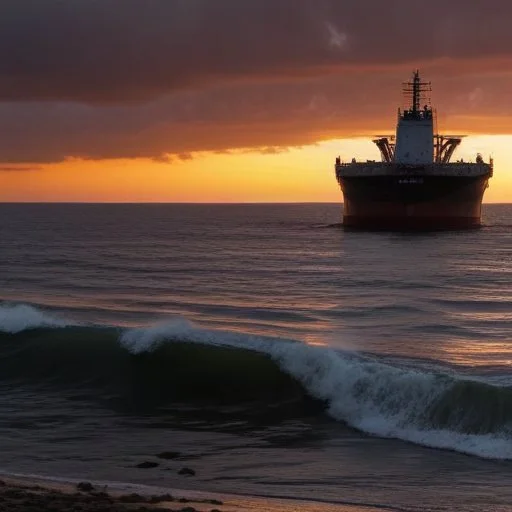
In the years leading up to the disaster, the global demand for oil was on the rise, and the maritime industry was responding by building larger and more efficient tankers. The Amoco Cadiz, built in 1975, was one such vessel, measuring over 1,100 feet in length and 160 feet in width. However, this increased capacity came with increased risks, and the Cadiz's maiden voyage would prove to be a catastrophic one.
The Amoco Cadiz set off from Ras Tanura, Saudi Arabia, bound for the Welsh port of Milford Haven. However, on the night of March 16, 1978, the tanker's navigation system failed, and it drifted off course. Despite receiving warnings from nearby vessels, the Cadiz continued on its deadly trajectory, eventually striking the Portsall Rocks at 9:45 PM. The force of the impact caused the tanker's hull to crack and splinter, ultimately splitting in two.
The consequences of the Amoco Cadiz disaster were far-reaching and devastating. The oil spill fouled over 100 miles of French coastline, killing an estimated 20,000 birds and countless other marine life. The cleanup efforts were monumental, involving over 10,000 workers and taking several months to complete. The disaster also led to significant changes in maritime regulations, including the implementation of double-hulled tankers and improved navigation systems.
The Amoco Cadiz disaster had a profound impact on the cultural and social landscape of France. The event sparked widespread outrage and protests, with many calling for greater accountability from the oil industry. The disaster also inspired a new wave of environmental activism, with many organizations emerging to advocate for greater protection of the French coastline.
The Amoco Cadiz disaster drew comparisons to the Torrey Canyon disaster, which had occurred just 11 years prior. While both incidents involved tanker crashes and oil spills, the Cadiz disaster was significantly larger in scale, releasing over twice as much oil into the ocean. However, both incidents shared a common thread – human error and inadequate safety measures.
One of the most poignant accounts of the disaster came from a local fisherman, who described the scene as "a sea of oil, with birds and fish struggling to survive." Another eyewitness recalled the "apocalyptic" scene, with oil-covered beaches and a "putrid" smell hanging over the area.
The Amoco Cadiz disaster served as a catalyst for change in the maritime industry. In the years following the disaster, double-hulled tankers became the norm, and navigation systems were significantly improved. The disaster also led to the creation of the International Convention on Oil Pollution Preparedness, Response and Co-operation (OPRC), which aimed to improve international cooperation on oil spill prevention and response.
The Amoco Cadiz disaster will forever be remembered as one of the most catastrophic environmental disasters in history. Its impact on the region, the industry, and global environmental policy continues to be felt to this day.
The Amoco Cadiz disaster had a significant impact on the local economy, with losses estimated to be in the hundreds of millions of dollars. The closure of beaches and fishing ports led to a substantial decline in tourism and fishing industries, respectively.
In addition, the disaster also affected the global oil industry, as oil prices surged in response to the shortage caused by the spill. The disaster highlighted the need for more stringent safety regulations and better emergency response planning, leading to increased investment in safety measures and emergency preparedness.
Furthermore, the disaster led to the creation of the International Oil Pollution Compensation Fund, which provides compensation to victims of oil spills.
The Amoco Cadiz disaster had a profound impact on French culture, leading to a surge in environmental activism and awareness. The disaster sparked widespread outrage and protests, with many calling for greater accountability from the oil industry and the government.
The disaster also inspired a new wave of environmental art and literature, with many artists and writers drawing inspiration from the devastating images of the oil-covered coastline.
In addition, the disaster led to a shift in public perception, with many French citizens becoming more aware of the importance of environmental protection and the need for sustainable practices.
In the months leading up to the Amoco Cadiz disaster, there were several warning signs that something was amiss. In January 1978, the tanker's navigation system had failed during a voyage from the Persian Gulf to Europe, forcing the crew to make an emergency stop in Portugal.
Additionally, there were reports of poor communication and inadequate safety procedures on board the tanker, which may have contributed to the disaster.
Further investigation revealed that the tanker's crew had been operating on inadequate sleep and rest periods, leading to fatigue and decreased situational awareness.
The Amoco Cadiz disaster led to significant advances in tanker design and navigation technology. In the years following the disaster, double-hulled tankers became the norm, providing an additional layer of protection against oil spills in the event of a collision.
The disaster also led to the development of more sophisticated navigation systems, including GPS and automatic identification systems (AIS), which have greatly reduced the risk of grounding and collision.
In addition, the disaster sparked research into new technologies for oil spill cleanup and prevention, such as oil-containing booms and skimmers.
The Amoco Cadiz disaster had a devastating impact on the marine ecosystem, with an estimated 20,000 birds and countless other marine animals killed as a result of the oil spill.
The spill also contaminated the water and soil, leading to long-term damage to the ecosystem and affecting the local food chain.
In the aftermath of the disaster, scientists and researchers conducted extensive studies on the effects of oil spills on marine ecosystems, providing valuable insights into the importance of environmental protection and conservation.